
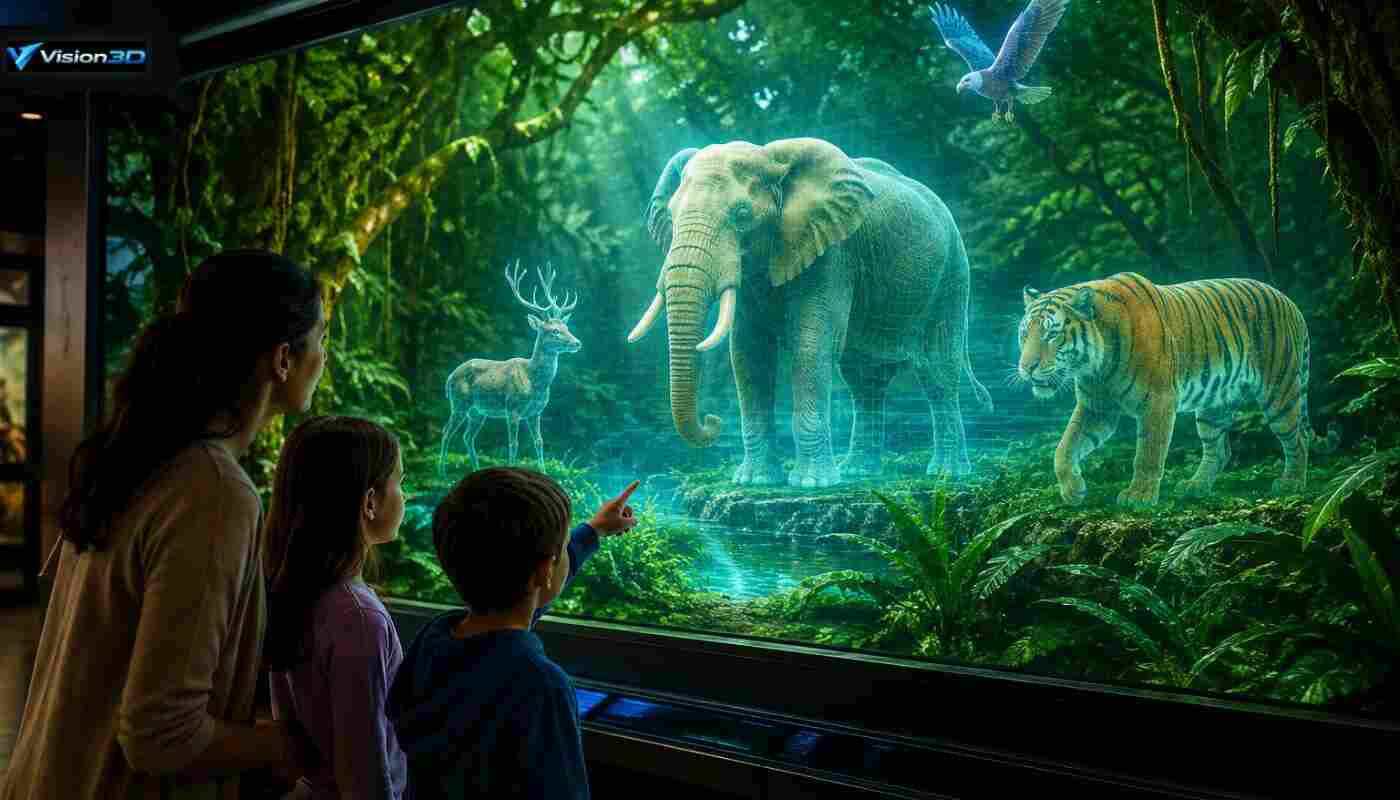
Zoos have been an essential part of education about wildlife, conservation awareness, and fun with the family. But, as technology changes, the old-fashioned enclosures are no longer the sole means to attract visitors. The implementation of 3D Hologram in zoos is changing the way people view wildlife by making the learning more engaging, ethical, and interactive.
The Evolution of Zoo Experiences
Contemporary audiences want to see more than just exhibits. They desire vibrant narration, truest imagery, and significant interaction. It is here that the 3D Hologram entertainment will come in as a game-changer. Zoos can use projection of realistic, three-dimensional animals in real-time settings to display extinct, threatened, or unhuggable species.
As opposed to the physical fencing, holograms eliminate constraints, which include habitat restriction, the stress of animals, and safety concerns. Tourists are in a position to view the animals in their natural habitats without affecting their welfare.
Enhancing Learning Through Interactive Hologram Education
The main advantage of holograms exists because they enable viewers to become interactive learners. The interactive holograms educational system lets visitors experience direct engagement with the educational materials.
As an illustration, children can:
- Touch screens: Learn animal diets, habitats, and behaviors.
- Real-time displays of animated life cycles of species.
- Play with virtual tours on how conservation works.
Such interactivity enhances the memorability of material and makes learning material more attractive, particularly to the younger audience. Visitors are not asked to read some fixed signs, but they are integrated into the learning process.
Bringing Oceans to Life with Holographic Aquarium Displays
Aquatic creatures have always been a feature of zoos and marine parks, but it is resource-intensive to maintain large aquariums. A holographic aquarium presents a more environmentally-friendly solution that can produce breathtaking visual effects.
- Visitors can experience advanced projection systems.
- Whales, sharks, and exotic fish are swimming around them in life size.
- Deep-sea conditions, which are otherwise inaccessible to recreation.
- Interactive underwater ecosystems that react to movement.
Not only will it help to lower the costs of operation, but it will also help to avoid the necessity to confine marine animals, which is in line with current ethical principles.
Expanding Storytelling and Conservation Awareness
The application of 3D Hologram in zoo environment allows the use of strong narration. Zoos are able to recreate extinct species, such as dinosaurs or endangered species, in their native environment. These visual stories assist the visitors in better perceiving the urgency of the conservation of biodiversity and its loss.
An example of this is a holographic tour that could demonstrate how climate change is affecting polar bears or how deforestation is affecting the lives of species in the rainforest. Such emotional, visual experiences make a more powerful impact than the conventional exhibits.
Boosting Visitor Engagement and Revenue
Our business uses the 3D Hologram entertainment system because it enhances customer experience through its ability to draw more customers who stay at our business for extended periods. The special exhibits, which combine technological elements with unique features, create social media sharing opportunities that make customers return to the exhibit.
Zoos can also host:
- Nighttime hologram shows
- Educational lessons with holographic projections.
- Wildlife storytelling classes based on themes.
These experiences are value-added to the visitor experience and provide new sources of revenue without increasing physical infrastructure.
The Future of Zoos with Holographic Technology
With the development of technologies, the process of hologram integration will be more advanced. Augmented reality, AI, and holography could be used together in future zoos to offer full immersion into an ecosystem, where visitors can walk through a virtual zoo, complete with synthetic animal sounds and visuals. It is not aimed at substituting the actual animals but to complete the existing exhibits with new, ethical, and educational solutions.
Final Words
Implementation of 3D Hologram in the Zoo setting is a big move towards the use of sustainable, engaging, and future-ready environmental education in the Zoo setting. Combining entertainment with education, holographic aquariums and other interactive hologram systems create memorable experiences that lead to the creation of conservation awareness. Holograms will be instrumental in redefining the way we relate to the natural world as zoos keep changing. To know more about the 3D Hologram in Zoo, get in touch with the Vision3D customer care number.
FAQs
Ans. The system delivers realistic three-dimensional animal displays through its advanced technology, which creates educational content for visitors.
Ans. It operates on beam technology and replicates underwater worlds where water, aquatic animals, and tanks are not present.
Ans. The system enables users to learn better through their ability to touch and move holographic content.
Ans. The system creates engaging experiences for visitors, which show them how to interact with wildlife in a way that protects animals and their natural habitats.