
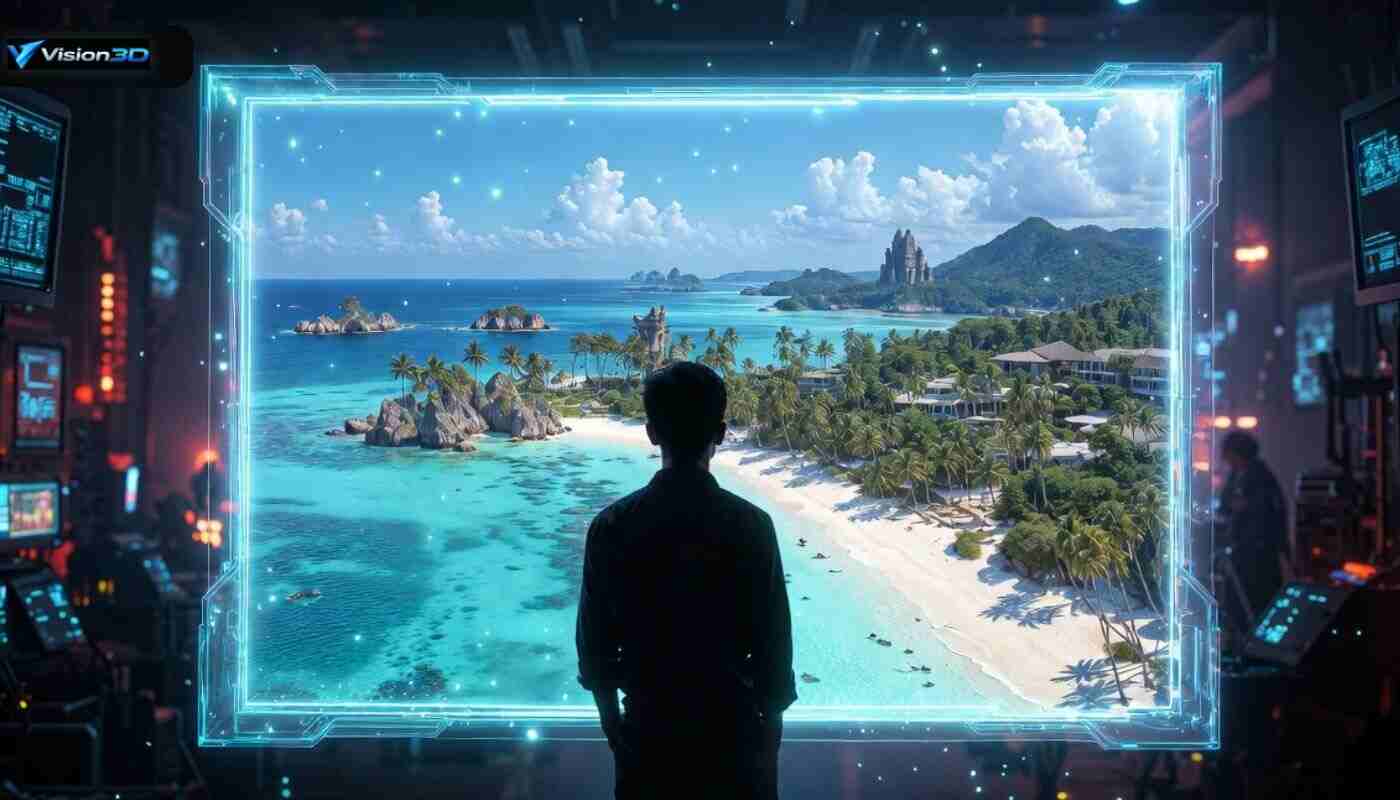
The travel industry is undergoing a digital transformation, and one of the most groundbreaking innovations is the use of 3D holograms in Virtual Tourism. The technology enables users to explore destinations through its authentic travel experiences, which they can access from their homes. Holographic solutions have emerged as essential components for upcoming travel needs because people now prefer environmentally friendly travel options that require less effort.
What is a 3D Hologram in Virtual Tourism?
The technology enables users to experience virtual travel to worldwide locations with highly realistic results. People can experience the most famous attractions, historical sites, and natural beauty from any location on Earth. People can remotely discover all of Paris street system and study every aspect of the Taj Mahal architectural design.
The system functions as an essential tool for educational purposes because it enables students and travelers to experience virtual destination tours before their actual visits.
Role of 3D Hologram in Virtual Tourism
This technology enables its users to have a virtual tour around the world in amazing realism. Whichever part of the world one is in, they can view iconic landmarks, cultural heritage sites, and natural wonders. As an example, one can stroll around the streets of Paris without the need to physically move.
It also contributes greatly to education and planning of trips, whereby students and travelers can experience destinations even before they visit them.
Interactive Hologram Experiences
One of the main peculiarities of this innovation is the interactive hologram systems. Such systems enable the user to experience the virtual surroundings rather than passively seeing them.
- Find places by using gestures or voice commands.
- Play with holographic tour guides.
- Zoom in and out and swivel around landmarks in detail.
This interactive degree makes virtual tourism more interactive, personalized, and informative.
Benefits of Hologram-Based Tourism
Combining the use of holographic technology has several benefits:
- Accessibility: Allows people with mobility/financial impairments to travel.
- Sustainability: Minimizes the adverse effects on the environment due to physical travel.
- Convenience: The system enables users to conduct immediate site assessments without the need for travel arrangements.
- Business Growth: The system enables tourism businesses to develop customer attraction through their interactive experience displays.
The 3D hologram projector can be used by organizations like museums and tourism boards to bring destinations to life and to turn them into a highly engaging experience for visitors.
Challenges and Future Potential
Despite the potential, the following issues are associated with this technology: it is expensive and not well-known. Nevertheless, recent improvements are rendering holographic solutions cheaper and more scalable.
The future of it could be to be added to AI and real-time data so that it allows fully immersive experiences of travel, including live virtual events and social interactions in holographic environments.
Final Words
The 3D Hologram in Virtual Tourism is influencing a new era of traveling as it is combining the elements of realism, interactivity, and accessibility. With the advancement of technology, it will be used in addition to traditional travelling, and it will introduce new possibilities of travelling all over the globe. To know more about 3D Hologram in Virtual Tourism, connect with the Vision 3D customer care number.
FAQs
Ans. It is a technology that utilizes holographic projections to provide a sense of immersion in virtual traveling experiences.
Ans. It simulates 3D images into actual space, which enables users to visit destinations in a realistic and interactive manner.
Ans. A two-way hologram enables users to interact with virtual content by use of gesture, voice and touch control.
Ans. No, it does not substitute physical travel; it only enriches the travel experiences by providing previews and alternatives.