
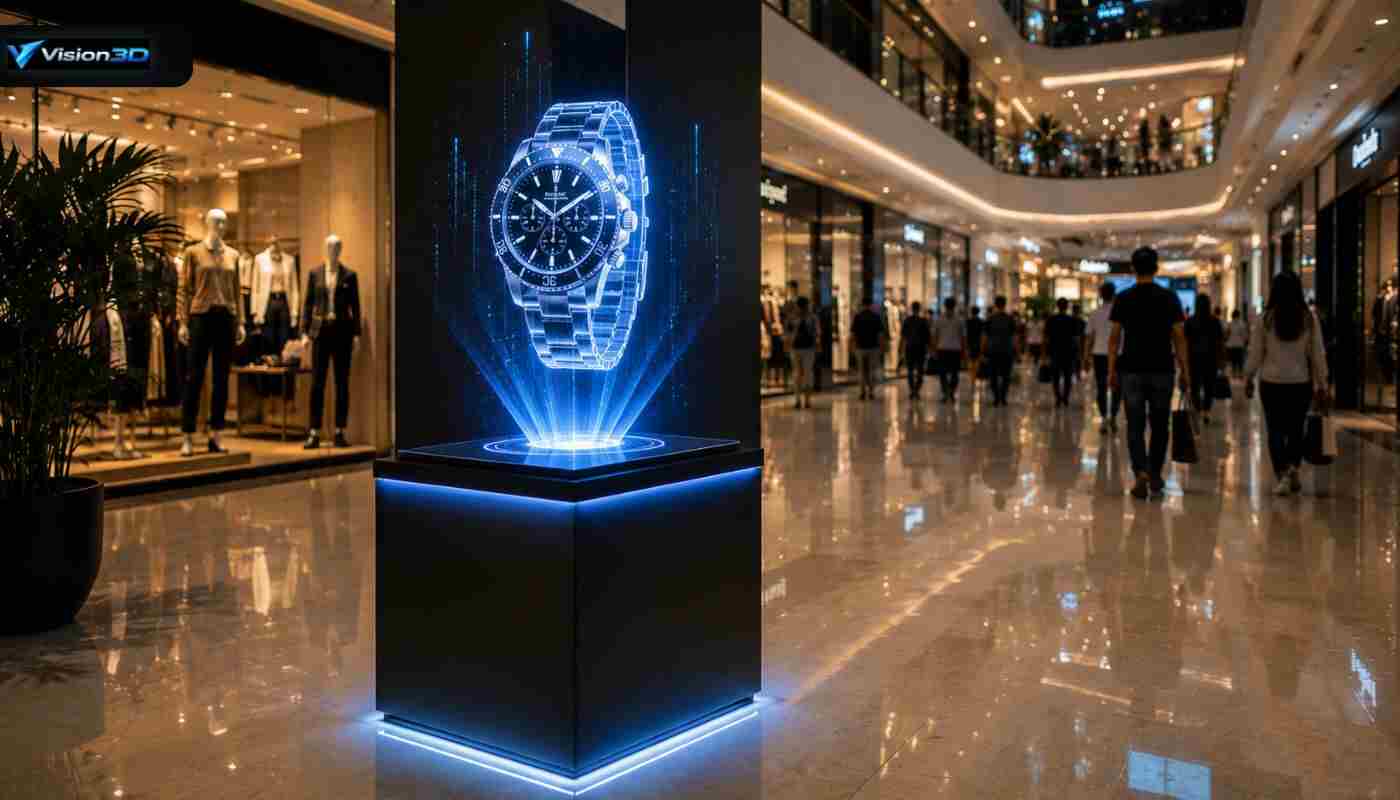
A hologram device can turn a standard exhibition stand into a head-turning, immersive experience that pulls in crowds and keeps visitors lingering longer. Rather than flat banners and static posters, event marketers now lean on floating 3D visuals, hands-on style product demos, and virtual presenters to frame brands, services, and product features in a way that feels high-tech and sticks in memory. When it is deployed correctly, a hologram device becomes one of the most effective pieces in any event-display toolkit, really.
How a Hologram Device Works at Exhibitions
A hologram device for exhibitions usually projects a 3D-looking image that seems to float in mid-air, sometimes inside a transparent screen, a pyramid-style enclosure, or across a tilted glass face. The setup uses a bright laser hologram projector or an LED-based array to render the content, then reflects it or diffuses it so people perceive a lifelike object, not a flat video clip.
At trade shows and corporate events, common uses include:
- Rotating product models, or even appliances, that people can walk around and inspect from a few angles at once.
- Virtual spokespersons that deliver the important points or tell branding stories in a calm, repeatable way.
- Animated brand marks plus visual effects that keep looping throughout the day, steady and noticeable.
- These kinds of displays pull attention from across the hall, and they also make it easy for staff to begin conversations with passersby, instead of waiting.
Why do hologram devices attract more visitors?
Compared with standard booths, a hologram device can really lift foot traffic and engagement. The main reasons include:
Visual “wow” factor: Floating 3D visuals naturally stand out among booths stuffed with flat 2D art.
- Lower mental effort: Visitors quickly understand product form, scale, and how it gets used, without reading long walls of text.
- Longer pause time: People often stop, watch, and ask questions when a moving 3D avatar appears or when a model spins in place.
For brands running hologram advertising campaigns, this face-to-face attention also boosts message recall, and it helps follow-up leads feel more connected.
Hologram Machine Choices for Events
Event teams can pick from a few hologram machine layouts, depending on space and the vibe they want:
- Compact pyramid displays: These are small desktop projectors that send out 3D scenes inside a clear enclosure. They work well for tighter booths or those demo corners where people just wander by.
- Large transparent-screen units: These floor-standing devices build life-size holograms. They tend to fit better for premium brands or main stage moments, and yeah, they look louder in a good way.
- Rental kits: Temporary arrangements that come with the required hardware, plus content assets. Sometimes, there is also on-site assistance for the short-term run.
Most suppliers can also do the content side for you, meaning they turn 3D models or brand videos into ready-to-play hologram device content. It usually runs smoothly at 30 to 60 fps, so there is less fiddling on event day.
Hologram Advertisement and Brand Storytelling
When a hologram device is used as a hologram advertisement tool, it can:
Present a 3D brand mascot or ambassador delivering steady messaging, the same talking points, every time.
- Turn the complex product details (component layers, the install steps, and even the data flow) into animations that look easy to follow. Like, the kind you can watch and immediately get what happens.
- Then, run scheduled loops that fit the different show periods. So morning, afternoon, and evening each get a matching sequence that keeps the visuals in sync.
- This way, the stand stays visually active through the whole day, without staff having to restart the same explanation again and again, all the time.
Choosing the Right Device for Your Stand
When you pick a hologram device for an exhibition, consider a few basics:
- Booth size and lighting conditions. Try to avoid bright direct light, because it can wash out the image.
- Expected visitor flow, and how many people you want to see the hologram at once.
- Whether you want a rental setup or a permanent installation.