
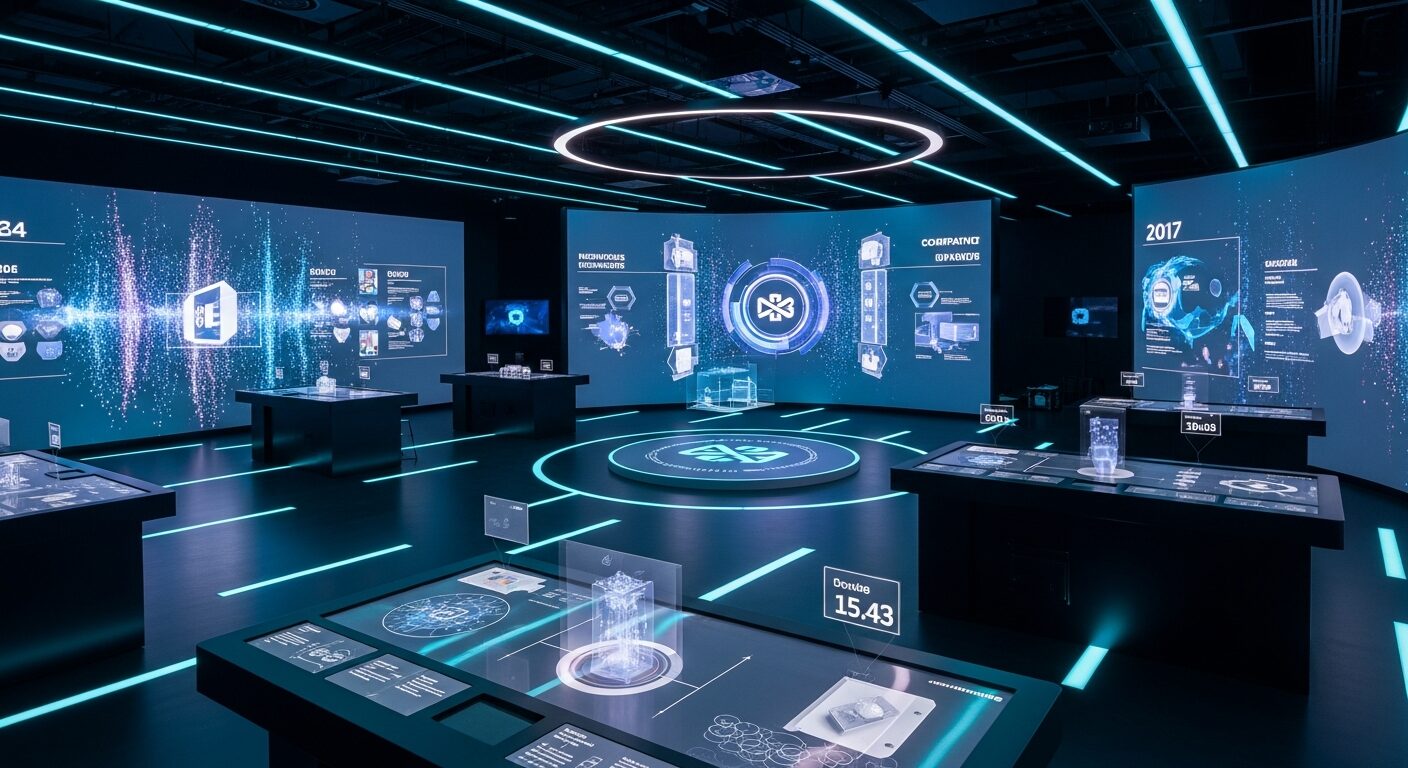
Interactive Museum Design – Engage Visitors with Digital Exhibits
Interactive museum design is reshaping how institutions engage visitors — moving beyond passive observation toward active participation, exploration, and discovery. The most successful interactive museums create environments where visitors become participants in the story, making choices, exploring at their own pace, and discovering content through hands-on engagement.
This approach requires a fundamental shift in exhibition thinking — from designing displays that visitors look at, to designing experiences that visitors move through, touch, respond to, and remember. The technology serves as an enabler, but the real innovation is in the visitor journey design, interaction design, and narrative architecture that makes the experience meaningful.
Principles of Interactive Exhibition Design
Effective interactive exhibition design follows several core principles. First, interaction should feel natural and intuitive — visitors shouldn't need instructions or prior knowledge to engage. The best interactive exhibits invite exploration through visual cues, spatial design, and familiar gesture patterns.
Second, interaction must lead to discovery. Touching a surface, making a gesture, or stepping on a floor zone should reveal something meaningful — a hidden story, a detailed view, a new perspective, or an unexpected connection. Interaction without reward quickly becomes frustrating.
Third, interactive experiences should accommodate different engagement levels. Some visitors will spend thirty seconds at an interactive station while others will explore for ten minutes. The design must provide satisfying experiences at both extremes, with depth available for those who seek it without penalising those who move quickly.
Finally, interactive elements should be contextually integrated into the exhibition narrative rather than appearing as technology add-ons. The interaction should feel like a natural part of exploring the story rather than a separate digital activity inserted into a physical exhibition.
Touch, Gesture, and Motion-Based Interactions
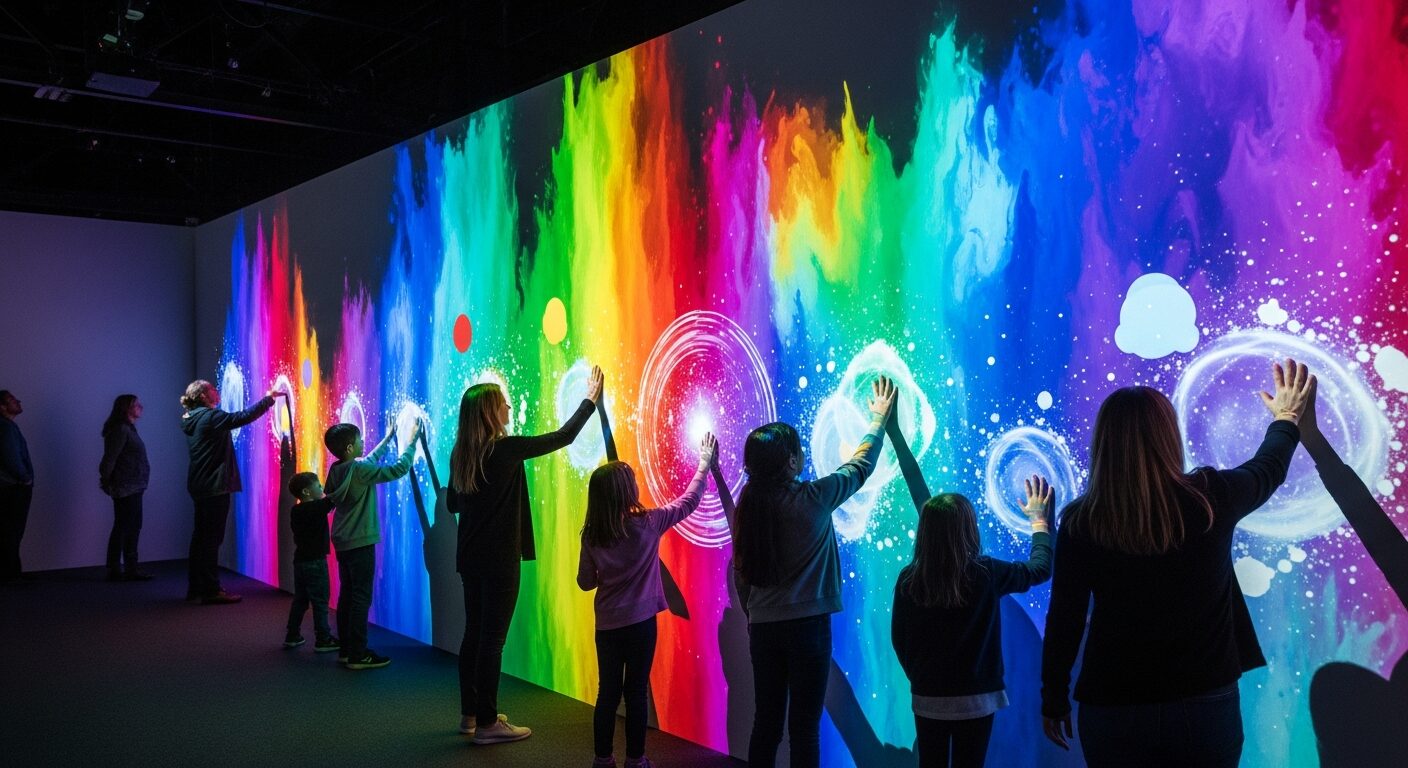
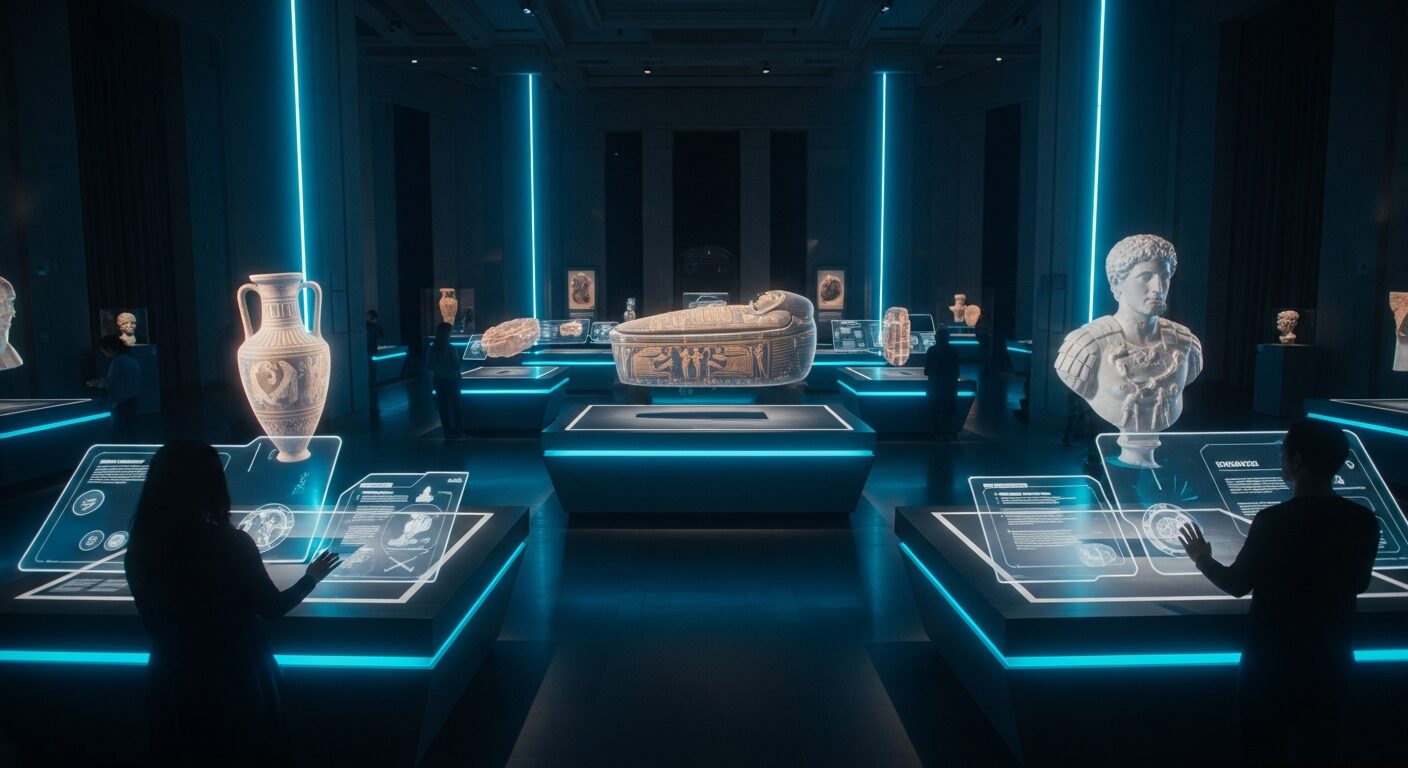
Touch-based interactive surfaces — walls, tables, and kiosks — remain the most accessible form of museum interaction. Visitors understand intuitively how to touch, swipe, and tap, making these systems effective for audiences of all ages and technical abilities. Large-format touch walls can support simultaneous multi-user interaction, enabling groups to explore content together.
Gesture-based systems offer touchless interaction that is both hygienic and magical. Visitors wave hands, point, and move their bodies to control content — rotating 3D objects, navigating virtual spaces, and triggering animations through natural movements. These systems work particularly well in settings where the absence of visible hardware reinforces a sense of wonder.
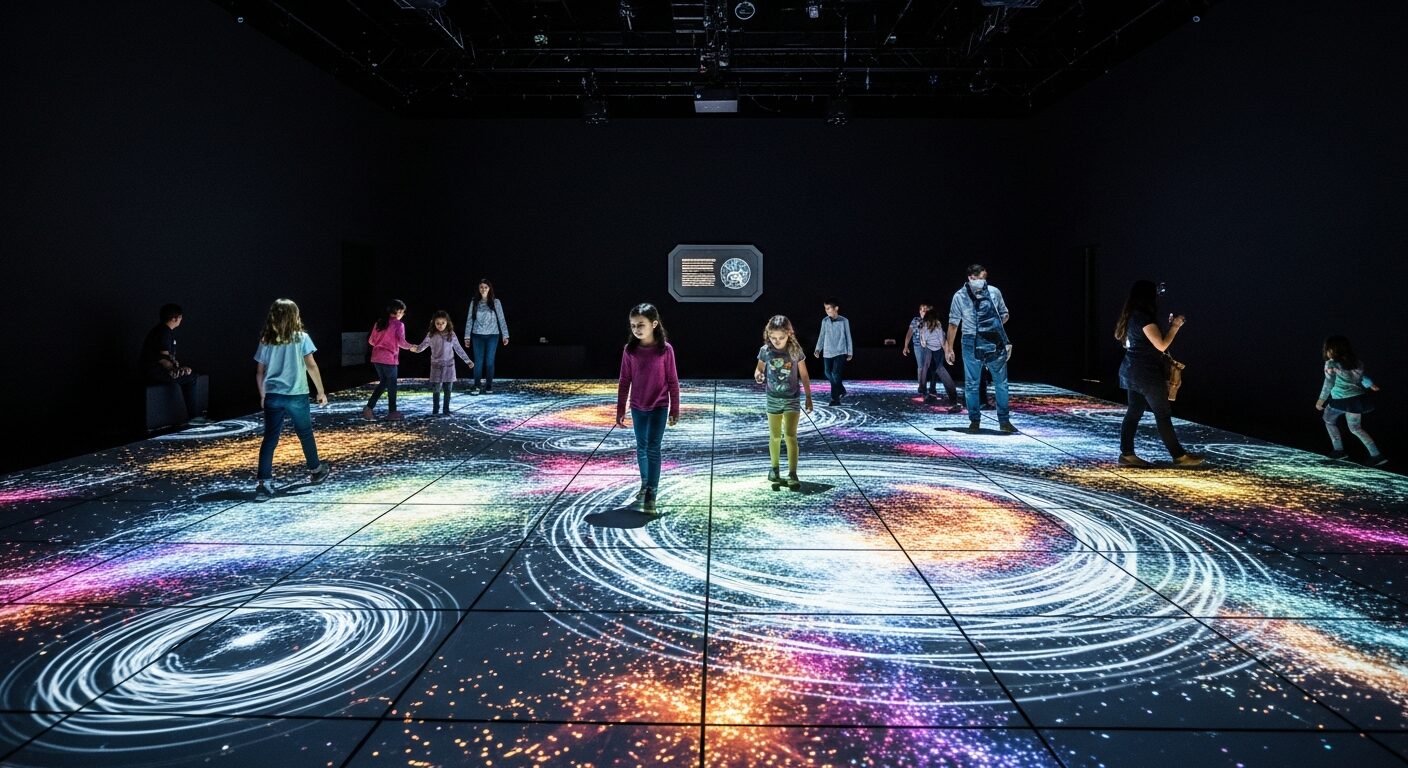
Motion-responsive environments — particularly interactive floors — detect visitor movement through overhead sensors and respond with projected content that follows, reacts to, and surrounds visitors. These create playful, accessible interactions that work especially well for family audiences and children's galleries where the whole body becomes the interface.
Designing Visitor Journey Flow
The visitor journey through an interactive museum is as important as the individual interactive stations within it. Journey design defines the sequence, pacing, and emotional progression of the visit — ensuring that interactions build upon each other and create a coherent narrative experience rather than a disconnected series of digital activities.
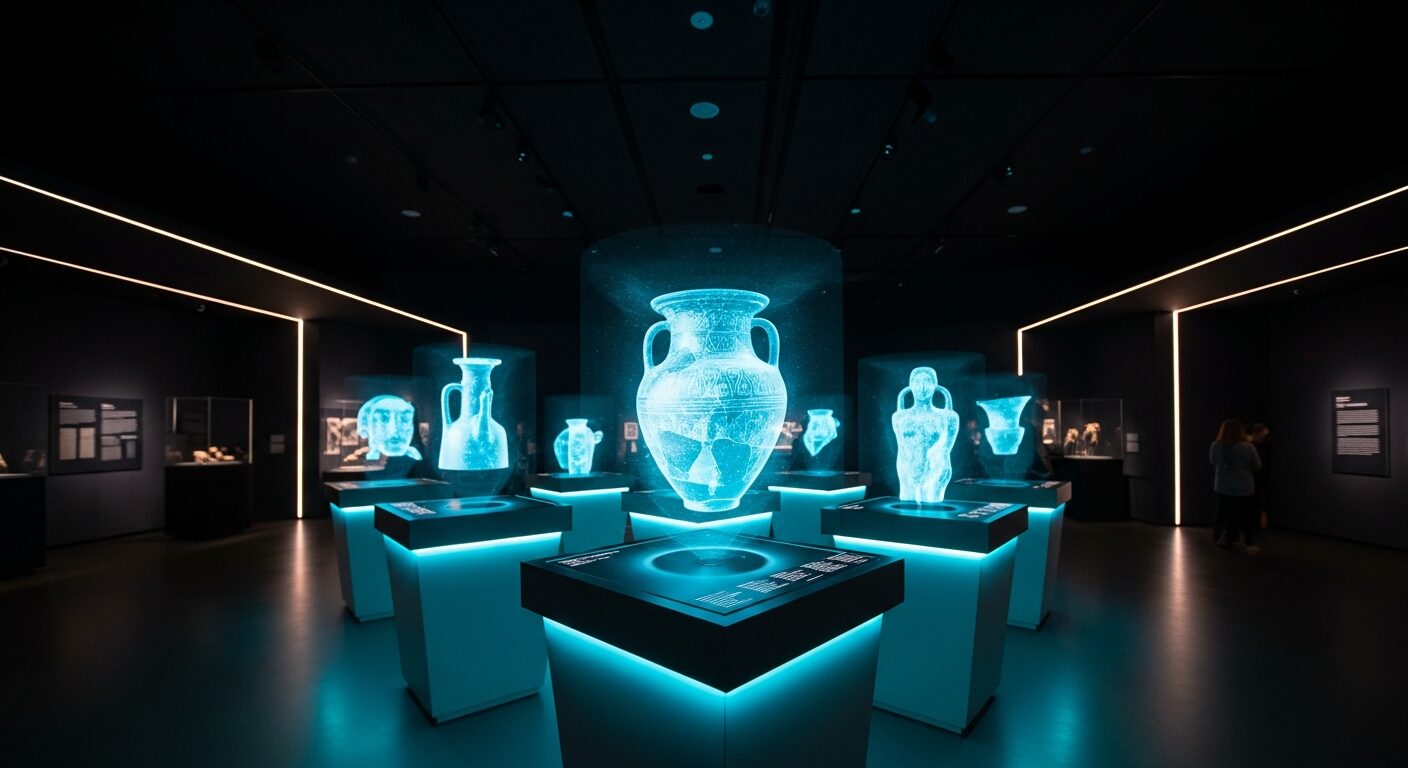
Effective journey design begins with an orientation moment — an impactful introduction that establishes the theme and sets visitor expectations. This might be an immersive projection experience, a holographic welcome, or a dramatic environmental transition that signals entry into a different experiential world.
The middle journey sections alternate between high-intensity interactive moments and reflective spaces. This rhythm prevents sensory fatigue and gives visitors time to process and absorb what they've experienced. Quiet zones with physical objects, text panels, or contemplative spaces balance the energy of interactive stations.
The journey concludes with a synthesis moment — an experience that brings together themes from the visit and leaves visitors with a lasting impression. This might be a personalised summary, a collective contribution to a shared digital canvas, or a final immersive environment that reframes everything they've encountered.
Accessibility in Interactive Museum Design
Inclusive design is fundamental to interactive museum planning. Every interactive element must be accessible to visitors with varying physical abilities, sensory capabilities, and cognitive needs. This means providing multiple interaction modalities — if a primary interaction requires touch, alternative access through gesture, audio, or proximity detection should be available.
Physical accessibility requires interactive surfaces at multiple heights, wheelchair-accessible approach zones, and clear sightlines from seated positions. Audio content must include visual alternatives, and visual content should include audio descriptions. Multi-language support expands accessibility to international visitors.
Cognitive accessibility means designing interactions that are intuitive without training, providing clear feedback when interactions succeed, and ensuring that content is comprehensible at multiple levels of prior knowledge. Universal design principles benefit all visitors, not only those with specific access needs — simpler, more intuitive interactions create better experiences for everyone.
Related Technologies
Explore the capabilities mentioned in this article.

Related Solutions
Frequently Asked Questions
What age groups work best with interactive museums?
Interactive museum design works for all ages when done well. The key is designing interactions with multiple engagement levels — simple, intuitive actions for young children and casual visitors, with deeper exploration available for adults and subject enthusiasts.
How do you prevent interactive exhibits from breaking?
Commercial museum interactive systems use industrial-grade hardware designed for continuous public use. Touch surfaces use toughened glass, projectors are housed in sealed enclosures, and software includes automatic recovery from unexpected inputs. Regular maintenance schedules keep systems performing reliably.
Can interactive design work in small museum spaces?
Yes. Interactive design principles apply at any scale. Even small galleries can incorporate interactive projection, touch-based displays, and responsive environments without requiring large floor areas. The key is selecting appropriate technology scales and designing focused, meaningful interactions.
How long does it take to design an interactive museum?
A comprehensive interactive museum project typically takes 12–18 months from concept to opening, including research, design development, content production, hardware installation, and testing. Smaller gallery installations can be delivered in 6–9 months.
Related Articles
Planning a Holographic Installation?
Our experience design team creates immersive holographic environments for museums, experience centres, and public installations.