
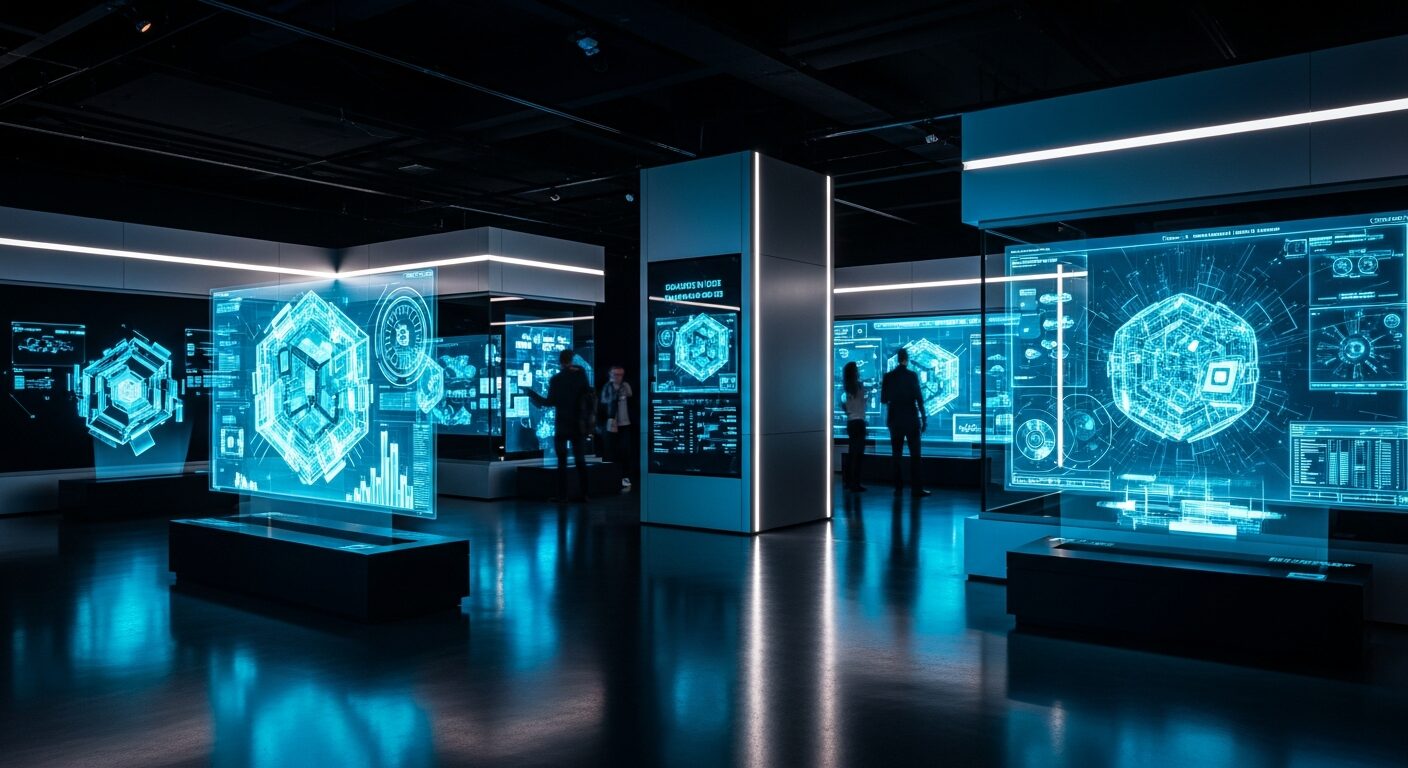
How Hologram Displays Work – Spatial 3D Technology
Holographic displays create the illusion of three-dimensional objects floating in physical space — transforming how audiences experience digital content in museums, experience centres, corporate environments, and public attractions. Understanding how these systems work is essential for anyone planning an immersive installation.
Unlike conventional flat screens that present imagery on a two-dimensional surface, holographic displays manipulate light to create depth, perspective, and spatial presence. The result is digital content that appears to occupy real physical space — objects that seem tangible, characters that appear to stand in the room, and environments that extend beyond the boundaries of any screen.
The Science of Holographic Projection
At their core, holographic displays work by controlling the direction, intensity, and phase of light to create visual information that the human eye interprets as three-dimensional. Different holographic technologies achieve this through different mechanisms, but they all share the fundamental principle of presenting visual content with spatial depth.
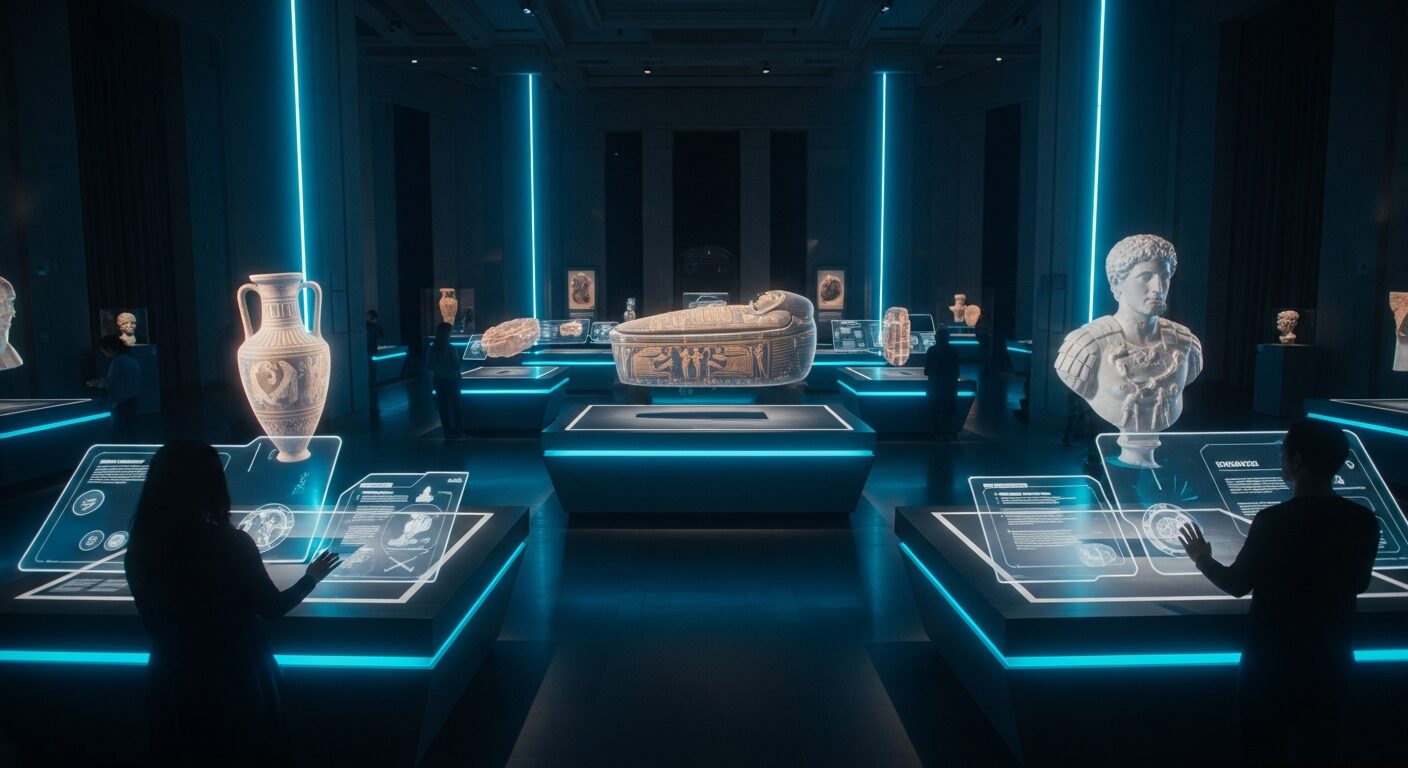
How holographic projections create the illusion of floating objects
The most widely deployed commercial holographic system is based on the Pepper's Ghost principle — a technique dating back to the 19th century that uses angled transparent surfaces to reflect projected imagery into the viewer's line of sight. Modern implementations use precision-engineered holographic film, high-brightness projectors, and carefully controlled lighting environments to create remarkably convincing illusions of floating three-dimensional content.
More advanced systems use volumetric display technology, where light is projected into a defined volume of space using rotating screens, laser arrays, or plasma excitation. These true volumetric displays can be viewed from multiple angles simultaneously, creating content that genuinely occupies three-dimensional space rather than simulating it through optical illusion.
Types of Holographic Display Systems
Holographic fan displays use high-speed rotating LED strips that render imagery as they spin, creating the appearance of floating content in mid-air. These are commonly used for retail displays, event installations, and product showcases where eye-catching visual impact is the primary objective.
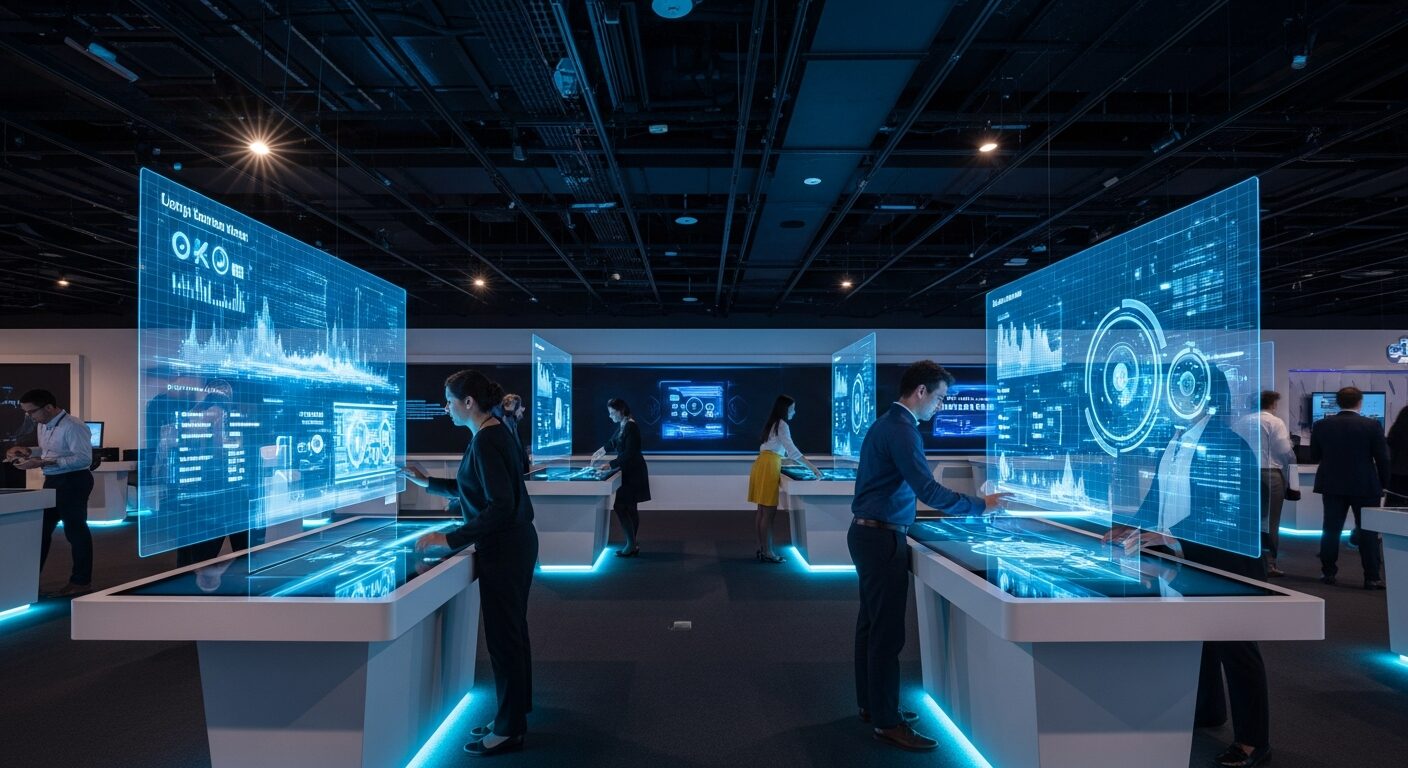
Comparison of holographic display technologies
Transparent LED panels are self-emitting display surfaces that remain see-through when inactive, allowing holographic content to be overlaid onto physical environments without blocking the view behind the display. These are ideal for retail windows, museum cases, and architectural integration where the display must coexist with the physical space.
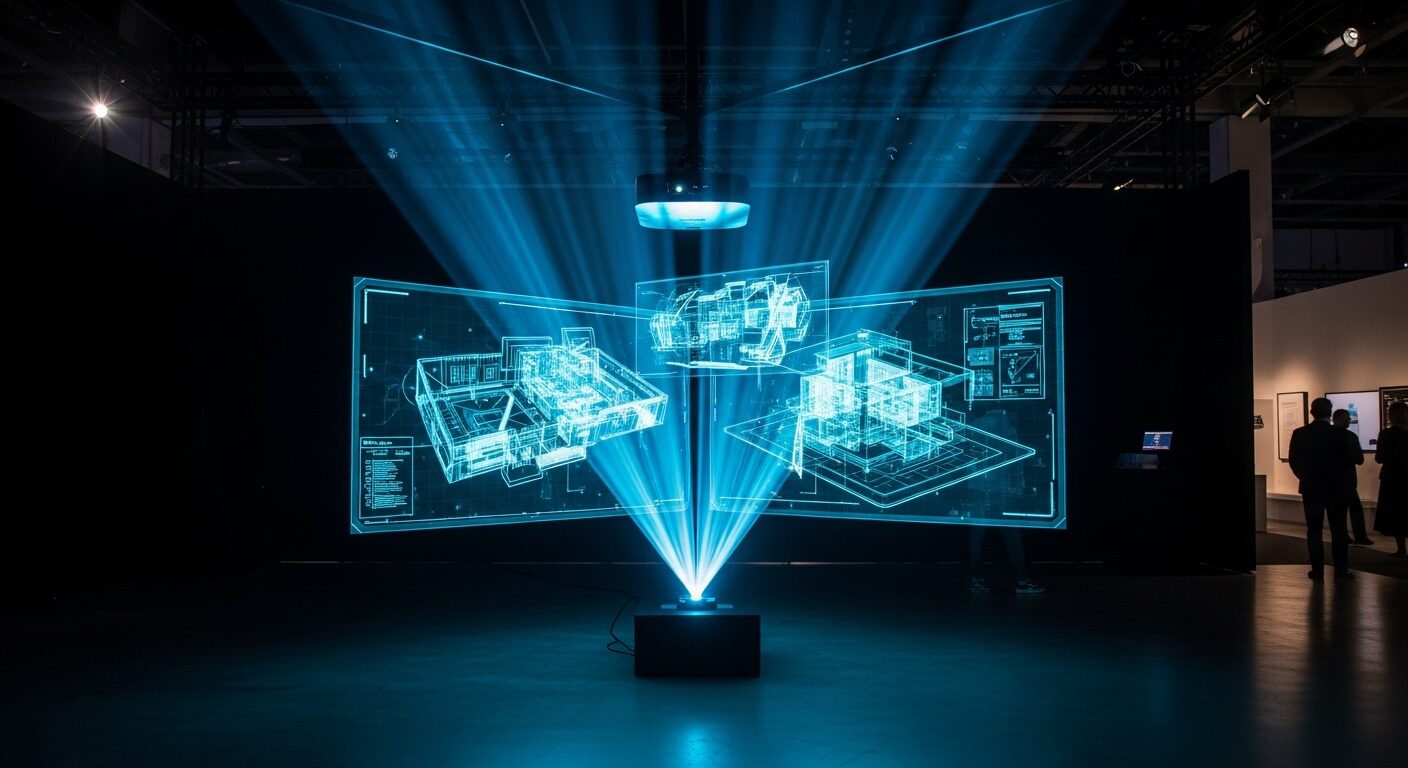
Large-format holographic projection systems — such as hologram walls and hologram stages — use transparent gauze or film screens combined with high-brightness projection to create immersive holographic environments at architectural scale. These systems are the foundation of most experience centre installations and museum holographic exhibits.
Holographic table displays present three-dimensional content on horizontal surfaces, enabling collaborative viewing from multiple positions around the display. These are used for architectural presentations, product design review, and interactive exhibition experiences.
Key Factors in Holographic Display Quality
The quality of a holographic display depends on several critical factors that must be carefully managed during design and installation. Brightness is paramount — holographic content must be significantly brighter than the ambient environment to maintain the illusion of floating imagery. This is why most high-quality holographic installations control ambient lighting carefully.
Viewing angle determines how many audience members can experience the holographic effect simultaneously. Pepper's Ghost systems typically have optimal viewing zones, while volumetric and fan displays offer wider viewing angles. The installation design must account for expected audience positions and movement patterns.
Content resolution and frame rate directly impact the perceived realism of holographic imagery. Modern holographic systems support 4K resolution and smooth motion playback, but the content production pipeline must be designed specifically for holographic presentation — conventional video content rarely translates effectively to holographic display.
Integration with the physical environment is what separates a compelling holographic installation from a simple display. The best holographic experiences combine the display technology with spatial audio, environmental lighting, physical set design, and interactive elements to create complete immersive environments.
Choosing the Right Holographic Technology
Selecting the appropriate holographic display technology depends on the specific requirements of the installation — audience size, viewing conditions, content type, space constraints, and budget all influence the optimal choice.
For large-audience experiences in controlled environments, Pepper's Ghost projection systems offer the most cinematic impact, creating life-sized holographic figures and expansive visual narratives across wall-scale displays. For retail and event environments where ambient light cannot be fully controlled, holographic fan displays and transparent LED panels provide effective results with simpler installation requirements.
For collaborative and interactive applications, holographic table displays enable groups to gather around shared 3D content. For the most immersive experiences, holographic room installations combine multiple display technologies with environmental systems to create fully enclosed holographic environments.
Vision3D evaluates each project's specific requirements and recommends the optimal technology approach — often combining multiple holographic systems within a single installation to create layered, multi-dimensional experiences.
Related Technologies
Explore the capabilities mentioned in this article.
Related Solutions
Frequently Asked Questions
Do holographic displays require special glasses?
No. The holographic display systems used in experience centres, museums, and commercial installations are glasses-free. They create the illusion of three-dimensional content visible to the naked eye using optical techniques like Pepper's Ghost projection, holographic fans, and transparent LED panels.
How bright do holographic displays need to be?
Holographic displays need to be significantly brighter than the ambient light in the viewing environment. Most high-quality installations use controlled lighting environments to ensure the holographic content remains vivid and convincing. Brightness requirements vary by technology — from 3,000 lumens for small displays to 20,000+ lumens for large-scale projection systems.
Can holographic displays show interactive content?
Yes. Modern holographic installations can integrate touch sensors, gesture recognition, motion tracking, and proximity detection to create interactive holographic experiences where content responds to visitor behaviour in real time.
How long do holographic display systems last?
Commercial-grade holographic systems are designed for continuous operation over many years. Projector lamps and LED components have rated lifespans of 20,000–50,000 hours, and systems are designed with maintenance accessibility and component replacement in mind.
Related Articles
Planning a Holographic Installation?
Our experience design team creates immersive holographic environments for museums, experience centres, and public installations.