
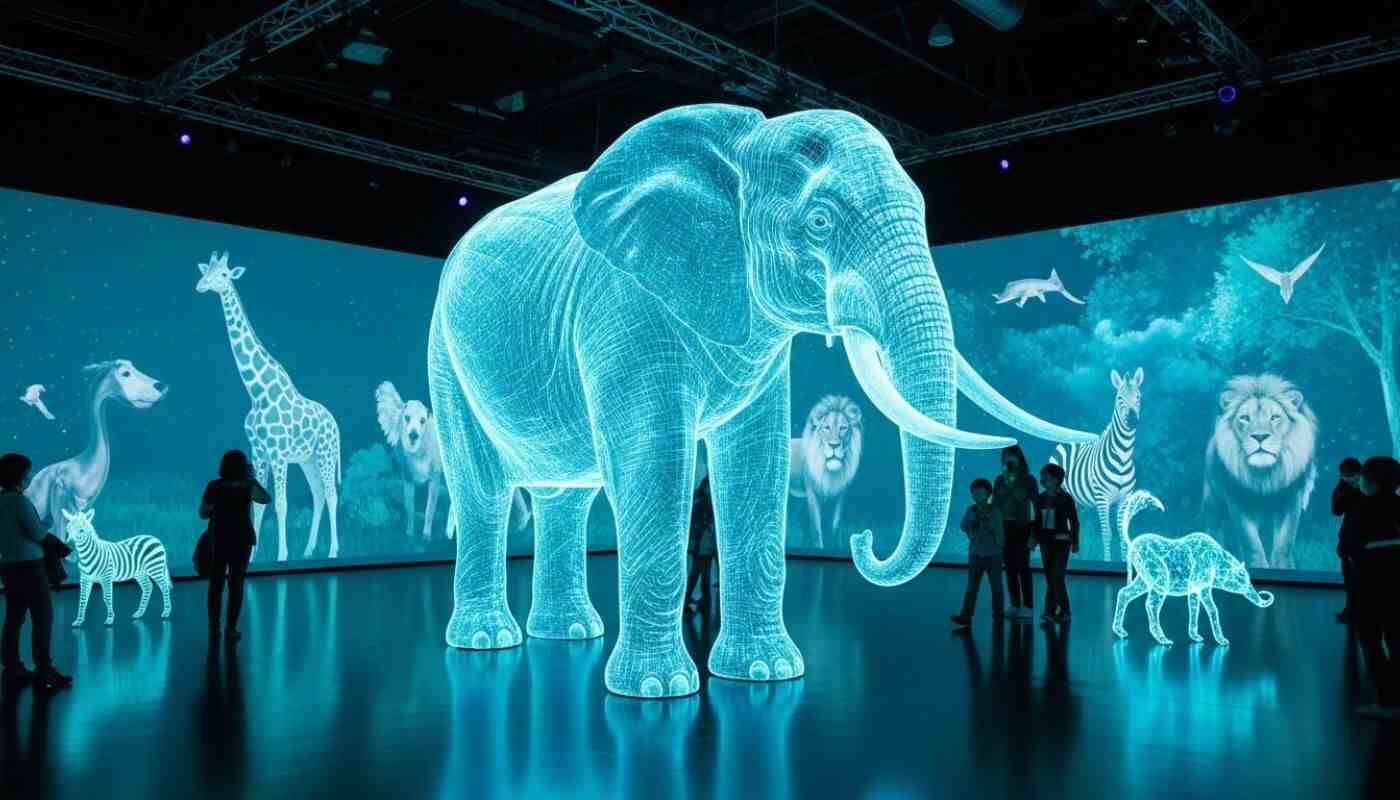
Experience Centre Design & Build Solutions
Vision3D designs turnkey corporate experience centres — integrating hologram walls, interactive projection, and spatial storytelling for enterprise.
Experience centres represent the most comprehensive form of immersive environment design - integrating multiple technologies into unified visitor journeys. Vision3D designs corporate experience centres from concept through deployment, creating environments where every element works together.
Our approach begins with designing spatial narratives that guide visitors through discovery moments and interactive engagements. Technology like hologram walls and holographic projection is selected based on narrative requirements.
From initial concept workshops to museum digital experiences, Vision3D delivers experience centres that function as powerful communication platforms - spaces where organisations can tell their stories with impact.
Industry Challenges
Communicating Complex Stories
Organisations often need to convey intricate narratives about innovation, heritage, or impact that are difficult to communicate through conventional presentation formats.
Creating Lasting Impressions
Visitor experiences must be memorable enough to influence perceptions, decisions, and relationships long after the visit concludes.
Technology Integration Complexity
Combining multiple display, interaction, and environmental systems into a seamless experience requires deep integration expertise and unified control architectures.
Operational Sustainability
Experience centres must operate reliably over years with manageable maintenance requirements and the flexibility to evolve content as organisational stories change.
How Vision3D Solves This
Visitor Journey Mapping
We design the complete visitor path - from arrival to departure - defining pacing, discovery moments, interaction opportunities, and emotional progression across distinct experience zones.
Unified Technology Architecture
All display, interaction, audio, and environmental systems are integrated through a centralised control platform that ensures synchronised, reliable operation across the entire centre.
Content Production Pipeline
Our in-house content team produces all visual, interactive, and audio content - from holographic media and 3D visualisations to interactive applications and spatial audio compositions.
Operational Handover & Support
We provide comprehensive training, documentation, and ongoing support to ensure venue teams can operate, maintain, and update the experience centre independently.
Technologies Used
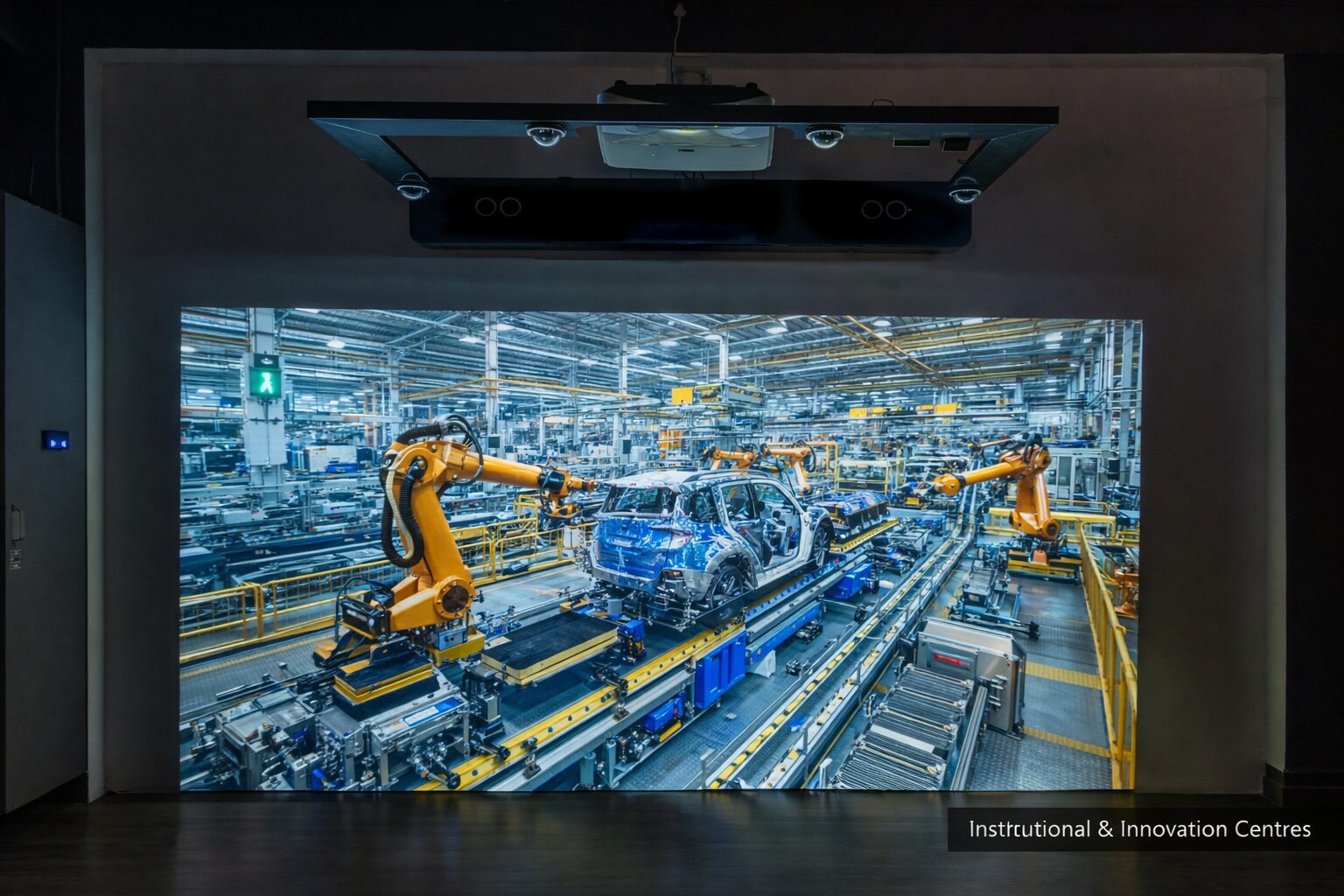
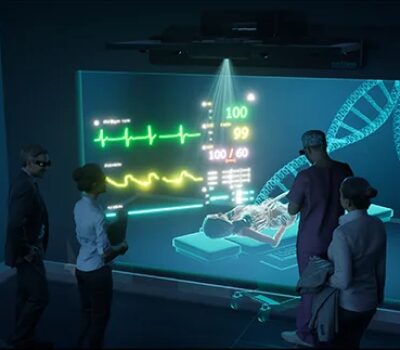
This solution draws on the following capabilities from our technology portfolio.

Example Project Scenarios
Corporate Innovation Showcase
A 600-square-metre experience centre featuring holographic product displays, interactive exploration tables, an immersive brand theatre, and gesture-controlled innovation timelines - designed for client visits, partner events, and stakeholder presentations.
Institutional Visitor Gallery
A multi-zone visitor experience communicating decades of research achievements through holographic wall narratives, interactive data visualisations, and an immersive projection environment presenting future research directions.
Government Public Engagement Centre
A public-facing experience centre presenting urban development master plans through holographic city models, interactive planning tables, and an immersive projection theatre showing the city's transformation vision.
Frequently Asked Questions
Find answers to the most common questions about this solution, implementation options, and project requirements.
An immersive experience centre is a purpose-designed physical environment where an organisation communicates its story, capabilities, and vision through spatial technology - holographic displays, interactive surfaces, projection environments, and narrative-driven visitor journeys. They are built for corporate enterprises, government agencies, educational institutions, and research organisations that need to engage visitors at a level that conventional presentations cannot achieve.
Every experience centre project begins with understanding the organisation's communication objectives and audience expectations. Vision3D runs structured discovery workshops with leadership teams to define the core narratives, visitor journey structure, and success metrics before any technology is specified. Design follows strategy - not the other way around.
A comprehensive experience centre - from initial concept workshops through content production, hardware integration, and operational commissioning - typically takes 6–18 months depending on scale and complexity. Vision3D provides a detailed project programme following the initial briefing phase.
Yes. Vision3D designs audience-adaptive systems that support multiple visitor journey profiles. Hosts can select content paths appropriate for each audience type - client visits, investor briefings, partner events, media engagements, or recruitment experiences - from a centralised control interface. The physical environment is constant; the narrative experience adapts.
Experience centres typically integrate holographic wall displays, interactive projection tables, gesture-controlled exploration interfaces, immersive brand theatres, digital presenter systems, spatial audio environments, and centralised control platforms. The specific technology mix is always determined by narrative requirements rather than a standard specification.
All experience centres are delivered with centralised content management platforms that enable marketing and communications teams to update product information, add new narratives, and refresh media without technical vendor involvement. Content architecture is designed from the outset to accommodate evolution over the multi-year operational lifespan of the centre.
Yes. Vision3D provides end-to-end design and delivery - from initial discovery workshops and spatial design through content production, technology integration, operational commissioning, and post-handover support. This unified approach ensures narrative coherence, technical reliability, and single-point accountability throughout the project.
Experience centres can be designed for spaces ranging from a single 50 sqm executive briefing room to multi-zone environments exceeding 1,000 sqm. Vision3D works within existing architectural constraints, adapting spatial narrative design to the available footprint while maximising the impact of each zone.
For organisations with multiple offices or facilities, Vision3D designs modular experience architectures with consistent content systems that can be deployed across locations with site-specific adaptations. Centralised content management allows updates to be distributed across all locations simultaneously.
Experience centres function as strategic business assets generating returns through accelerated client decision cycles, improved partner engagement, stronger brand differentiation, and more effective stakeholder communication. Many clients report that a single high-stakes client visit that converts to a commercial decision can exceed the entire investment in the experience centre.
Bring This Solution to Life
Tell us about your project. We'll explore how experience centre design & build solutions can transform your space and engage your audience.