
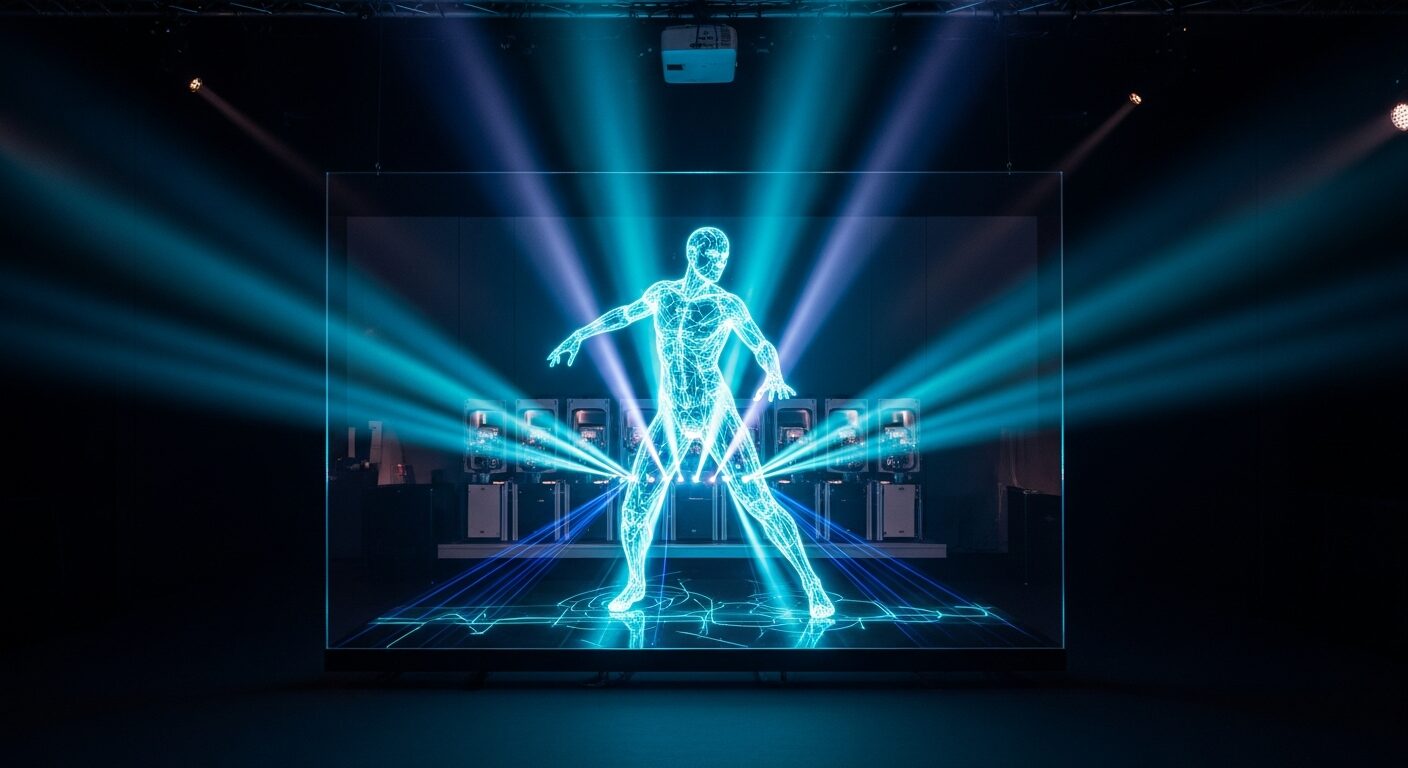
Holographic Projection Systems Guide – Vision3D Technology
Holographic projection is a family of technologies that create the appearance of three-dimensional imagery floating in physical space. From intimate retail displays to room-scale immersive environments, holographic projection systems serve a wide range of applications across entertainment, education, corporate communication, and cultural preservation.
Understanding the different holographic projection technologies — their capabilities, limitations, and ideal applications — is essential for anyone planning a holographic installation. This guide provides a comprehensive overview of the major holographic projection systems available today.
Pepper's Ghost Projection Systems
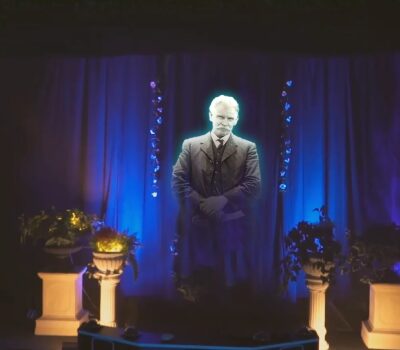
Pepper's Ghost is the most widely deployed large-scale holographic projection technique. It works by reflecting projected imagery off an angled transparent surface — typically a thin holographic film or glass panel — positioned between the audience and a dark background. The viewer sees the reflected imagery superimposed onto the background, creating the illusion of a holographic figure or object floating in space.
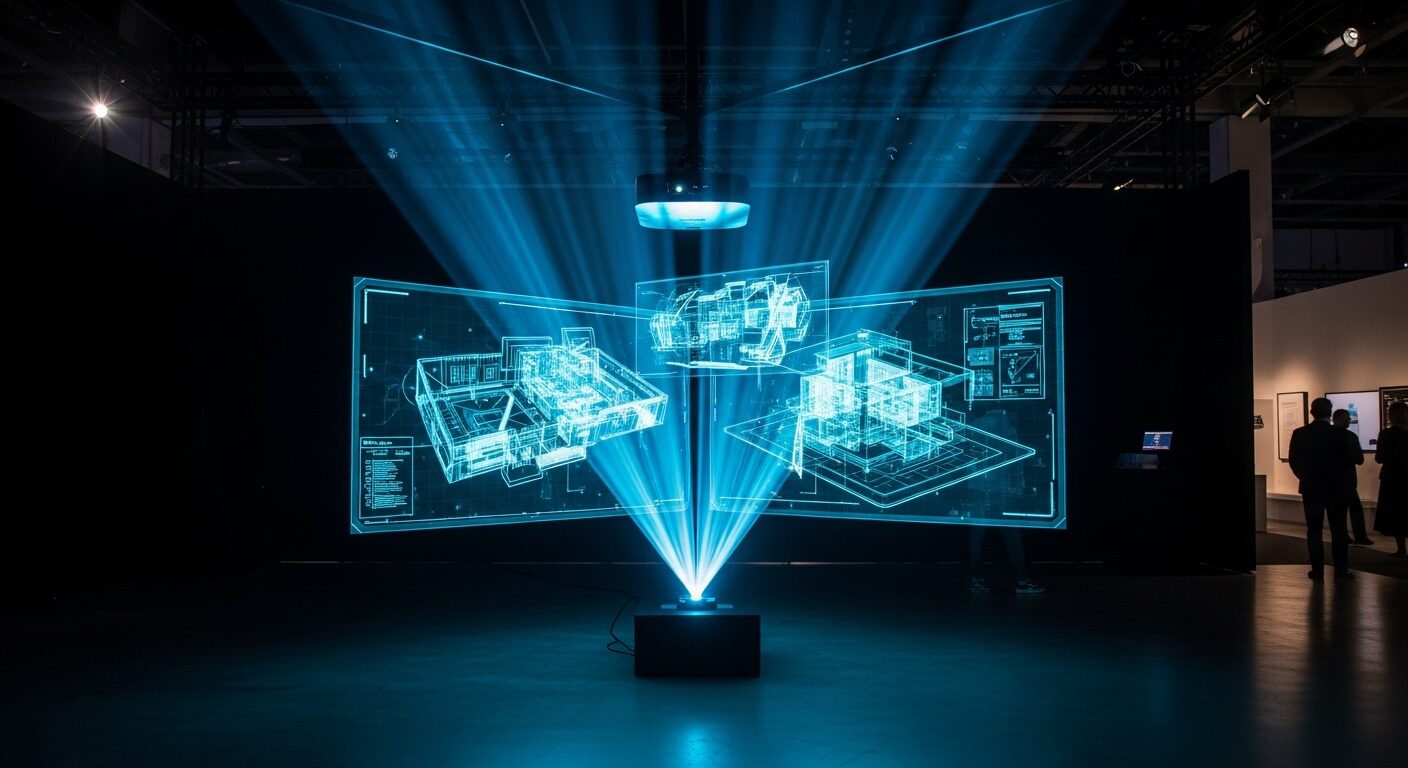
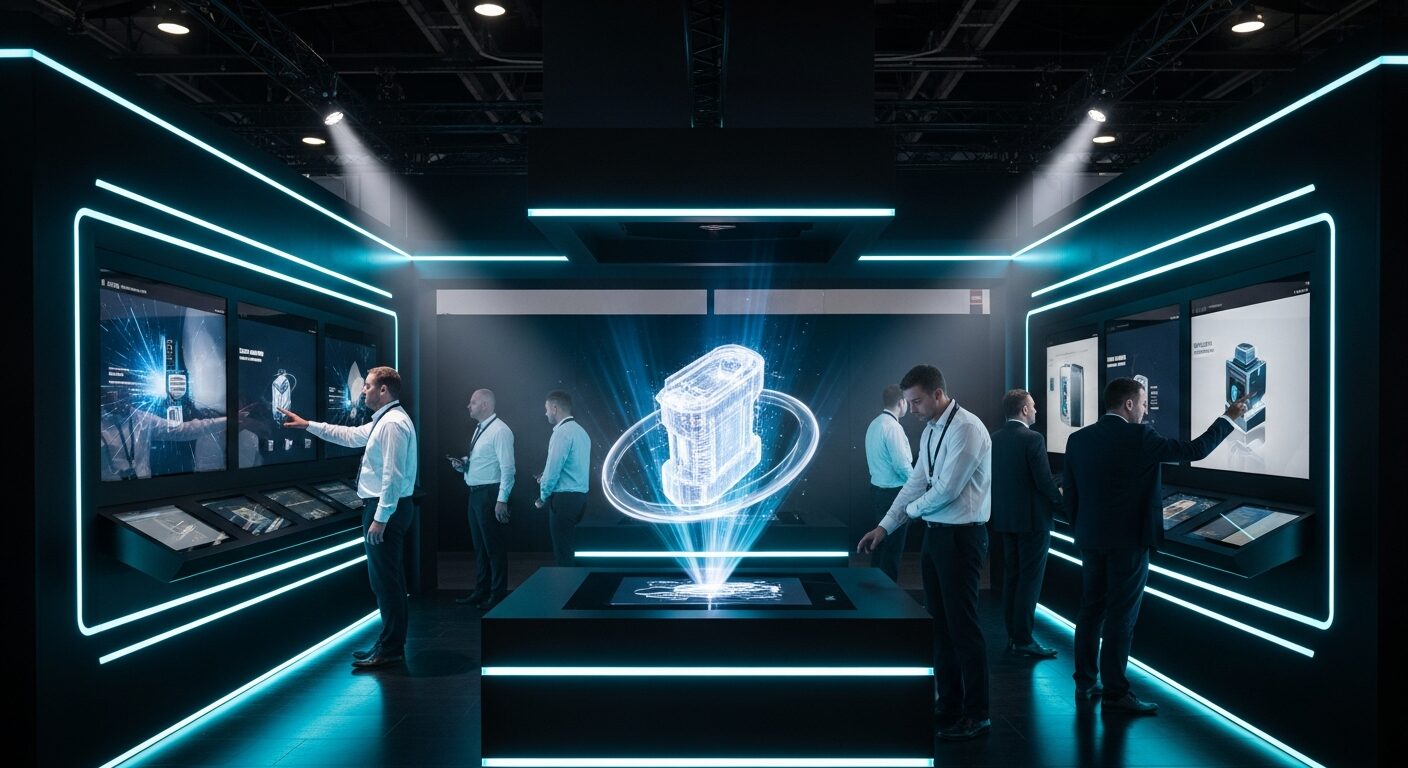
Comparison of holographic display technologies
Modern Pepper's Ghost systems use precision-engineered holographic film that is nearly invisible from the front, high-brightness projectors (typically 10,000–30,000 lumens), and carefully controlled stage lighting to create remarkably convincing holographic illusions. The technique is used for holographic stage presentations, museum figure displays, and experience centre installations.
The primary advantages of Pepper's Ghost are visual quality (high resolution, good colour reproduction, life-scale presentation), audience capacity (large groups can view simultaneously), and proven reliability. The primary limitation is viewing angle — the illusion is optimised for a specific audience position relative to the screen.
Holographic Fan Displays
Holographic fan displays use rapidly spinning LED strips to render three-dimensional imagery in mid-air. As the LEDs rotate at high speed, they display different image data at each angular position, creating the persistence-of-vision effect that makes the content appear to float as a continuous holographic image.
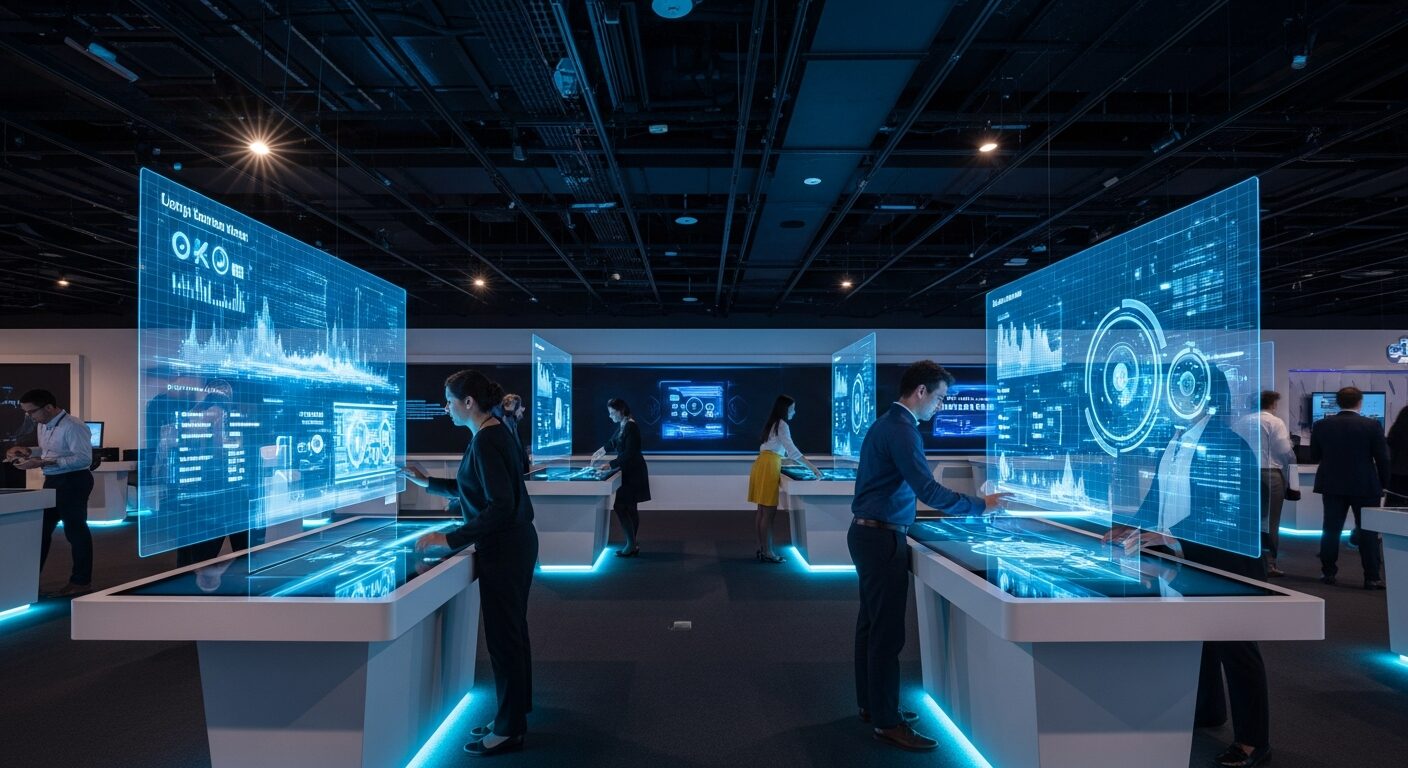
Holographic display technical workflow
Modern holographic fans achieve resolutions up to 1080 pixels across the display diameter, with rotation speeds of 700+ RPM creating smooth, flicker-free imagery. Multiple fans can be synchronised into arrays to create larger holographic displays — wall-sized installations composed of dozens of individual fan units presenting unified content.
Holographic fans are particularly effective in environments where ambient light cannot be fully controlled, as the LED brightness overcomes competing light sources. They are commonly used in retail displays, exhibition booths, event installations, and architectural features where the spinning fan mechanism itself adds visual intrigue.
Volumetric and Light-Field Displays
True volumetric displays project light into a three-dimensional volume of space, creating content that can be viewed from any angle without the viewing-position limitations of Pepper's Ghost or fan systems. These displays use techniques including rotating screens, laser plasma excitation, and multi-layered transparent panels to place visual information at genuine three-dimensional coordinates.
Light-field displays represent the cutting edge of holographic technology — reconstructing the actual light field that would be emitted by a real three-dimensional object. Viewers see correct parallax, focus, and occlusion from any viewing position, creating the most realistic holographic experience currently achievable.
While volumetric and light-field displays offer the most convincing holographic imagery, they remain more expensive and technically complex than Pepper's Ghost and fan systems. Their use is currently concentrated in high-value applications including medical visualisation, scientific research, and premium corporate installations where the quality advantage justifies the investment.
Transparent LED Display Systems
Transparent LED panels are self-emitting display surfaces that show vivid content while remaining see-through when inactive. Unlike projection-based holographic systems, transparent LED displays do not require controlled ambient lighting — they produce their own light and can compete with bright environments.
Transparent LED panels are available in various pixel pitches (typically 3–10mm), with higher-resolution panels suitable for close viewing and larger pixel pitches designed for viewing distances of several metres. Panels can be assembled into any size and shape configuration, from small product displays to building-scale architectural installations.
In experience centre and museum applications, transparent LED displays are used for cases where holographic content must be overlaid onto physical environments without blocking the view behind the display — such as museum display cases, architectural windows, and retail environments where products behind the screen must remain visible.
Related Technologies
Explore the capabilities mentioned in this article.
Related Solutions
Frequently Asked Questions
Which holographic technology looks most realistic?
For life-sized figure presentations, Pepper's Ghost systems currently deliver the most convincing visual quality due to high resolution and life-scale presentation. For product displays and eye-catching visuals, holographic fans create impressive floating imagery. For true 3D viewing from any angle, volumetric displays are most realistic but most expensive.
Can holographic projections be touched or interacted with?
Holographic imagery itself cannot be physically touched, but holographic installations can incorporate gesture sensors and motion tracking to create the impression of interaction. Visitors can wave hands through holographic content and trigger responses, creating convincing interactive experiences.
How much do holographic projection systems cost?
Costs vary enormously by technology and scale. Small holographic fan displays start from a few hundred pounds, while large-scale Pepper's Ghost installations for experience centres can range from tens of thousands to several hundred thousand pounds depending on size, brightness, and integration complexity.
Do holographic systems need regular maintenance?
Yes. Projector-based systems require lamp or laser source replacement at intervals of 20,000–50,000 hours. LED-based systems have longer component lifespans but still benefit from regular cleaning and calibration. All systems should have preventive maintenance schedules appropriate to their operating environment.
Related Articles
Planning a Holographic Installation?
Our experience design team creates immersive holographic environments for museums, experience centres, and public installations.