
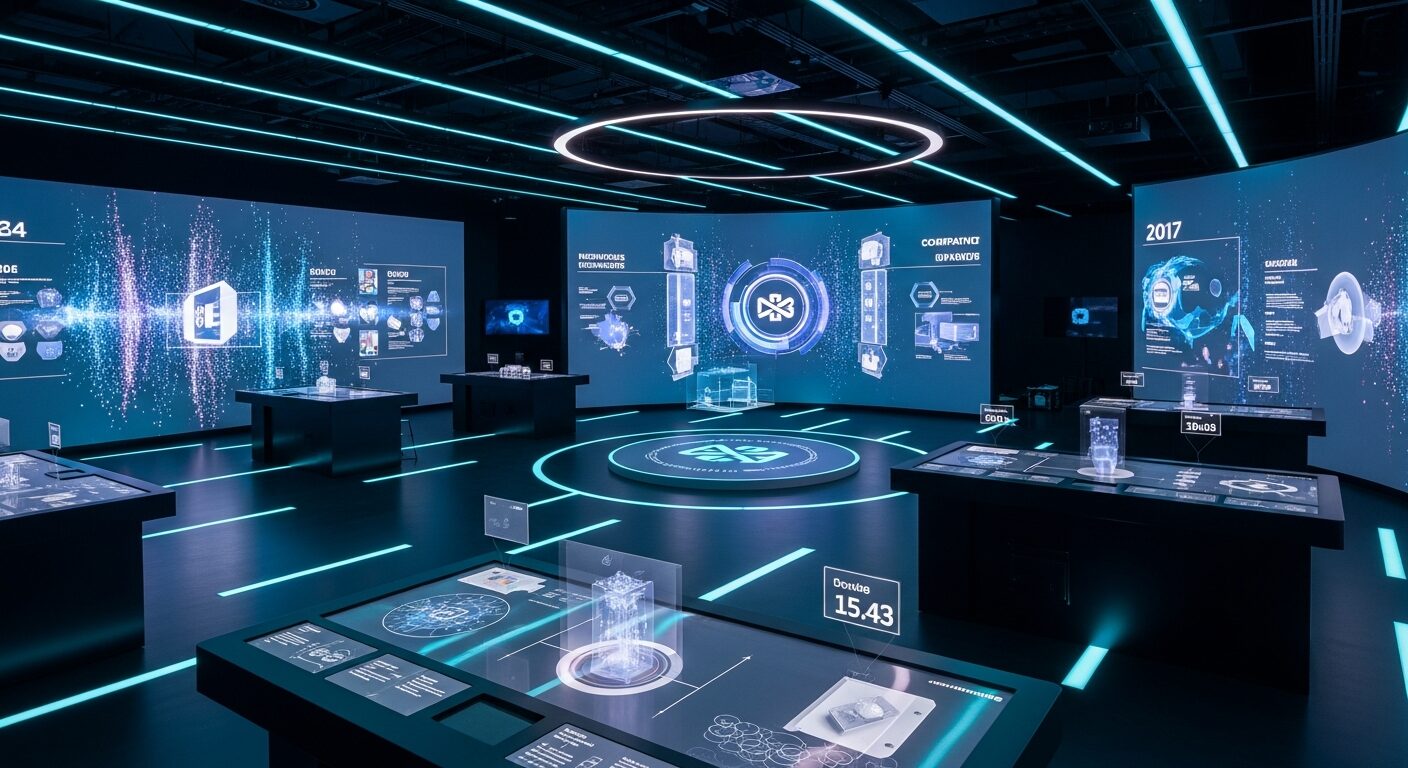
Next‑Gen Digital Experience Centres – Innovation & Holograms
Digital experience centres are evolving rapidly — driven by advances in spatial computing, AI-driven content personalisation, holographic display technology, and sustainable design practices. The next generation of experience centres will deliver more personalised, more immersive, and more meaningful visitor experiences than anything currently possible.
For organisations planning experience centre investments, understanding these emerging trends is essential for making future-proof decisions. The technology choices made today will determine whether an experience centre remains compelling and relevant for five, ten, or fifteen years — or requires expensive replacement within a few years as expectations advance.
AI-Driven Personalised Experiences
Artificial intelligence is enabling experience centres to adapt content and narratives to individual visitors in real time. Rather than presenting identical content to every visitor, AI-driven systems can analyse visitor behaviour — movement patterns, dwell times, interaction choices, and expressed preferences — to customise the experience dynamically.
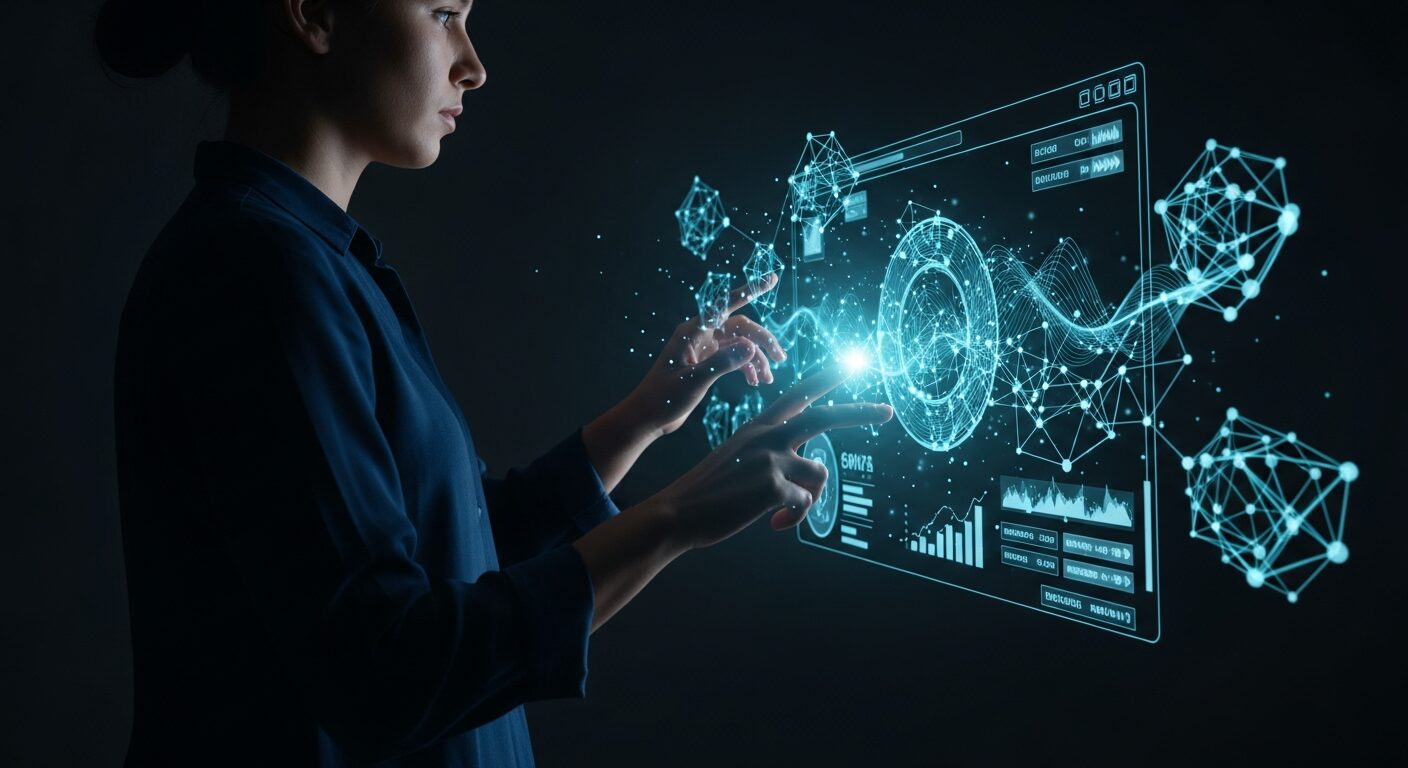
Holographic display technical workflow
This might mean adjusting the depth of technical content based on detected expertise level, changing language and narrative style for different audience types, or highlighting content themes that match individual interests. The visitor experience becomes a conversation rather than a broadcast — responsive, relevant, and personally meaningful.
AI also enables intelligent content recommendation — suggesting which zones to visit next based on what a visitor has already experienced, ensuring that the journey through the experience centre feels curated and coherent rather than random. Over time, AI systems learn from aggregate visitor behaviour, helping operators identify which experiences resonate most strongly and where content updates would have the greatest impact.
Spatial Computing and Mixed Reality Integration
Spatial computing — the convergence of augmented reality, computer vision, and environmental sensing — is creating new possibilities for experience centre design. Visitors equipped with lightweight AR devices can see holographic overlays integrated seamlessly into physical environments, creating experiences where digital and physical content coexist indistinguishably.
This technology enables experience centres to layer multiple content dimensions onto a single physical space. A corporate innovation centre might present its current product portfolio through physical displays and holographic overlays while simultaneously offering a future vision layer showing products in development. Visitors switch between layers through natural gestures or simple controls.
Environmental sensors enable physical spaces to respond to visitor presence without wearable devices. Rooms that adjust lighting, audio, and projected content based on who enters and where they stand create responsive environments that feel alive and attentive.
Holographic Telepresence
Holographic telepresence — the ability to project a live person as a life-sized hologram in a remote location — is transforming how experience centres deliver expert presentations and personal interactions. Rather than pre-recorded content, visitors can interact with live presenters who appear as holographic figures within the experience centre.
This technology enables organisations to feature their leading experts, executives, and spokespeople in experience centres worldwide without travel. A CEO in New York can deliver a holographic presentation to visitors in Bangalore, answer questions in real time, and appear to stand physically in the room.
As bandwidth and rendering technology improve, holographic telepresence will become increasingly indistinguishable from physical presence — enabling experience centres to offer exclusive, personalised interactions with key figures that would be impossible to scale through physical appearances alone.
Sustainable Experience Centre Design
Sustainability is becoming a core design consideration for experience centres. Organisations are increasingly concerned about the environmental impact of their installations — from energy consumption during operation to the embodied carbon of construction materials and the end-of-life disposal of electronic components.
Energy-efficient display technologies, intelligent power management systems, and LED-based projection are reducing operational energy consumption. Modular construction systems that can be reconfigured rather than demolished when content changes reduce material waste and extend installation lifespans.
Content update strategies that refresh experiences through software rather than hardware replacement align with circular economy principles. Experience centres designed for longevity — with upgradeable components, adaptable spatial configurations, and flexible content platforms — deliver both environmental and economic sustainability.
Related Technologies
Explore the capabilities mentioned in this article.
Related Solutions
Frequently Asked Questions
How far away are AI-personalised experience centres?
Basic AI personalisation is already being deployed in advanced experience centres. Fully adaptive AI-driven visitor journeys are expected to become mainstream within 3–5 years as the technology matures and visitor privacy frameworks evolve.
Will holographic telepresence replace pre-recorded content?
Holographic telepresence will complement rather than replace pre-recorded content. Pre-recorded holographic presentations ensure consistent quality and availability, while live telepresence adds exclusivity and interactivity for special events, VIP visits, and expert consultations.
How can experience centres be made more sustainable?
Key strategies include using energy-efficient display technology, designing modular systems that can be reconfigured rather than replaced, implementing intelligent power management, choosing sustainable construction materials, and planning content refresh strategies that minimise hardware waste.
Related Articles
Planning a Holographic Installation?
Our experience design team creates immersive holographic environments for museums, experience centres, and public installations.