
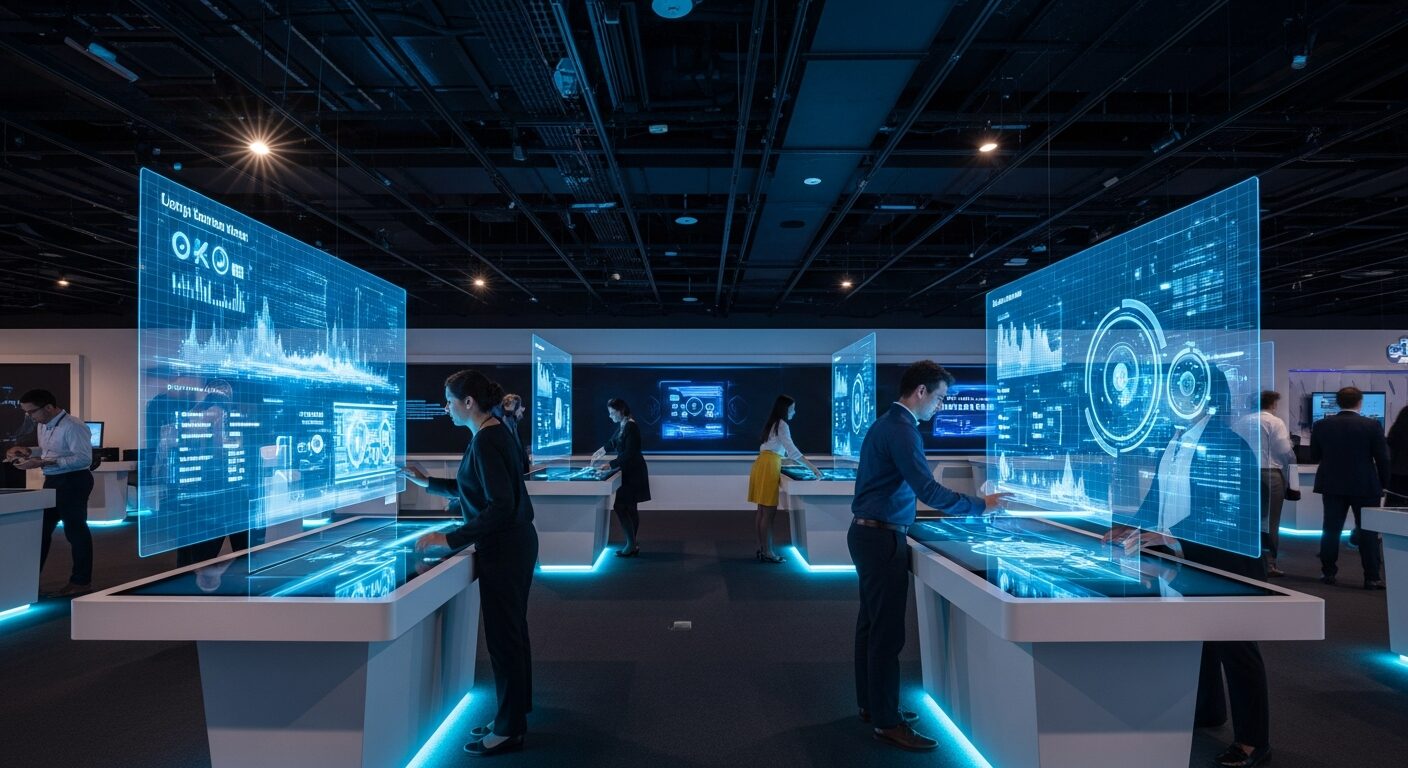
Training & Simulation
Immersive holographic training environments and simulation systems for skill development, procedural training, and scenario-based learning.
Training and simulation represent one of the most impactful applications of immersive technology — creating environments where personnel develop critical skills, practise complex procedures, and respond to realistic scenarios without the risks, costs, or logistical challenges of real-world training exercises.
Vision3D designs immersive training environments that combine holographic displays, interactive projection systems, and spatial simulation technology to create training spaces where theory meets practice. Our installations serve industries where procedural accuracy, safety awareness, and operational competence are essential — from industrial operations and emergency response to technical maintenance and strategic planning.
Every training installation is designed around learning objectives — ensuring that immersive technology serves pedagogical goals rather than existing as spectacle. Interactive assessments, scenario branching, and performance tracking are integrated to provide measurable training outcomes.
Interactive projection system architecture
Industry Challenges
Replicating Real-World Environments
Effective training requires realistic environmental context that classrooms and computer-based modules cannot provide — trainees need to practise in conditions that mirror real operational settings.
Risk-Free Skill Development
High-risk industries need training environments where personnel can practise dangerous procedures, emergency responses, and equipment operation without real-world consequences.
Consistent Training Quality
Training delivered by instructors varies in quality and consistency — immersive environments ensure every trainee receives the same high-quality, standardised experience.
Measuring Training Effectiveness
Traditional training methods make it difficult to objectively measure skill acquisition and procedural compliance, limiting the ability to identify gaps and improve programmes.
How Immersive Technology Solves Them
Immersive Training Environments
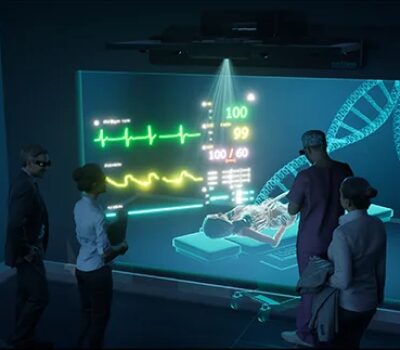
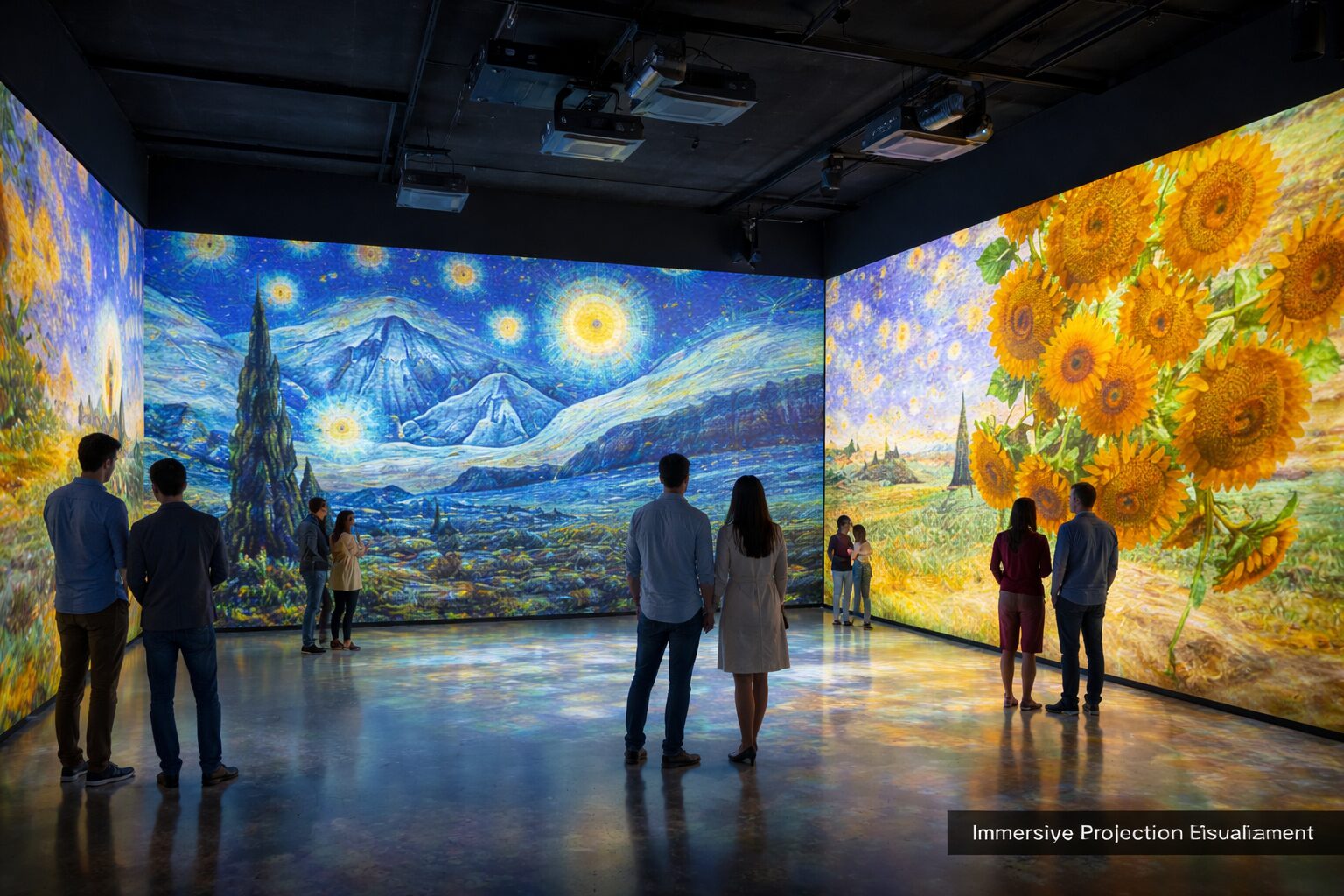
Holographic room and immersive projection systems create realistic operational environments where trainees practise procedures, make decisions, and develop skills in contextually accurate spatial settings.
Holographic Procedural Visualisation
Holographic wall displays present complex procedures, equipment systems, and operational sequences as three-dimensional spatial narratives that improve comprehension and retention.
Interactive Scenario Simulation
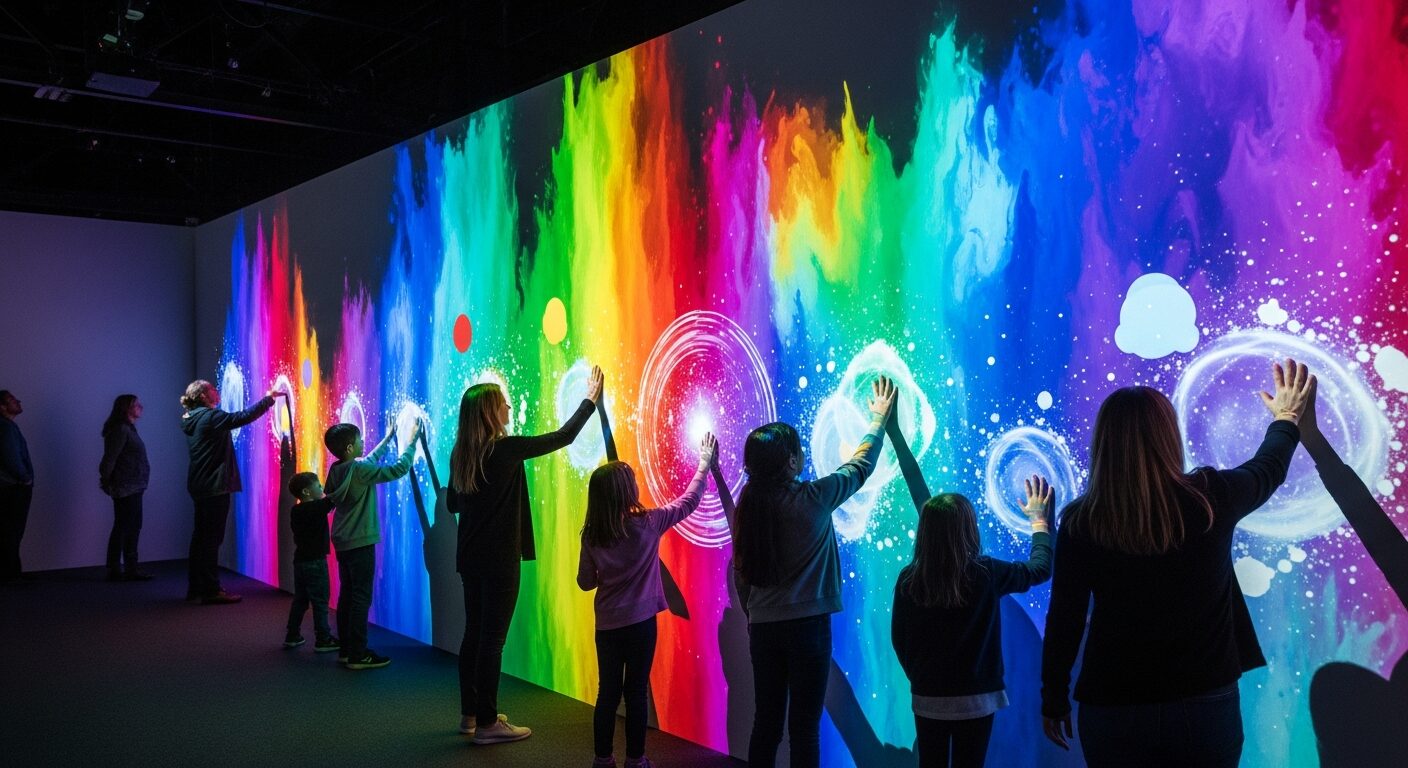
Interactive projection systems create responsive training scenarios where trainee actions trigger realistic consequences, enabling experiential learning through cause-and-effect engagement.
Gesture-Based Equipment Interaction
Gesture interaction systems simulate equipment operation and procedural tasks, allowing trainees to practise physical workflows in holographic environments without actual equipment.
Relevant Solutions
Explore solutions designed for this industry.
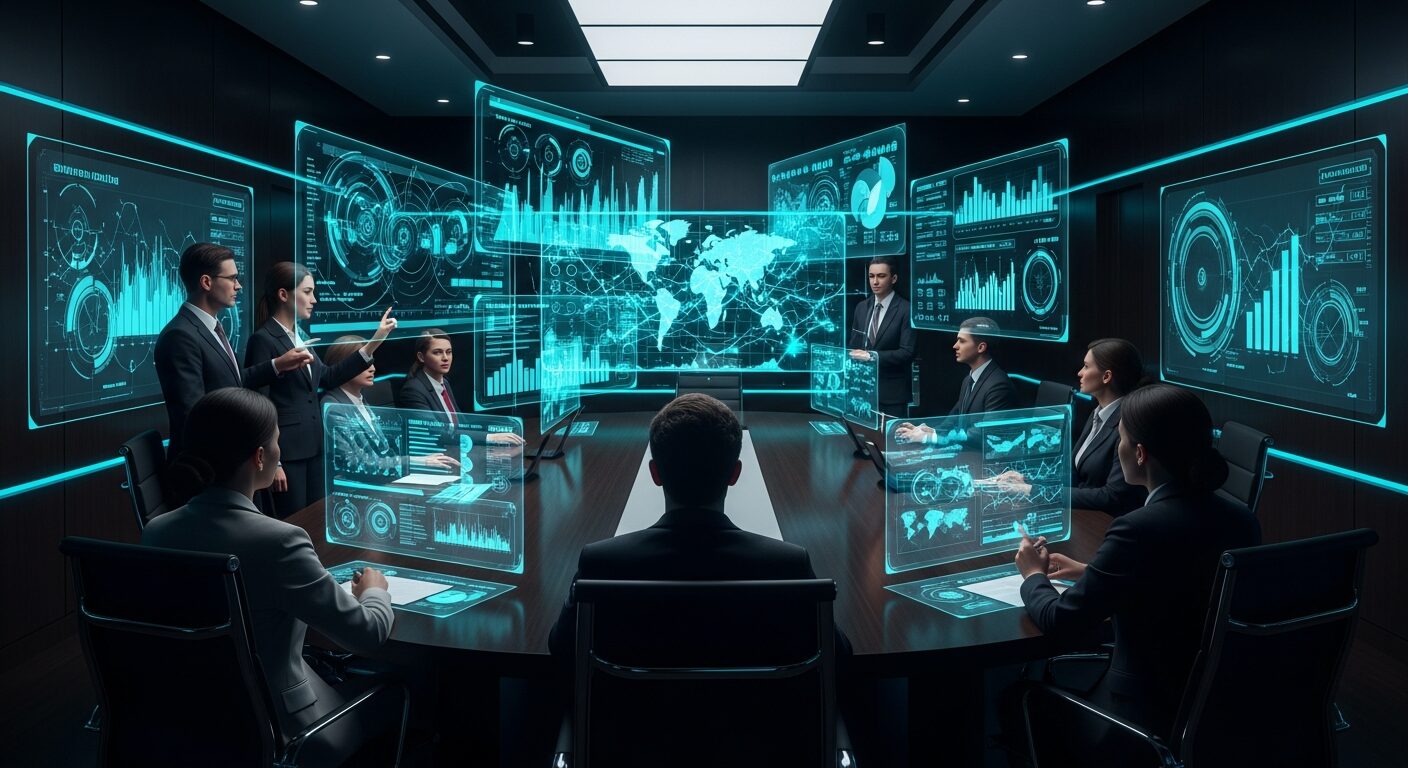
Technologies Used
Capabilities from our technology portfolio that power solutions in this industry.

Related Insights
Start a Conversation
Tell us about your training & simulation project. We'll explore how immersive technology can transform your space and engage your audience.