
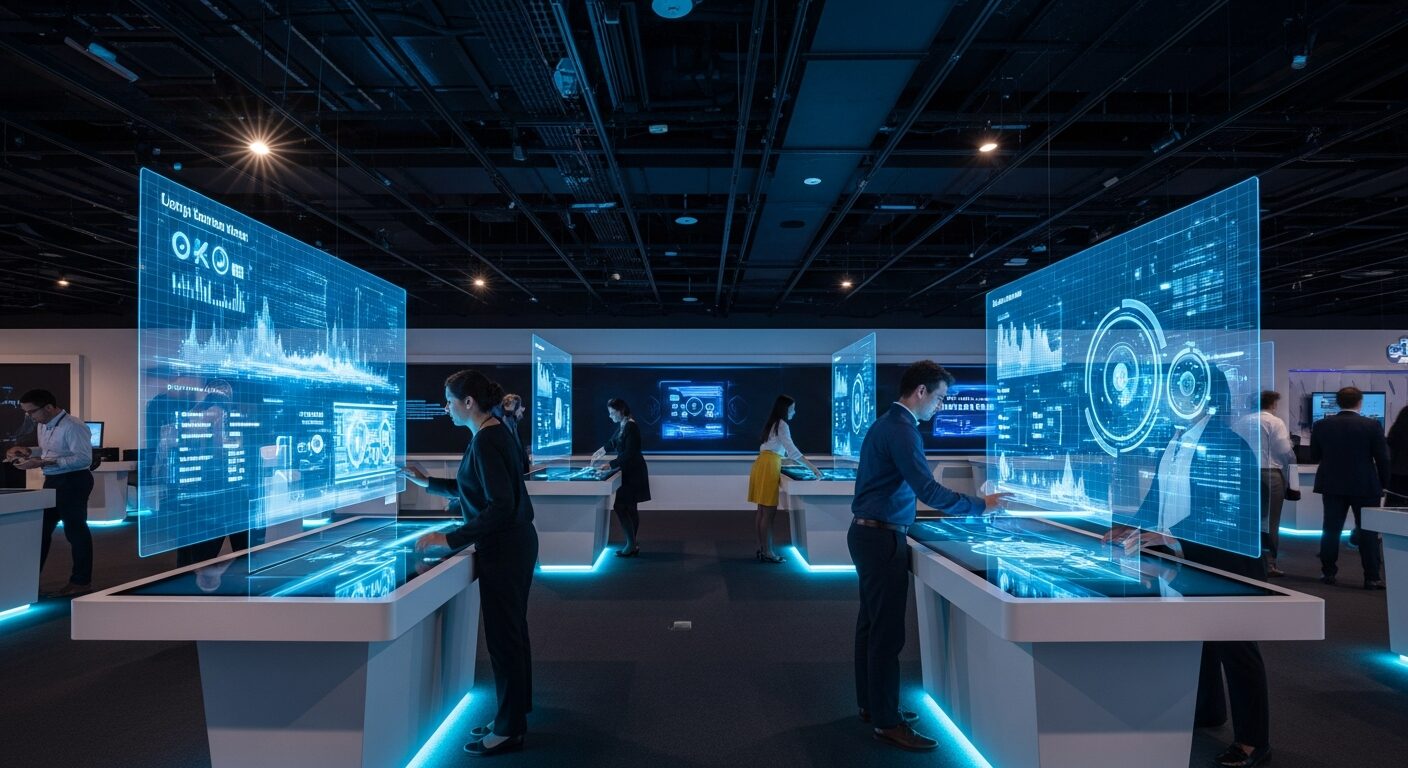
Education
Holographic displays and interactive systems that transform classrooms and institutions into engaging learning environments.
Education is undergoing a fundamental transformation as institutions recognise that traditional lecture formats and textbook-based learning cannot fully engage modern students. Immersive technology offers a pathway to deeper understanding — making abstract concepts tangible, complex systems visible, and historical events experienceable.
Vision3D designs interactive learning environments that combine holographic displays, projection-based interactive surfaces, and spatial computing to create educational experiences where students do not just observe — they explore, interact, and discover. Our installations serve universities, schools, training centres, and institutional learning spaces.
From holographic anatomy displays and interactive historical timelines to immersive geography environments and collaborative science exploration surfaces, our education technology is designed around pedagogical objectives, curriculum integration, and long-term institutional operation.
Industry Challenges
Engaging Digital-Native Learners
Students raised on interactive media expect learning experiences that match the engagement levels of the technology they use daily — static lectures and textbooks often fail to hold attention.
Making Abstract Concepts Tangible
Complex subjects in science, history, engineering, and medicine are difficult to grasp through two-dimensional materials alone — learners need spatial, hands-on experiences.
Scalable Content Delivery
Educational institutions need technology that supports curriculum updates and content changes without requiring complete system overhauls each academic year.
Inclusive Learning for All Abilities
Technology must accommodate diverse learning styles and abilities, providing visual, auditory, and kinesthetic pathways to knowledge.
How Immersive Technology Solves Them
Holographic Visualisation of Complex Subjects
Holographic displays present scientific models, historical reconstructions, and engineering systems as three-dimensional objects that students can examine from every angle.
Interactive Learning Surfaces
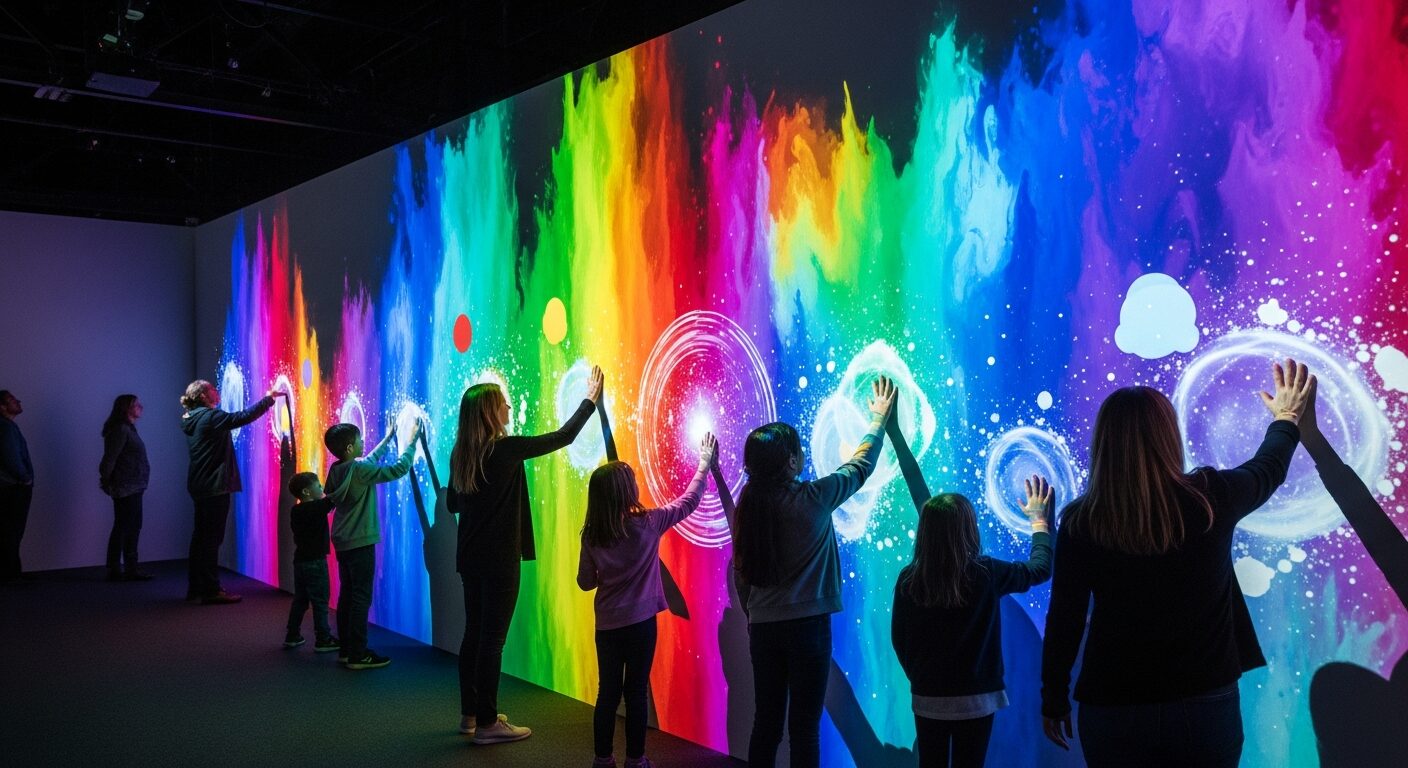
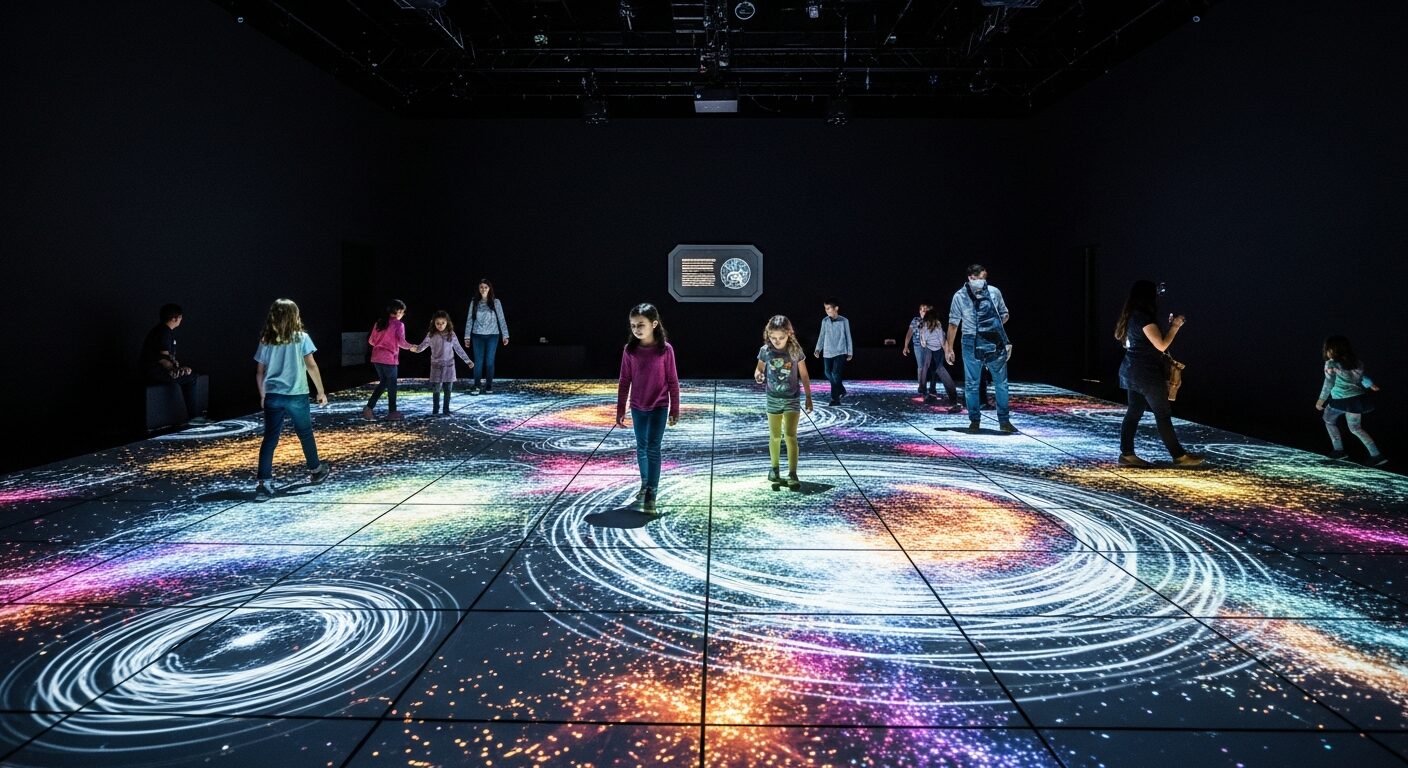
Projection-based interactive floors and walls transform classrooms into collaborative learning environments where students physically engage with educational content.
Spatial Learning Environments
Immersive projection systems create full-room learning environments that transport students to historical periods, scientific environments, and geographical locations.
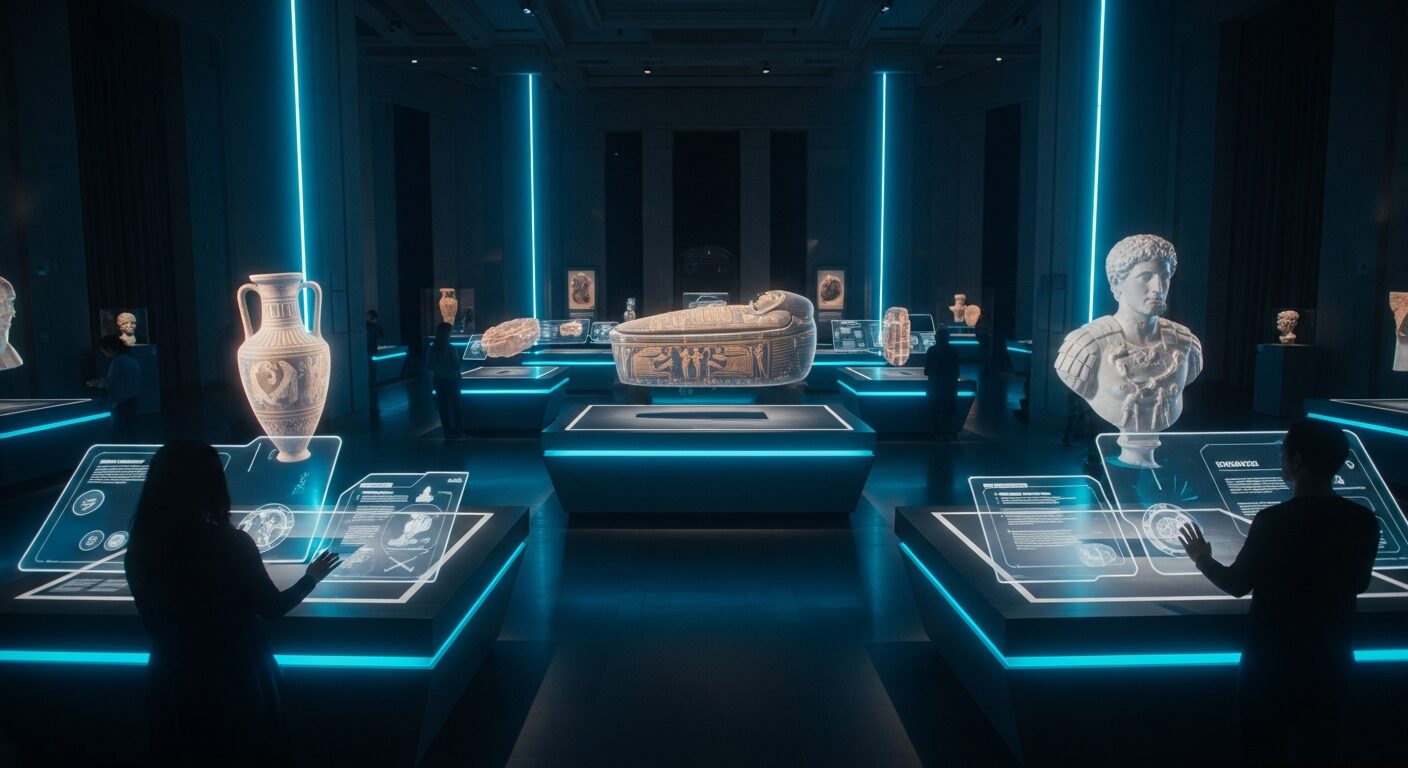
Digital Artefact Libraries
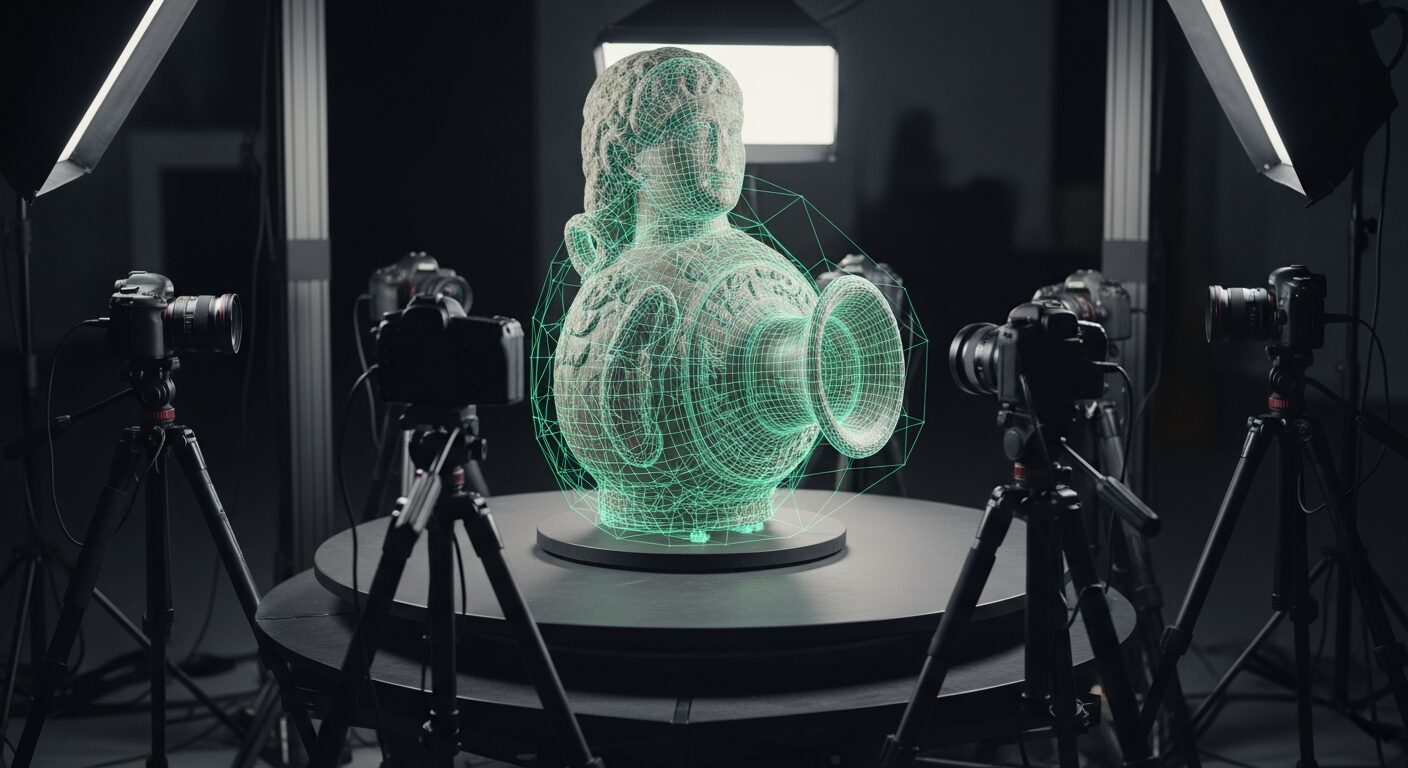
3D digitisation creates detailed digital replicas of specimens, artefacts, and models that can be explored holographically without risk to original objects.
Relevant Solutions
Explore solutions designed for this industry.
Technologies Used
Capabilities from our technology portfolio that power solutions in this industry.
Related Insights
Start a Conversation
Tell us about your education project. We'll explore how immersive technology can transform your space and engage your audience.