
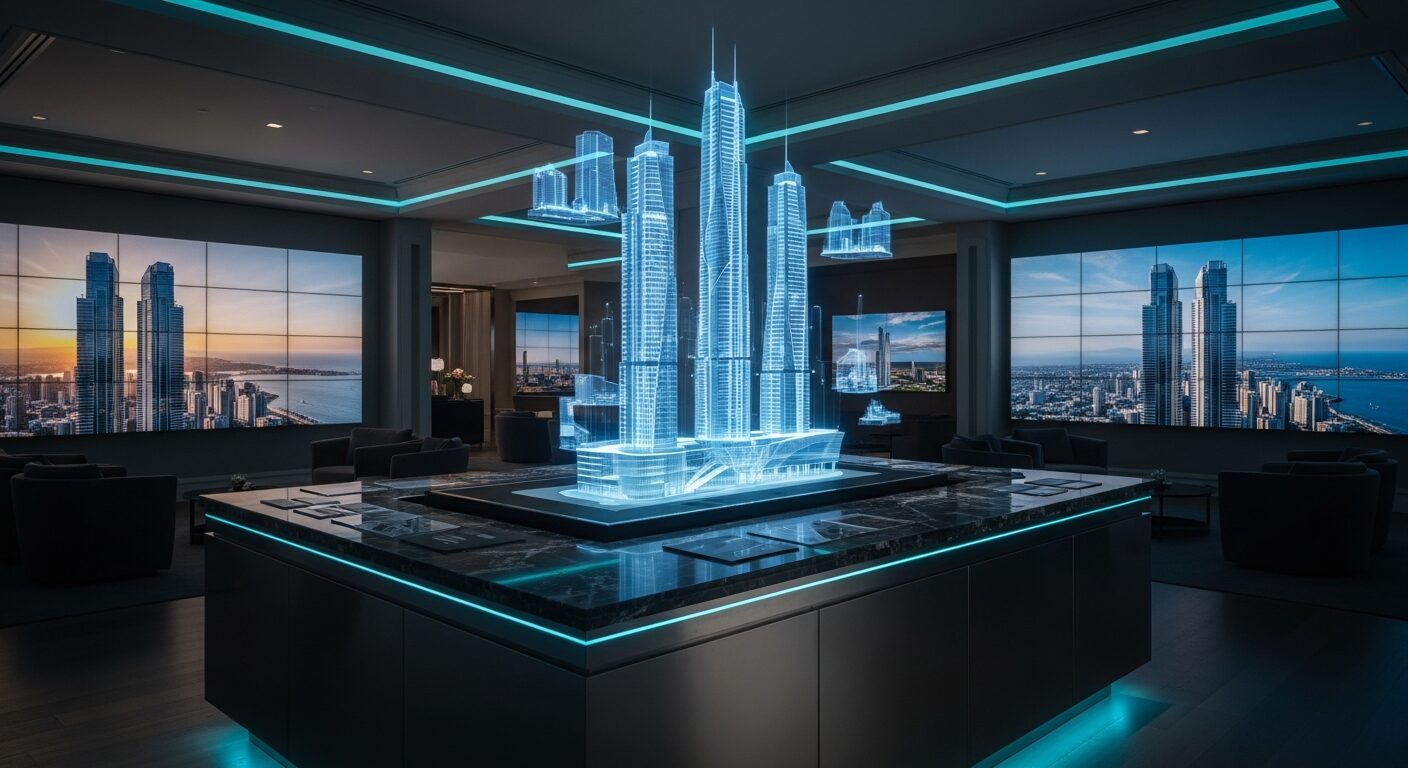
Architecture & Construction
Holographic architectural visualisation and immersive spatial environments for design review, stakeholder presentation, and construction planning.
Architecture is fundamentally a spatial discipline, yet the tools used to communicate architectural ideas — drawings, renderings, and physical models — often fail to convey the true experience of inhabiting a designed space. Stakeholders struggle to understand proportions, light qualities, and spatial relationships from flat representations alone.
Vision3D brings holographic visualisation and immersive spatial technology into architectural practice, enabling architects to present designs as three-dimensional holograms, walk stakeholders through full-scale immersive environments, and capture existing conditions through precision LiDAR scanning for holographic integration.
Our architectural installations serve design studios, developer presentation suites, planning consultation environments, and construction coordination facilities — providing spatial communication tools that improve design decisions, accelerate stakeholder alignment, and reduce costly construction-phase changes.
Industry Challenges
Communicating Spatial Design Intent
Architectural designs are inherently three-dimensional, yet most presentation tools reduce them to flat renderings and floor plans that fail to convey the spatial experience of a building.
Stakeholder Alignment
Architects must align diverse stakeholders — developers, planners, community groups, and construction teams — around a shared spatial vision that each group interprets differently.
Design Review Accuracy
Identifying spatial conflicts, proportional issues, and design opportunities requires the ability to examine architectural models at multiple scales with true three-dimensional perspective.
Construction Coordination
Complex construction projects involve multiple trades and systems that must be coordinated in three-dimensional space, requiring spatial planning tools beyond traditional 2D drawings.
How Immersive Technology Solves Them
Holographic Architectural Models
Holographic table and wall displays present architectural designs as interactive three-dimensional models that stakeholders can explore from every angle, examining details, context, and spatial relationships.
Immersive Spatial Walkthroughs
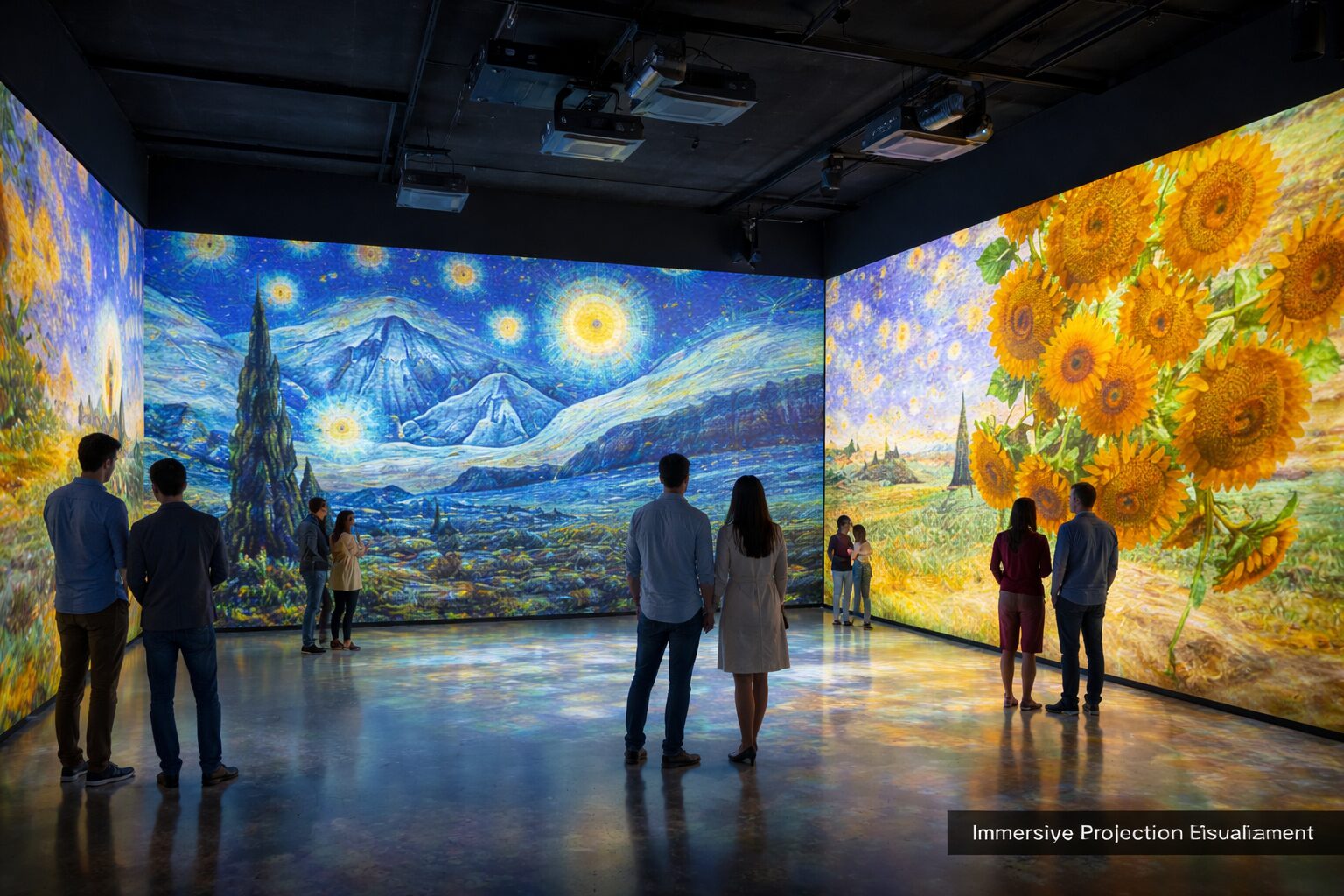
Immersive projection environments allow architects and stakeholders to walk through unbuilt spaces at full scale, experiencing proportions, light, and atmosphere before construction begins.
LiDAR-Based Site Documentation
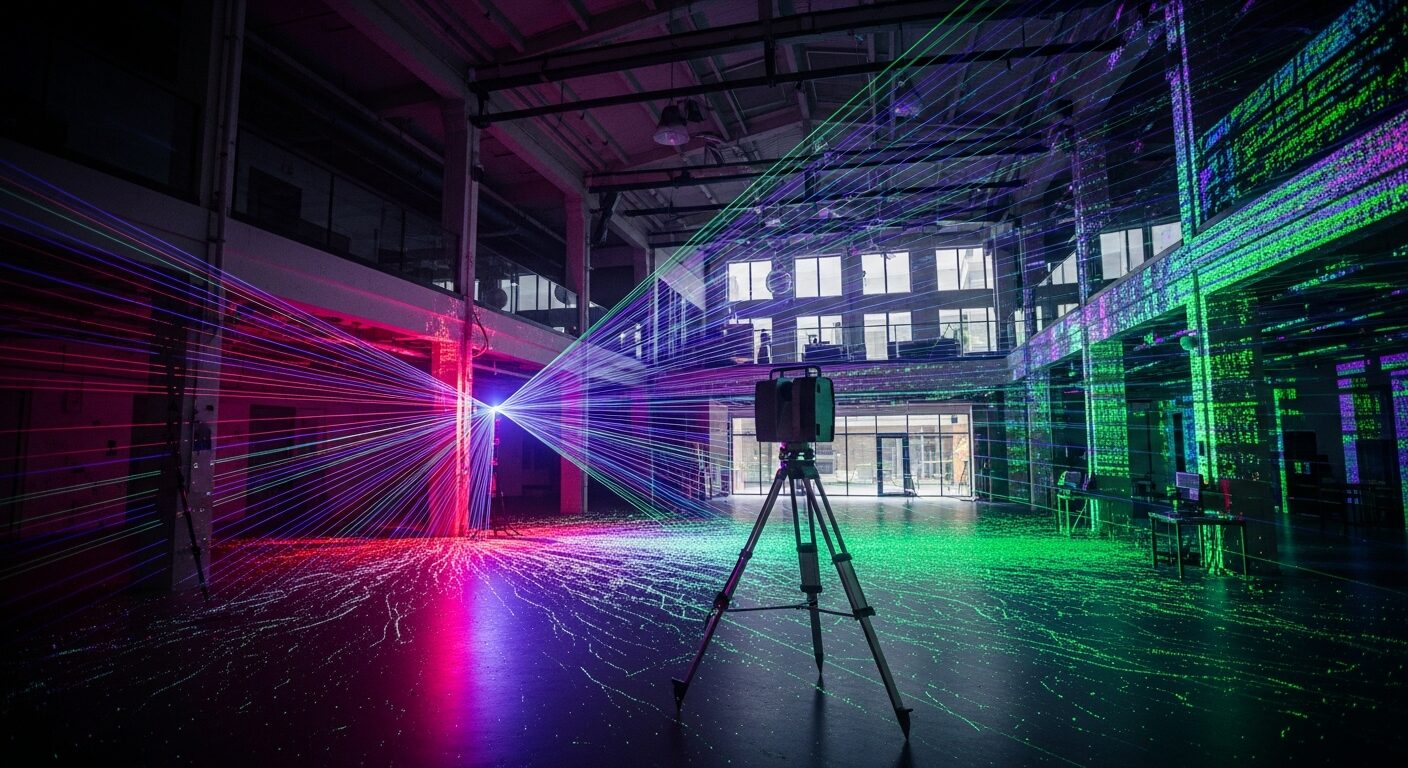
LiDAR scanning captures existing site conditions as precise three-dimensional point clouds, providing accurate spatial context for design development and construction planning.
Virtual Tour Distribution
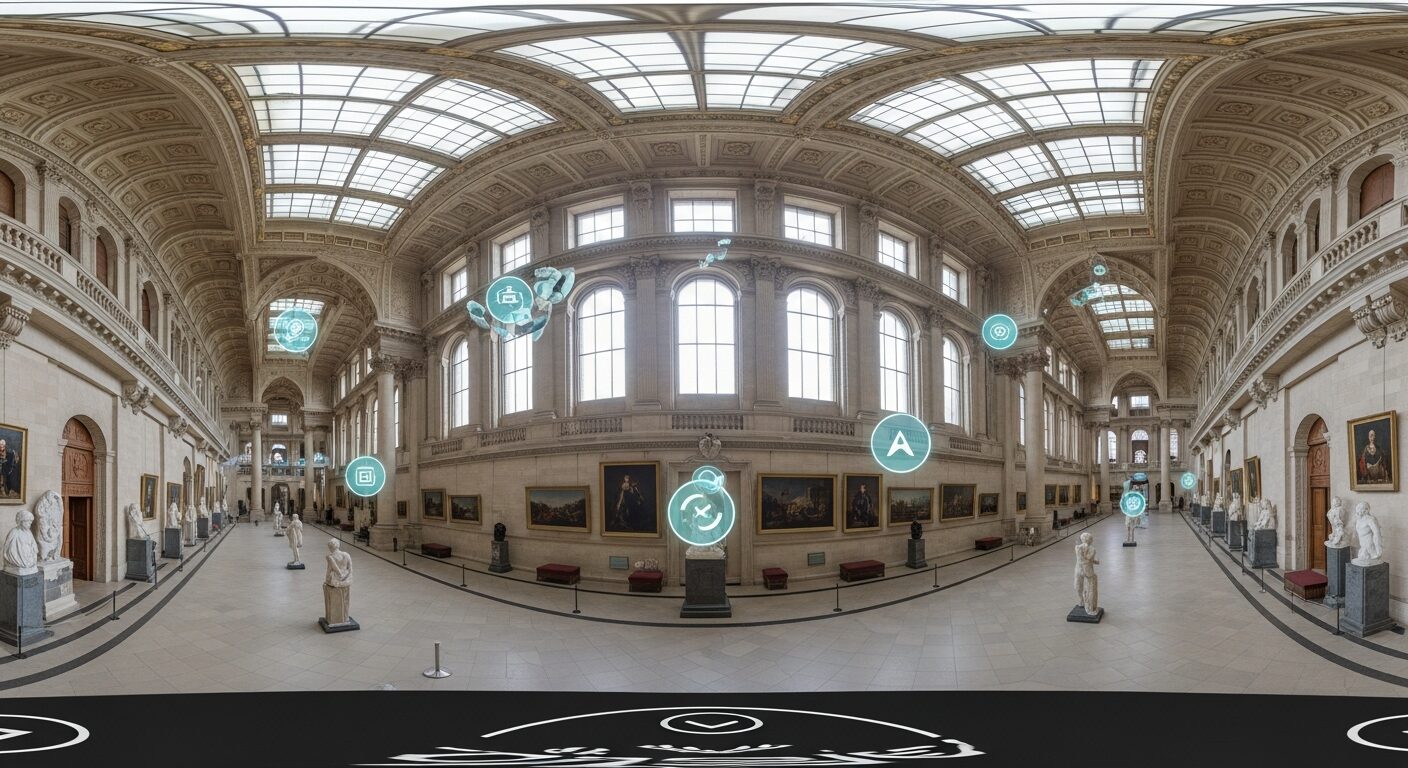
Virtual tour experiences extend architectural presentations beyond the design studio, enabling remote stakeholders to explore proposed designs interactively from any location.
Relevant Solutions
Explore solutions designed for this industry.
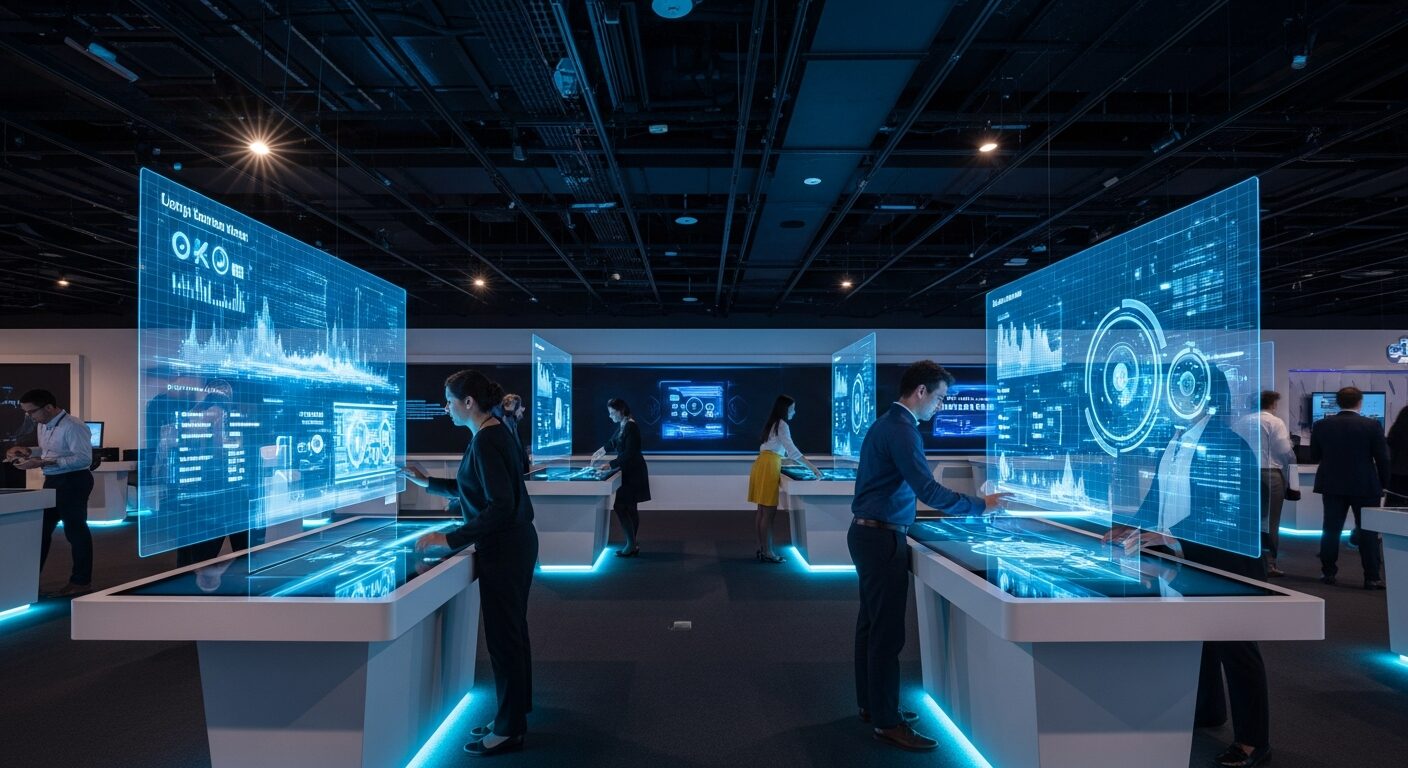
Technologies Used
Capabilities from our technology portfolio that power solutions in this industry.
Related Insights
Start a Conversation
Tell us about your architecture & construction project. We'll explore how immersive technology can transform your space and engage your audience.