
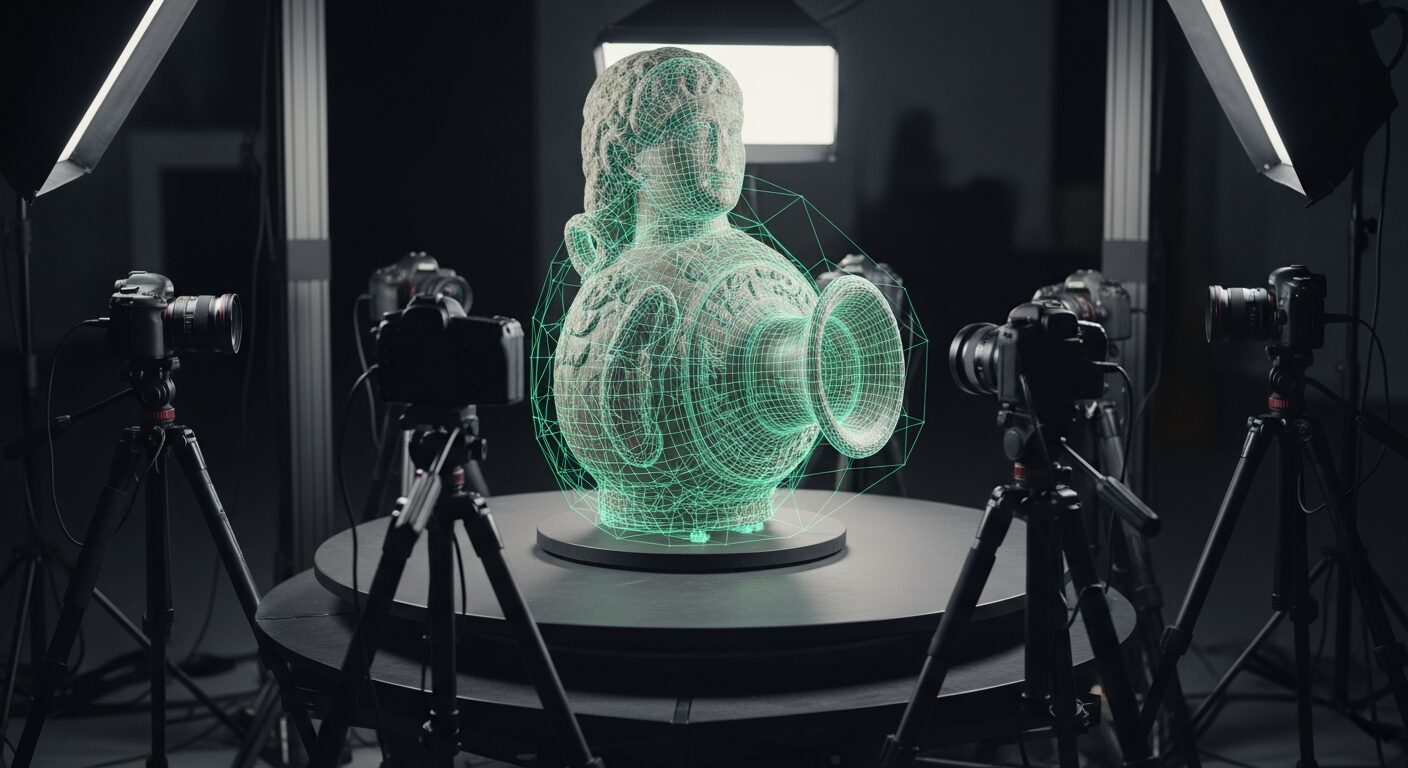
3D Digitisation Services – High-Precision 3D Scanning & Modeling
3D digitisation captures physical objects — artefacts, sculptures, heritage items, products, and specimens — as precise digital replicas using photogrammetry, structured-light scanning, and specialised capture techniques. These digital assets serve as the foundation for holographic display, virtual museum collections, research archives, and interactive exploration experiences.
Vision3D operates a comprehensive 3D digitisation pipeline that captures objects at exceptional fidelity — from surface geometry and texture detail to material properties and colour accuracy. Each digital replica is production-ready for holographic showcase, virtual tour integration, 3D printing, and interactive application deployment.
Our digitisation work serves museums, heritage institutions, research organisations, and commercial clients who need their physical assets transformed into versatile digital formats that extend access, enable preservation, and support new forms of presentation and engagement.
Digital twin creation and synchronisation architecture
Technology Overview
3D digitisation combines multiple capture technologies to create accurate digital replicas of physical objects, selecting the optimal approach based on object size, material, and intended use.
Photogrammetry
Multi-angle photography processed through photogrammetric software to reconstruct accurate 3D geometry and photorealistic texture from hundreds of calibrated images.
Structured-Light Scanning
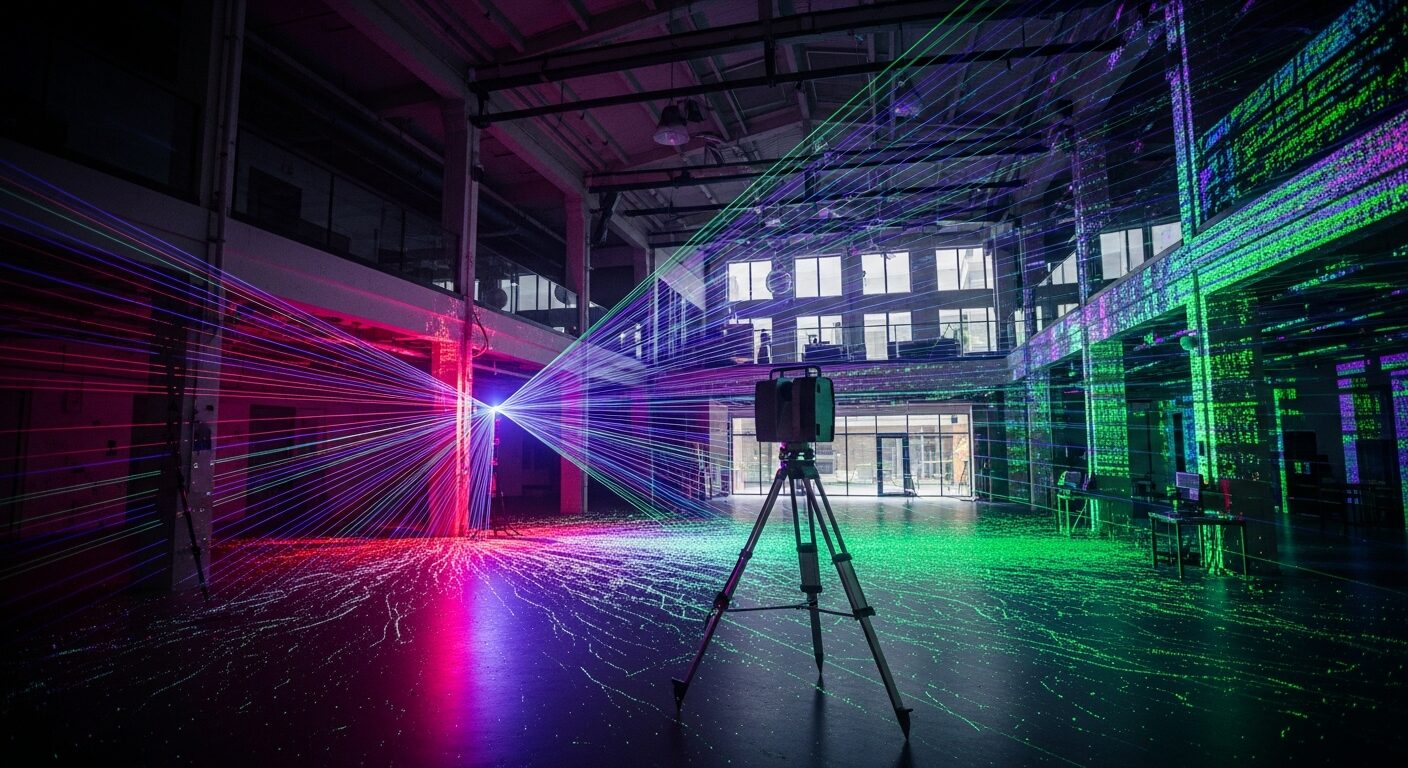
Projected light pattern scanning that captures surface geometry with high precision, ideal for detailed objects with complex surface features.
Texture & Material Capture
Specialised photography and processing techniques that capture surface materials, reflectance properties, and colour accuracy beyond simple texture mapping.
Digital Asset Optimisation
Post-processing pipeline that optimises 3D models for various output formats — high-detail holographic display, web-based viewing, AR integration, and 3D printing.
Applications
Museum Collection Digitisation
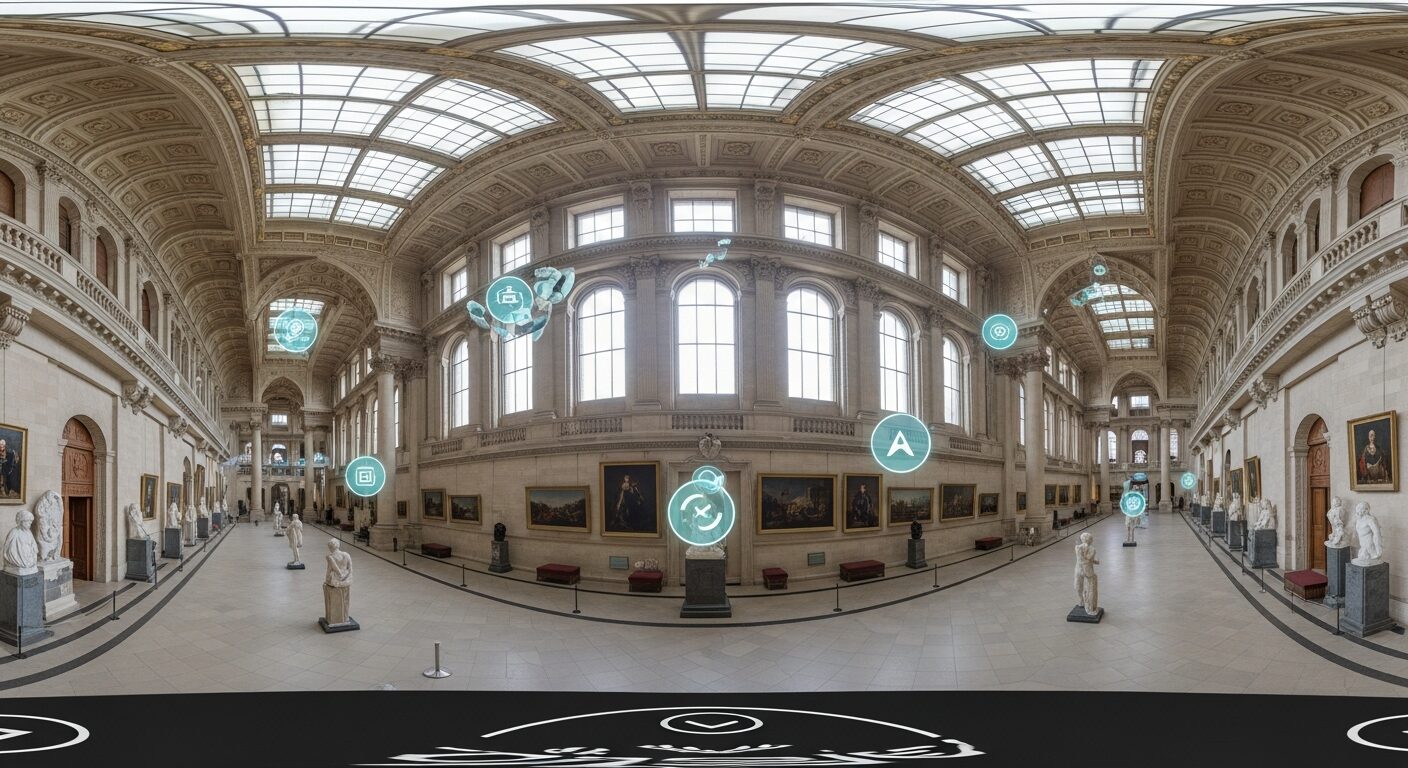
Create digital replicas of museum collections for online access, virtual exhibitions, research sharing, and preservation of fragile or restricted artefacts.
Heritage Object Preservation
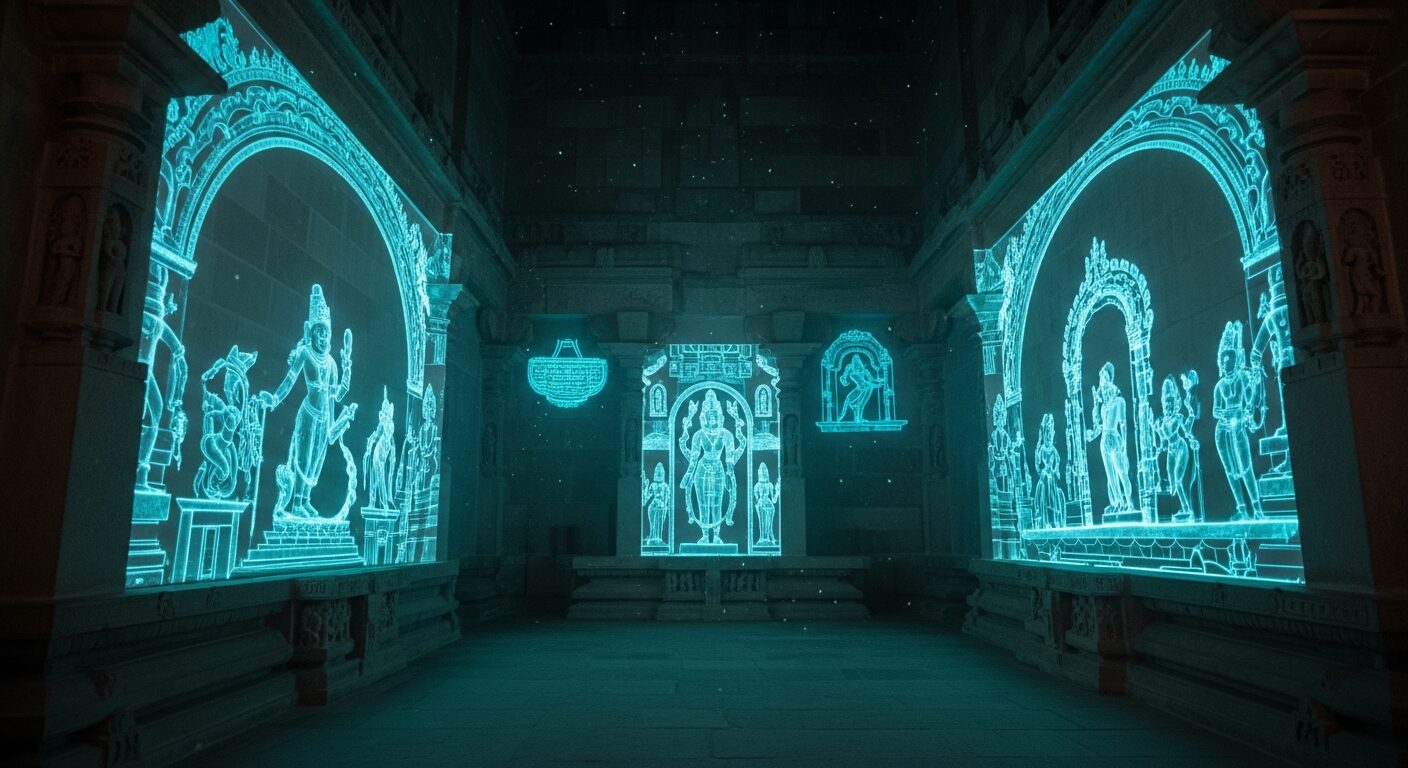
Digitise heritage objects and cultural artefacts to create permanent digital records that survive physical deterioration, damage, or loss.
Holographic Object Showcase
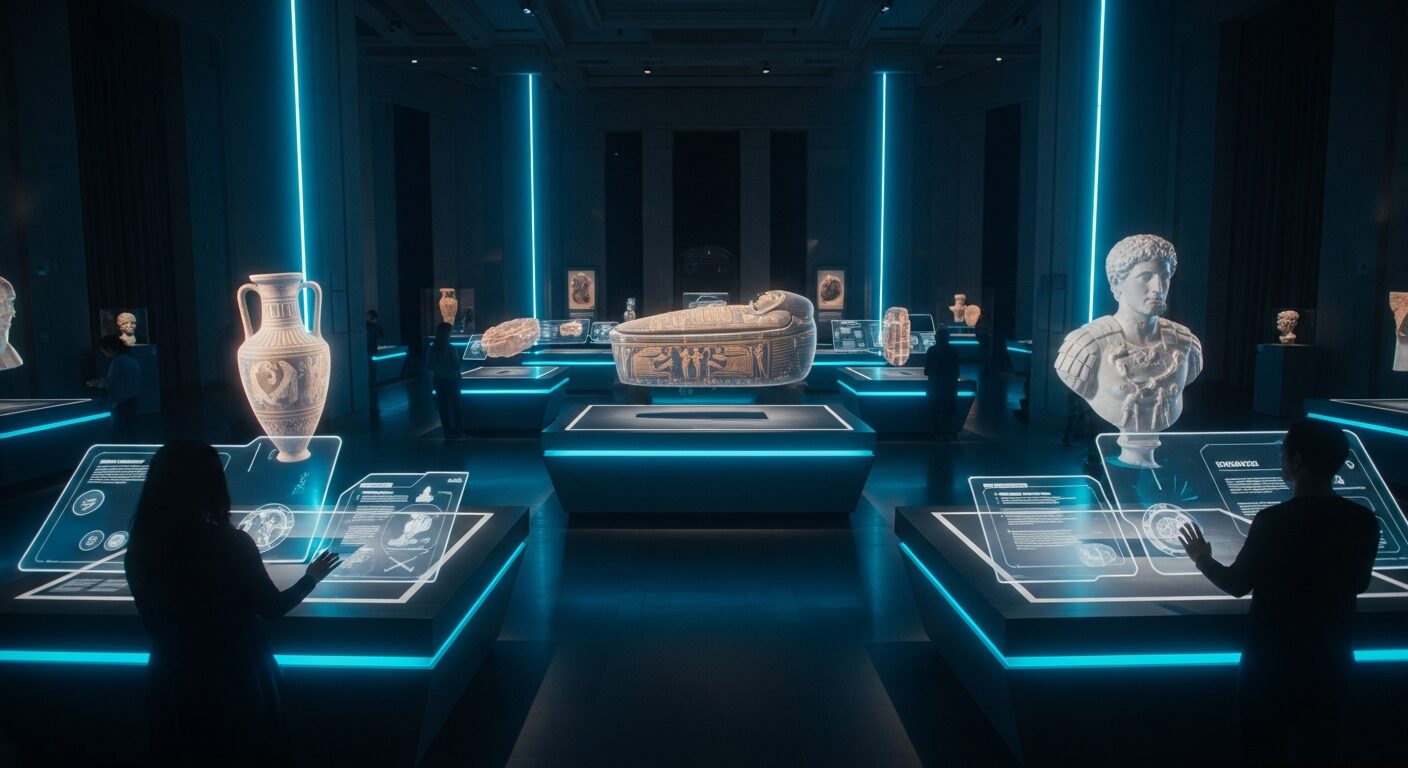
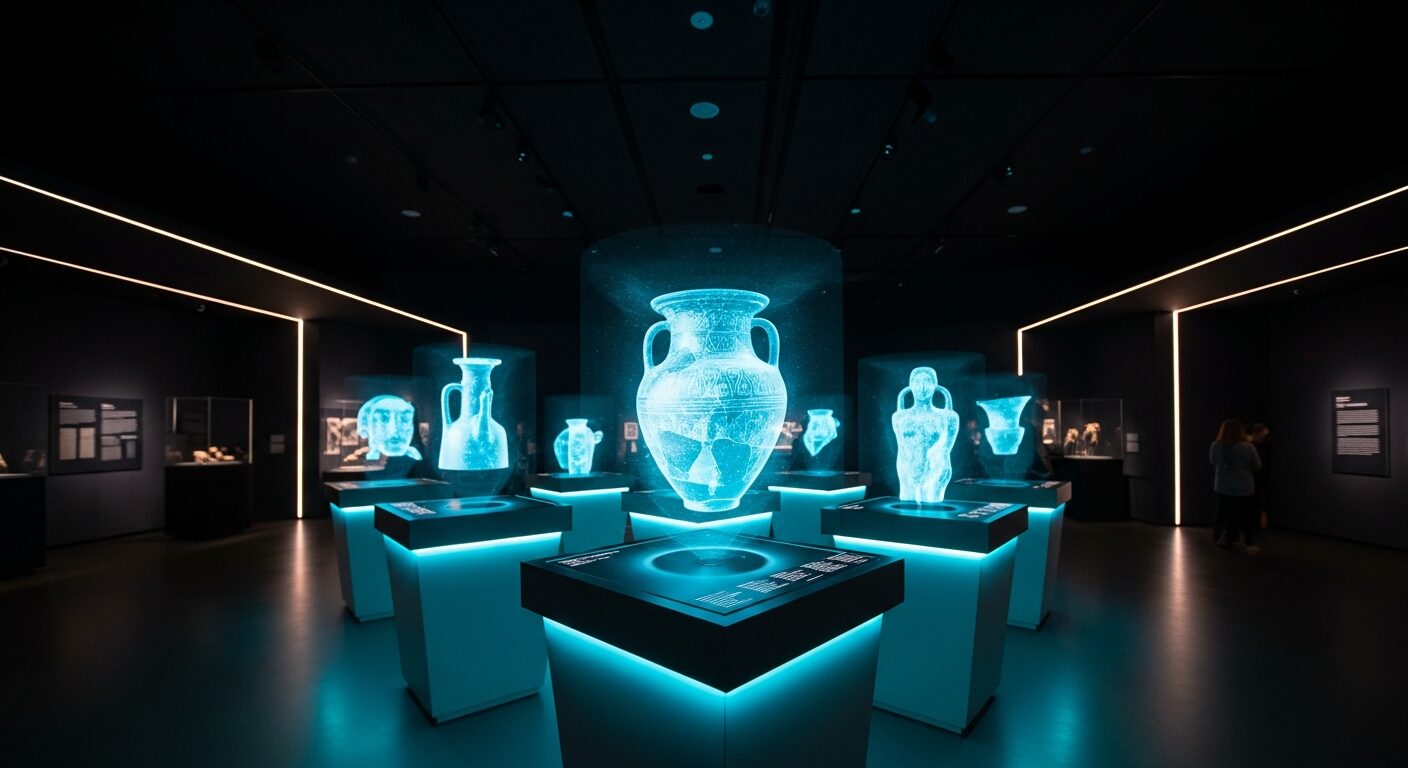
Produce 3D assets for holographic table and stage displays, presenting digitised objects as interactive floating holograms visitors can explore.
Product & Industrial Documentation
Create precise digital replicas of products, prototypes, and industrial components for documentation, quality control, and marketing applications.
Example Installations
Ancient Pottery Collection
Photogrammetric digitisation of 150+ ancient pottery pieces, creating an interactive digital catalogue accessible through holographic table displays and web portal.
Sculpture Archive Project
Comprehensive 3D scanning of a significant sculpture collection, producing sub-millimetre accurate digital replicas for conservation reference and virtual exhibition.
Heritage Jewellery Digitisation
Micro-photogrammetry of precious heritage jewellery items, capturing intricate details for holographic showcase and digital preservation.
Related Technologies
Related Solutions
Solutions that use this technology.
Learn More
In-depth articles about this technology.
Bring This Experience to Your Space
Tell us about your project and vision. We'll explore how 3d digitisation services – high-precision 3d scanning & modeling technology can transform your environment.