
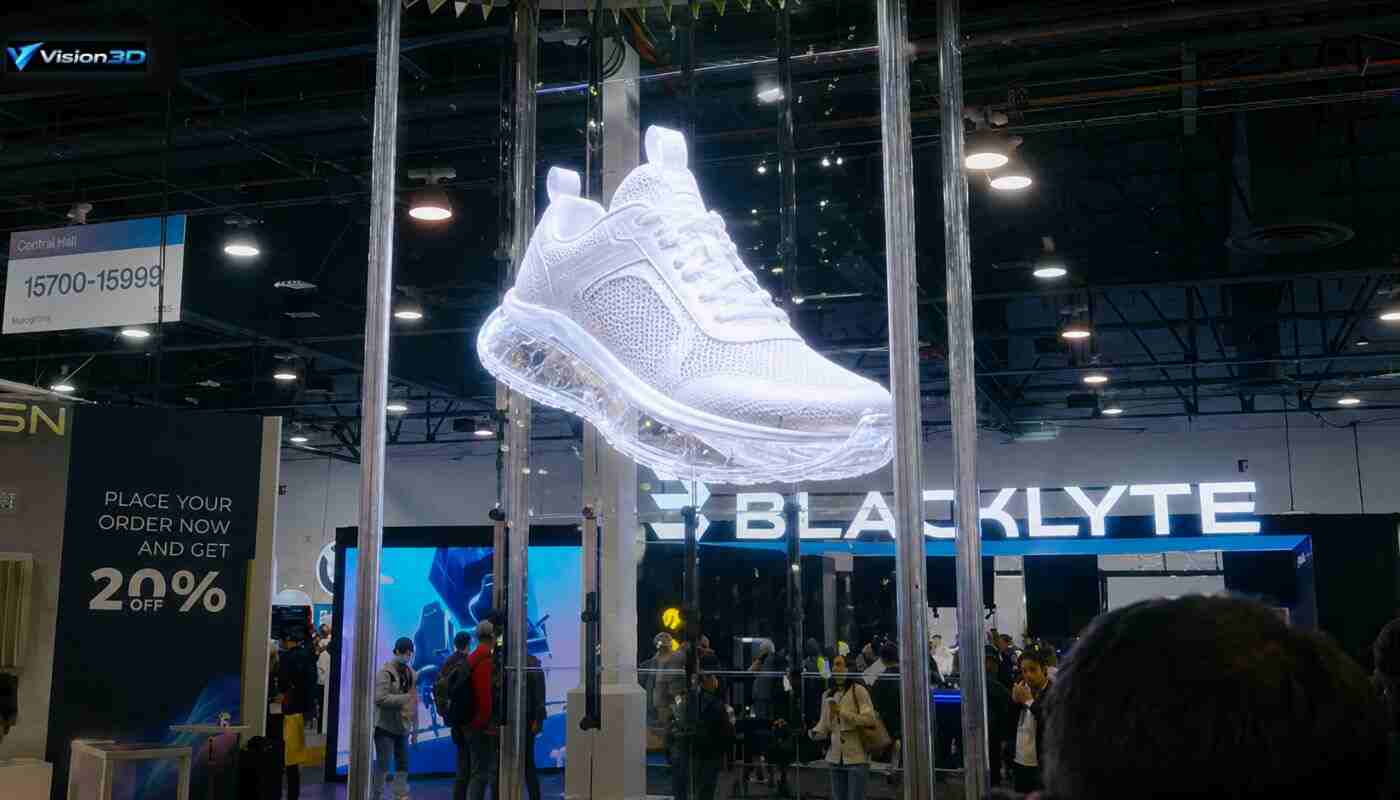
It’s no longer sufficient to simply have a big banner on the trade floor or event hall. A 3D hologram show isn’t just about raising brand awareness – it’s about delivering jaw-dropping images, memorable brand moments, and foot traffic. Whether it’s a product launch, a demo, or anything in between, a hologram show will engage the audience with an interactive experience.
Why 3D Hologram Exhibition Ads Work
A holographic screen produces lifelike floating images that appear in real space. This “tangibility” evokes human curiosity and causes them to suspend, look, and engage. An impactful 3d hologram for events can not only create a memorable experience to share, but it also creates an impact on dwell time, which can have a positive effect on in-event lead generation and social media engagement.
Three Effective Uses For Hologram Show Ads
- Product demos: Show product capabilities, no actual product. Complex machinery, changes in fashion, or several angles of view are represented using holographic presentations.
- Brand Storytelling: Storytelling your brand in minutes with multi-layered visuals and narration. A hologram show provides a narrative, motion, and scale that other screens can’t provide.
- Interactive activation: Combine motion sensors or touchless controls so viewers can rotate, scale, or customize the hologram—turning passive viewers into active participants.
Design Tips To Maximize Impact
- Try to keep the message short. When using holographic experiences, the experience should be short and to the point if there is a lot to do during a busy event.
- Use high-contrast visuals. Bold colors and crisp shapes seem to work better on a holographic screen; they also help with visibility even when you’re a good distance away.
- Prioritize motion design. The animation is smooth and well-drawn, and the timing is appropriate, allowing for a realistic and engaging experience.
- Place for flow. Show the 3D hologram at strategic points where people stop – at the entrance, demo islands, or close to the registration areas – to stop and watch the traffic.
Technical Considerations
Know how to choose an appropriate display for your environment and the size of your audience. Some configurations can be better for low-light applications, while others are designed for show hall lighting. There are some important factors to consider: resolution, viewing angle, and content format.
Design the assets with the viewing angle and the native resolution of the holographic hardware in mind. Properly managing power, mounting, and content playback reliability minimizes the risk of downtime during the event.
Measure Success
As with all marketing tools, establish goals and track outcomes of hologram shows. You can use footfall, dwell time, and lead capture rate from interactions and social engagement (photos, shares) as all useful metrics that are available. It could be an in-house survey or a QR code promotion, but curiosity can turn into tangible prospects.
Budgeting and ROI
The starting prices depend on the setup, customized content, and event setup. In terms of ROI, a 3d hologram for events can be very profitable when you consider that, when there’s some content you can reuse for various events, rather than hiring a staff, printing out some collateral, and running a demo again and again. When it’s a high-value launch or target event, ensure that the experience is highlighted.
Real-World Creative Ideas
- Floating product reveal: Launch a new product where it kind of assembles right in front of the audience, suspended in mid-air.
- Show scale: compare life-size holograms of products or parts.
- Virtual spokesperson: Have a virtual presenter for features and a team for one-on-one questions.
Final words
A 3D hologram exhibition isn’t simply a gimmick; it’s a useful instrument that focuses on engagement to lead. A well-planned hologram show with clear objectives and technical precision becomes the focal point of event marketing, capturing audience attention and sparking discussions long after the event. To know more about the 3D Hologram Exhibition, get in touch with the Vision3D customer care number.
FAQs
Ans. A filtered screen display – first with holograms to get an immersive, floating display of the product content for marketing and then for storytelling.
Ans. It draws attention, keeps visitors on the site longer, and provides engaging brand experiences that turn your visitors into leads.
Ans. Yes, most products can be presented in a digital model, animation, and/or augmented presentations.
Ans. The setup can vary with the amount of equipment, but by planning the content, power, and viewing angles beforehand, problems are minimised, and the setup will be easier.