
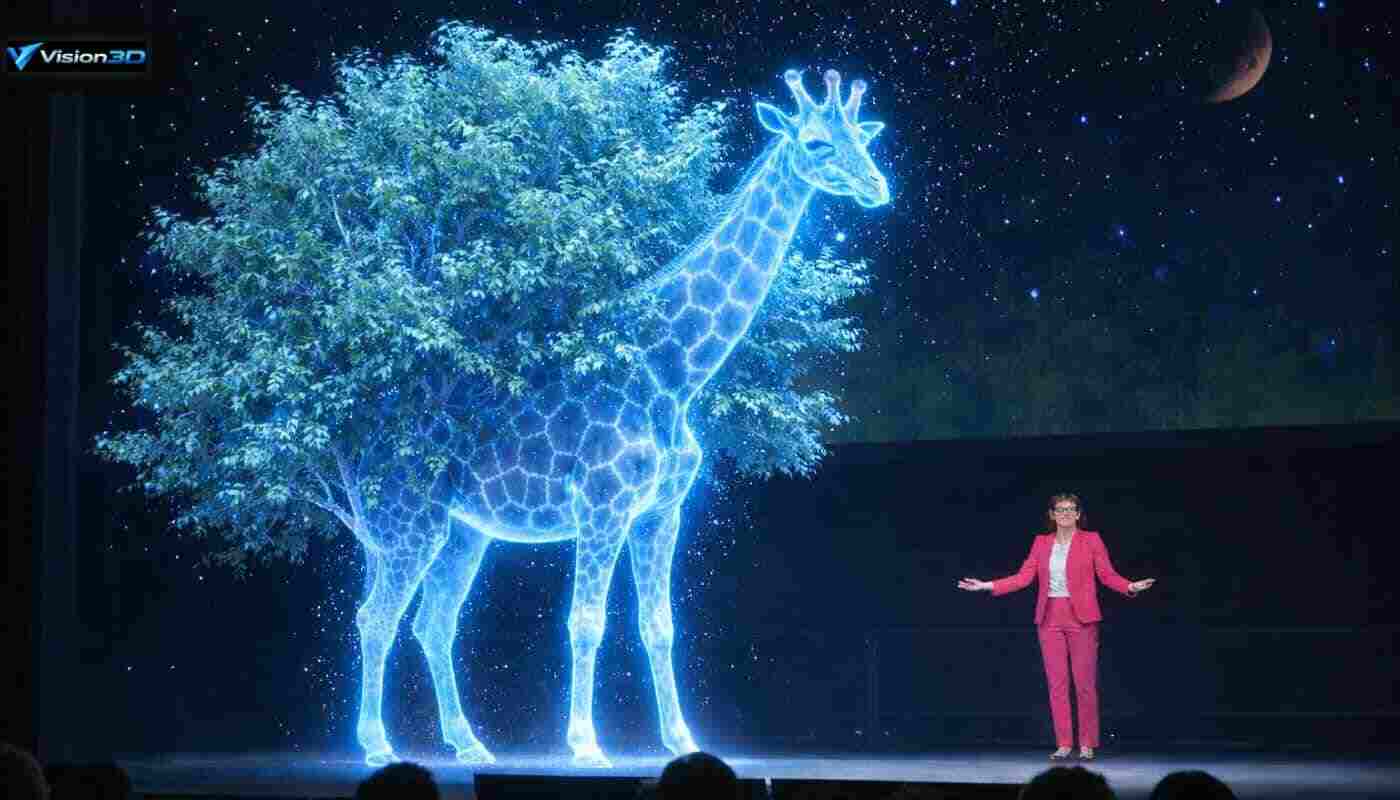
Hosting a 3D hologram show at your corporate event instantly makes your brand feel innovative and forward-thinking, in a way that sticks. From product unveiling moments to yearly conferences, these immersive displays tend to create unforgettable scenes that really pull in the crowd and also prompt social sharing. Modern laser hologram projectors come with a plug-and-play setup, smartphone control, and ultra-bright 1080p visuals, so they work well for events of different sizes in 2026.
Why Brands Pick Hologram Shows for Events
A 3D hologram show can generate 300% more engagement than traditional screens, pulling people in toward your booth or stage. It feels like everyone stops, even if they weren’t looking, and then they stay. Product launches also benefit from 360° views, because they reveal internal parts and hidden details, while brand activations lean on floating ambassadors to narrate your story in the air. With interactive features, passive viewers become active visitors, leaning closer to examine products up close.
Types of Hologram Displays for Corporate Use
Holographic Fans and Pyramids
Compact LED fans make spinning product visuals that work nicely on trade show tables. These portable units suit small businesses or even counter displays, and they typically include smartphone app control. Setup is quick, so you can move between venues without a headache.
Laser Hologram Projectors
High-power laser projectors bring 1080p clarity and manage 100-inch visuals for the main stages. AAXA HP4 and Yelusonw style models also include Bluetooth integration along with built-in storage, so teams can keep live presentations flowing, even when the venue is big.
Holo Boxes and Walls
For larger installations, setups like HoloGrid craft life-sized experiences during flagship launches. Companies can place several units across exhibition halls, so the message stays consistent instead of drifting.
Key Benefits for Product Launches
A 3D hologram show can speed up market timelines, mainly because expensive physical prototypes get skipped. Instead, teams can picture the product immediately, rotating and revising the design on the fly, without building scale mockups. Engineers and architects also work together remotely on shared 3D files, which cuts development costs and helps push the full launch schedule faster. Later, consumers can engage with the sailing product context, reviewing different configurations before anything ships, which often drives pre-orders and early buzz.
The hologram scanner tech takes real products and captures them into volumetric displays, letting professionals rehearse procedures in safe, make-believe settings. That training angle is especially crucial in aerospace and medical fields where quick simulation really does matter, fast.
Making Hologram Content
To build holograms, picking a dependable hologram maker helps a lot. These services turn 2D CAD files, video recordings, or photographs into 3D holograms with real-time processing. iPhone LiDAR scanners, along with Blender software, let in-house teams generate spinning, rotating models. Aim for loop clips around 15–30 seconds for stronger attention, and align the visuals to music for lively presentations.
Arranging Your Hologram Show
Hologram advertising campaigns tend to work best when they blend into a broader social media plan. Viewers and attendees often record the 3D visuals, then share them across platforms, which increases organic reach. Coordinate with press teams for behind-the-scenes coverage, and also have QR codes ready that send people to AR experiences.
Tracking Results
Track the metrics, like dwell time being 5x longer than those static displays, plus social shares up 300%, and on-site engagement with a 40% conversion lift. After-event surveys show 75 to 92% brand recall, while traditional ads sit at around 0.1%. If you integrate a hologram show into your corporate event strategy, you’ll get visible attention and impressions that remain longer in memory at the end of the day.