
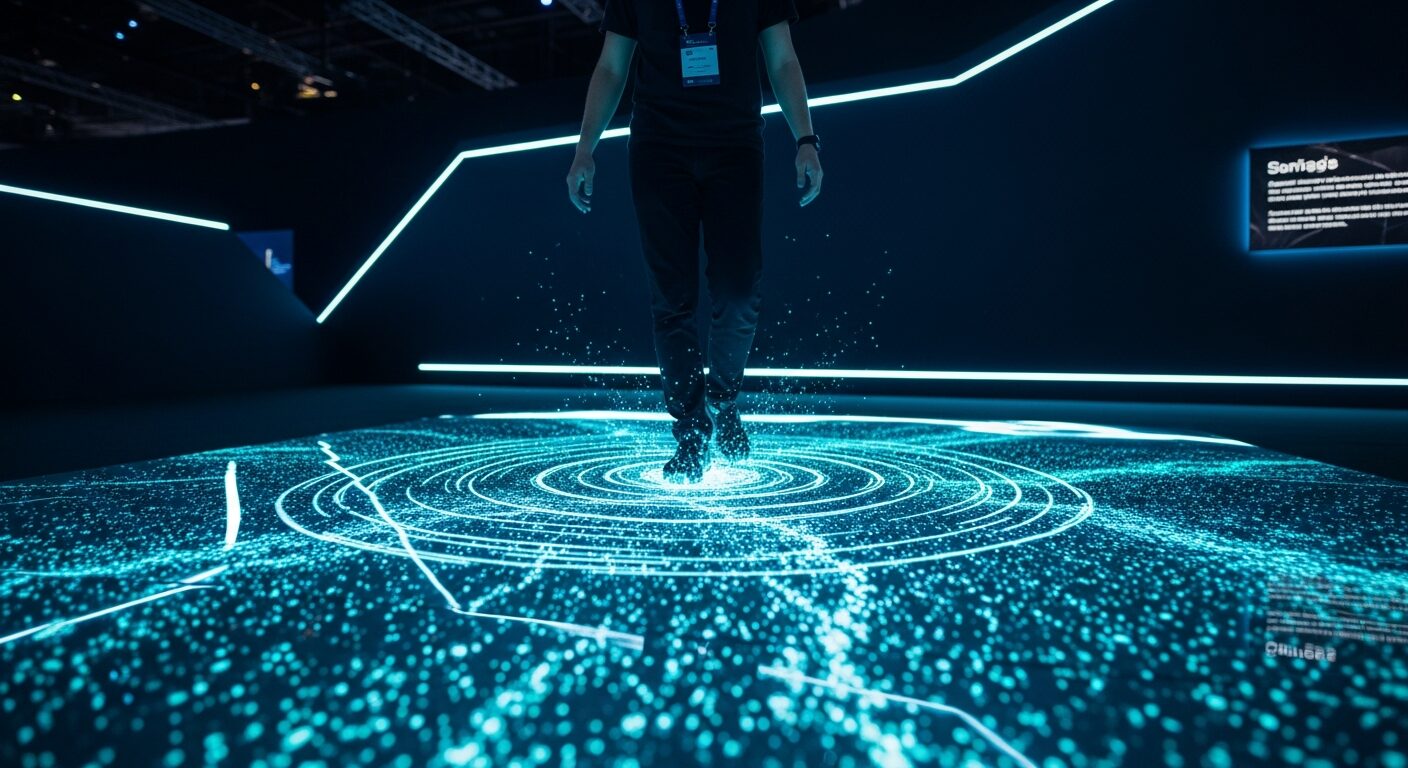
Interactive Floor Technology – Motion‑Reactive Floors Guide
Interactive floor installations transform the ground beneath visitors' feet into responsive digital canvases — creating experiences where the environment reacts to every step, gesture, and movement. These installations are used in museums, retail spaces, events, theme parks, and public attractions to create moments of surprise, delight, and engagement.
The technology behind interactive floors combines overhead projection, real-time motion tracking, and physics-based content engines to create experiences that feel magical yet operate on well-understood engineering principles. Understanding how these systems work helps planners make informed decisions about where and how to deploy interactive floor technology effectively.
How Interactive Floor Systems Work
An interactive floor system consists of three core components working together: a projection system, a motion detection system, and a real-time content engine. The projection system — typically one or more commercial-grade projectors mounted directly above the interactive area — casts visual content onto the floor surface. The motion detection system uses infrared sensors or depth cameras to track visitor positions and movements across the floor area in real time.
Interactive projection system architecture
The content engine receives motion data from the sensors and generates responsive visual effects that react to visitor behaviour. When a visitor steps into the interactive zone, the system detects their position and triggers visual responses — ripples, particles, colour changes, animations, or interactive game elements — that follow and respond to their movement.
The entire system operates with minimal latency — typically under 50 milliseconds from movement detection to visual response — creating the impression of a floor surface that genuinely reacts to human presence in real time.
Projection and Surface Requirements
The projection system must deliver sufficient brightness to create vivid imagery on the floor surface, even in environments with some ambient lighting. Commercial interactive floor systems typically use projectors rated at 5,000–10,000 lumens, mounted at heights of 3–5 metres to achieve coverage areas of 4–20 square metres per projector.
The floor surface itself significantly affects image quality. Light-coloured, matte surfaces reflect projected imagery most effectively. Some installations use specially engineered floor materials designed for optimal projection reflection — white or light grey surfaces with anti-glare properties that maximise image clarity and colour accuracy.
For larger interactive areas, multiple projectors are edge-blended to create seamless coverage across expansive floor zones. Calibration systems automatically correct for projector alignment, ensuring that content flows smoothly across projector boundaries without visible seams.
Content Types and Interaction Models
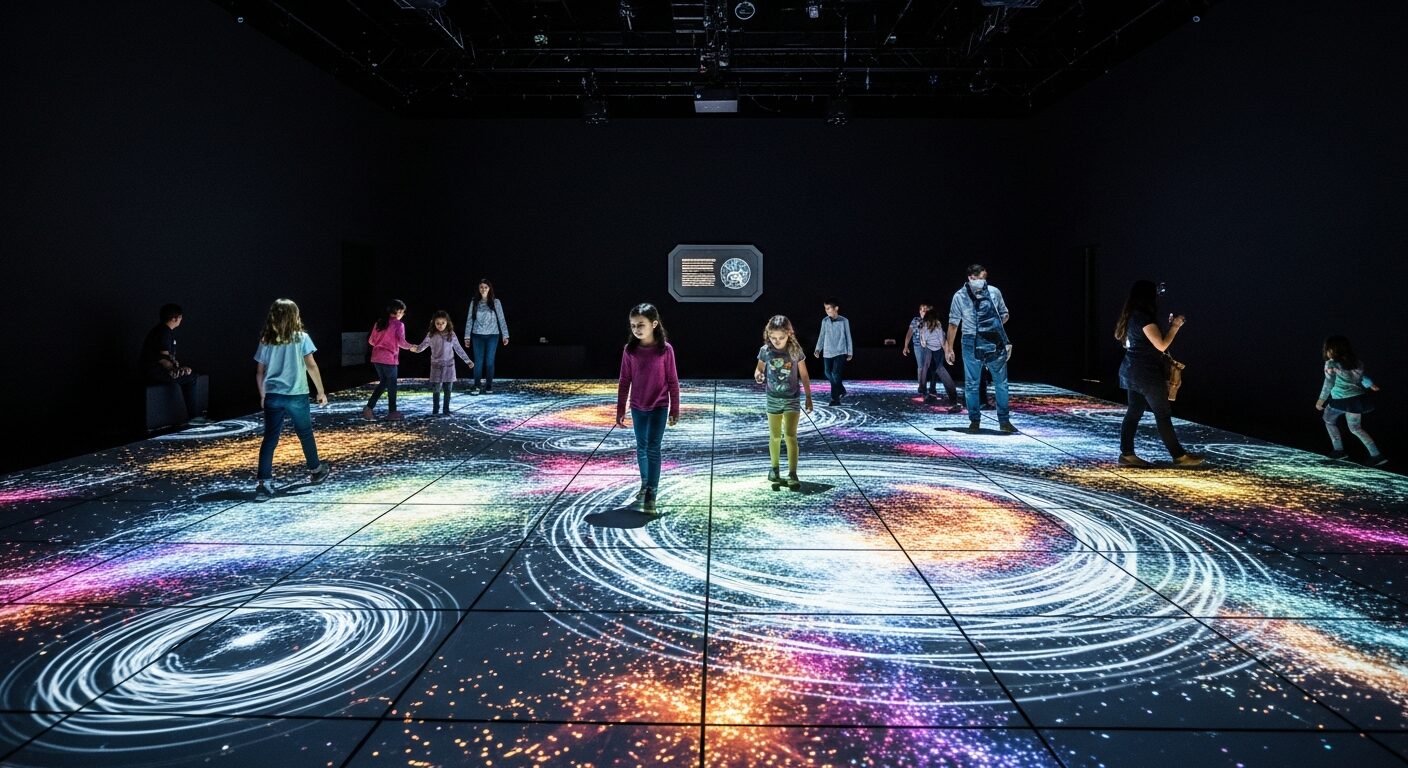
Interactive floor content spans a wide range of experiences depending on the venue and audience. Nature simulations — water ripples, falling leaves, swimming fish, growing flowers — create gentle, accessible interactions that appeal to all ages. These are popular in museum lobbies, retail spaces, and hotel environments where subtle engagement is preferred.
Game-based content — catch-the-object challenges, pattern-matching puzzles, collaborative goals — creates higher-energy interactions suited to children's museums, entertainment venues, and event activations. These experiences can include scoring, progression, and competitive elements that extend engagement time.
Informational overlays transform floors into interactive maps, timelines, or data visualisations. Museum floors can reveal archaeological layers, geographic information, or historical events as visitors walk through specific zones. This approach combines the playfulness of interactive response with genuine educational content.
Installation and Operational Considerations
Interactive floor installations require careful attention to mounting height, projector access for maintenance, cable routing, and environmental conditions. Projectors generate heat and require ventilation — ceiling-mounted enclosures must provide adequate airflow while protecting equipment and maintaining visual cleanliness.
The floor surface must withstand normal foot traffic while maintaining projection quality. In high-traffic environments, surface coatings may need periodic renewal to maintain optimal reflectivity. Some installations use raised floor systems or projection-optimised floor tiles that can be replaced individually if damaged.
Content management systems allow venue operators to schedule different content themes throughout the day or week — morning educational content transitioning to afternoon entertainment, or seasonal themes that refresh the experience for repeat visitors. Remote management capabilities enable content updates and system monitoring without on-site technical visits.
Related Technologies
Explore the capabilities mentioned in this article.
Related Solutions
Frequently Asked Questions
How durable are interactive floor installations?
Interactive floor systems are designed for commercial environments with high foot traffic. Projectors are housed in protective enclosures, sensors are ceiling-mounted away from physical contact, and floor surfaces are specified for durability. With regular maintenance, systems operate reliably for many years.
Can interactive floors work outdoors?
Standard interactive floor systems are designed for indoor use where ambient light can be managed. Outdoor installations are possible but require significantly higher projector brightness and controlled lighting conditions, typically limiting effective operation to evening hours or covered environments.
What size area can an interactive floor cover?
Single-projector interactive floors typically cover 4–20 square metres. Multi-projector systems can create interactive floor areas of 100+ square metres by blending multiple projection zones with coordinated motion tracking across the entire area.
Do interactive floors work with wheelchairs and pushchairs?
Yes. Interactive floor systems detect movement regardless of how visitors move through the space. Wheelchair users, visitors with pushchairs, and people using mobility aids all trigger interactive responses in the same way as walking visitors.
Related Articles
Planning a Holographic Installation?
Our experience design team creates immersive holographic environments for museums, experience centres, and public installations.