
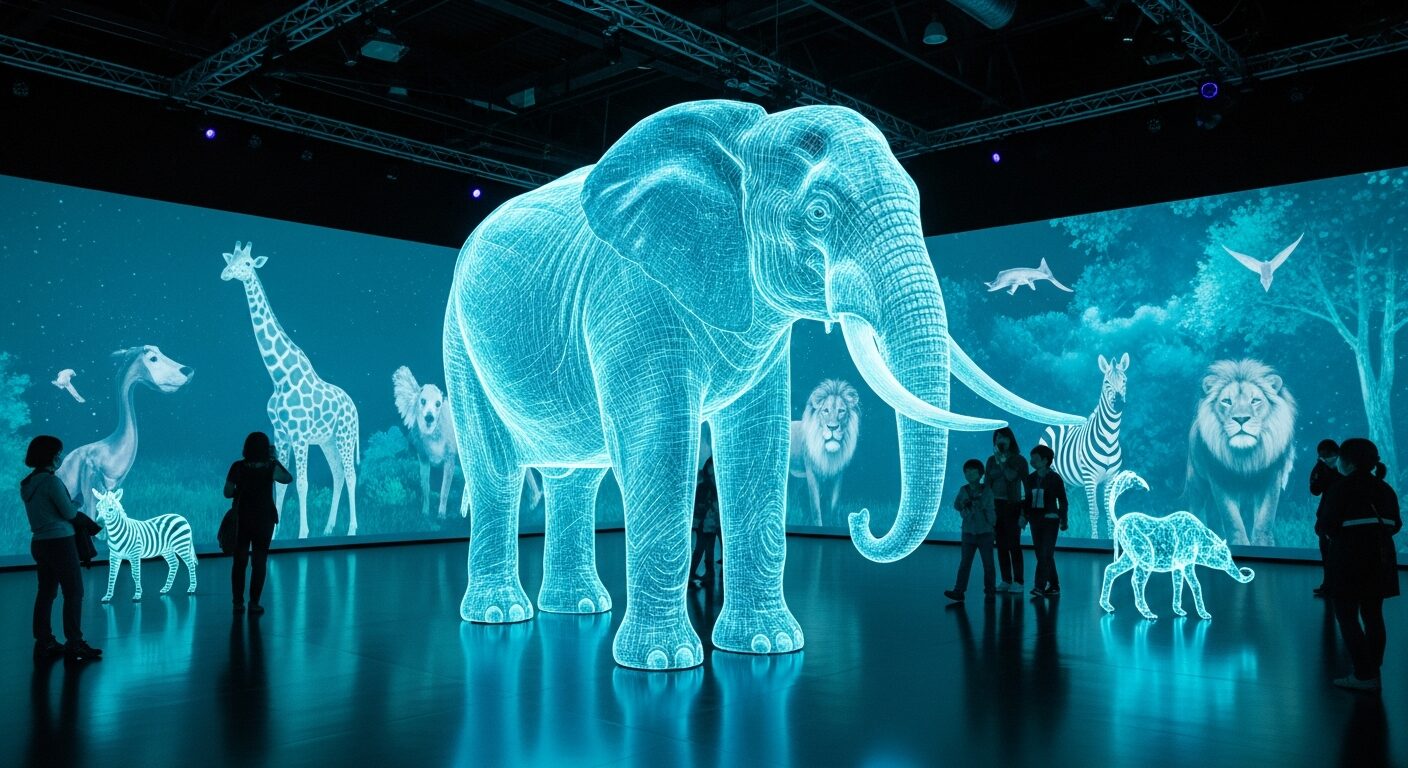
Hologram Zoo Technology – Ethical Wildlife Experiences
The hologram zoo represents a revolutionary approach to wildlife experiences — using immersive holographic technology to bring life-sized animals into physical spaces without the ethical concerns of animal captivity. As public attitudes toward traditional zoos shift, holographic wildlife encounters are emerging as compelling alternatives that deliver educational value, emotional impact, and genuine wonder.
Hologram zoo installations create environments where visitors walk through themed habitat zones — encountering photorealistic holographic animals that move, breathe, and interact with the space around them. The technology behind these installations combines advanced projection, animation, spatial audio, and environmental design to create wildlife encounters that feel remarkably real.
How Hologram Zoo Installations Work
A hologram zoo installation is fundamentally an immersive environment design challenge — combining multiple technologies to create convincing habitat spaces where holographic animals appear to live. The core display technology typically uses large-format transparent screens or holographic gauze onto which high-brightness projectors cast photorealistic animal imagery at life scale.
How holographic projections create the illusion of floating objects
The animals themselves are created through a sophisticated 3D animation pipeline. Artists build anatomically accurate digital models based on real animal references, rig them with realistic skeletal and muscular systems, and animate them using motion data derived from wildlife behaviour studies. The result is holographic creatures that move with naturalistic weight, rhythm, and personality.
Spatial audio is a critical component — each habitat zone features ambient soundscapes of the appropriate environment (savannah winds, jungle birdsong, ocean waves) with directional audio cues that place animal vocalisations in three-dimensional space, matching the visual position of the holographic creatures.
Habitat Environment Design
The physical environment surrounding each holographic animal display is designed to reinforce the illusion of a real habitat. This includes themed lighting that simulates natural conditions — golden savannah sunlight, dappled jungle canopy, blue underwater ambient light — along with physical set elements like vegetation, rocks, and terrain features.
Some advanced installations incorporate environmental effects such as temperature variation (warmth in tropical zones, coolness in arctic environments), air movement from concealed fans, and even scent diffusion to engage multiple senses beyond sight and sound.
The visitor path through a hologram zoo is carefully choreographed. Transition zones between habitats allow audiences to adjust their expectations, while viewing positions are designed to optimise the holographic effect and create personal encounter moments where animals appear to acknowledge visitor presence.
The Ethical Advantage of Holographic Wildlife
Traditional zoos face growing public scrutiny over animal welfare, captivity conditions, and the ethics of keeping wild animals in confined spaces for public entertainment. Hologram zoos eliminate these concerns entirely — no animals are harmed, confined, or stressed, while visitors still receive the educational and emotional benefits of encountering wildlife.
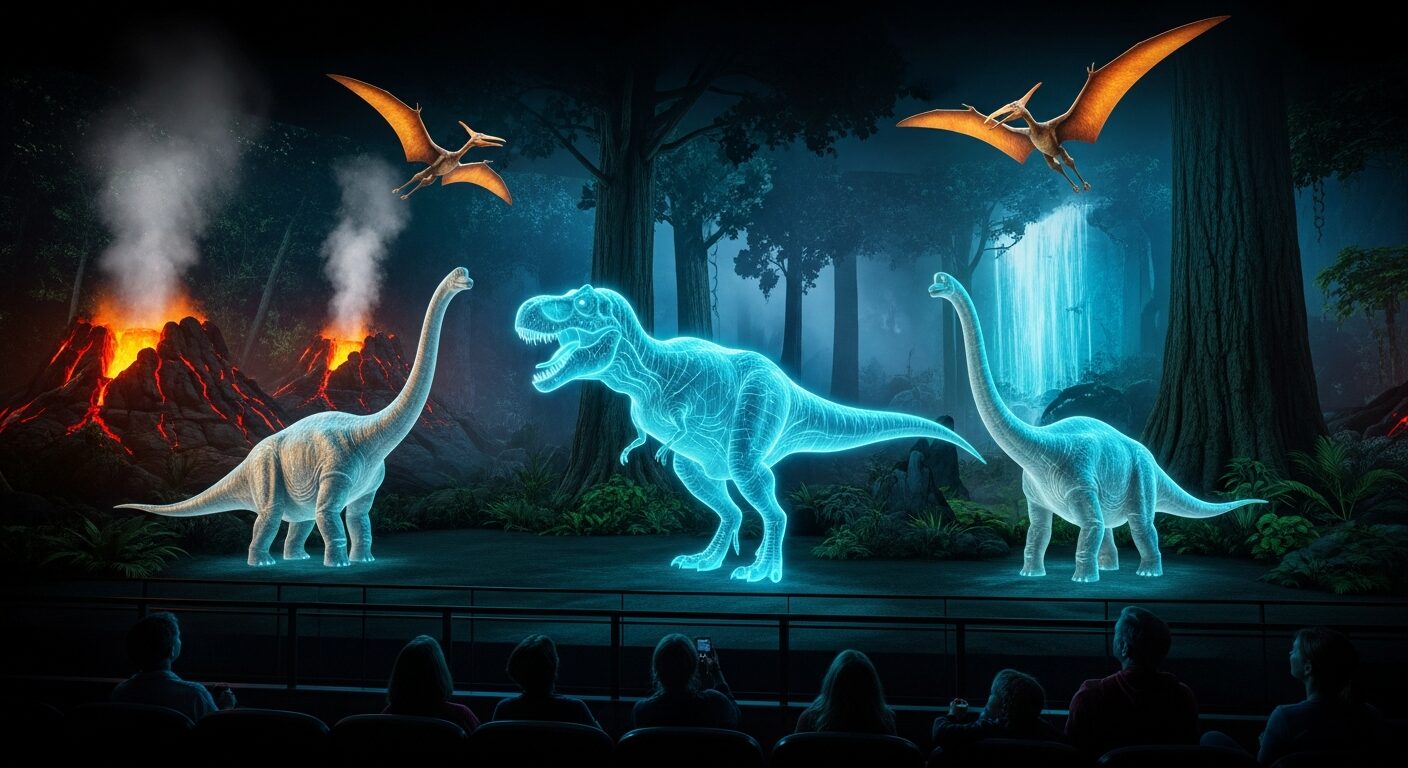
Holographic technology also removes biological limitations. A hologram zoo can present endangered species that could never be kept in captivity, extinct animals like dinosaurs and ice-age megafauna, deep-ocean creatures that cannot survive in aquarium conditions, and even fantastical creatures for entertainment contexts.
From an operational perspective, holographic animals require no feeding, veterinary care, or habitat maintenance — significantly reducing ongoing operational costs while eliminating the regulatory and ethical complexities of live animal management.
Applications Beyond Entertainment
While the entertainment value of hologram zoo experiences is significant, the educational applications are equally compelling. Museum natural history departments use holographic animal displays to complement specimen collections, presenting extinct species in their reconstructed habitats and bringing taxidermy specimens to contextual life.
School programmes benefit from holographic wildlife encounters that align with curriculum standards — students can observe animal behaviour, habitat relationships, and evolutionary adaptations in immersive environments that create lasting learning impressions far beyond textbook illustrations.
Tourism and hospitality venues use hologram zoo installations as signature attractions — differentiating hotels, resorts, and destination venues with unique wildlife experiences that draw visitors and generate social media engagement without the logistical challenges of live animal management.
Related Technologies
Explore the capabilities mentioned in this article.
Related Solutions
Frequently Asked Questions
How realistic are hologram zoo animals?
Modern holographic animals are rendered in photorealistic detail at full life scale, with anatomically accurate models and naturalistic behaviour animation. Combined with spatial audio and immersive environment design, the experience creates a convincing sense of encountering real wildlife.
Can hologram zoos show dinosaurs and extinct animals?
Yes. One of the major advantages of holographic wildlife displays is the ability to present any species — including extinct animals like dinosaurs, woolly mammoths, and prehistoric marine creatures. These are reconstructed based on scientific research and palaeontological evidence.
How much space does a hologram zoo need?
Hologram zoo installations can be designed for a range of spaces — from single-room encounters of 50 square metres to multi-habitat walk-through experiences of 1,000+ square metres. The scale is determined by the number of habitats and the desired visitor throughput.
Are hologram zoos suitable for children?
Absolutely. Hologram zoo experiences are designed to be engaging for all ages. The absence of real animals removes any safety concerns, and the controlled environment allows content to be tailored for family audiences with educational commentary and interactive elements.
Related Articles
Planning a Holographic Installation?
Our experience design team creates immersive holographic environments for museums, experience centres, and public installations.