
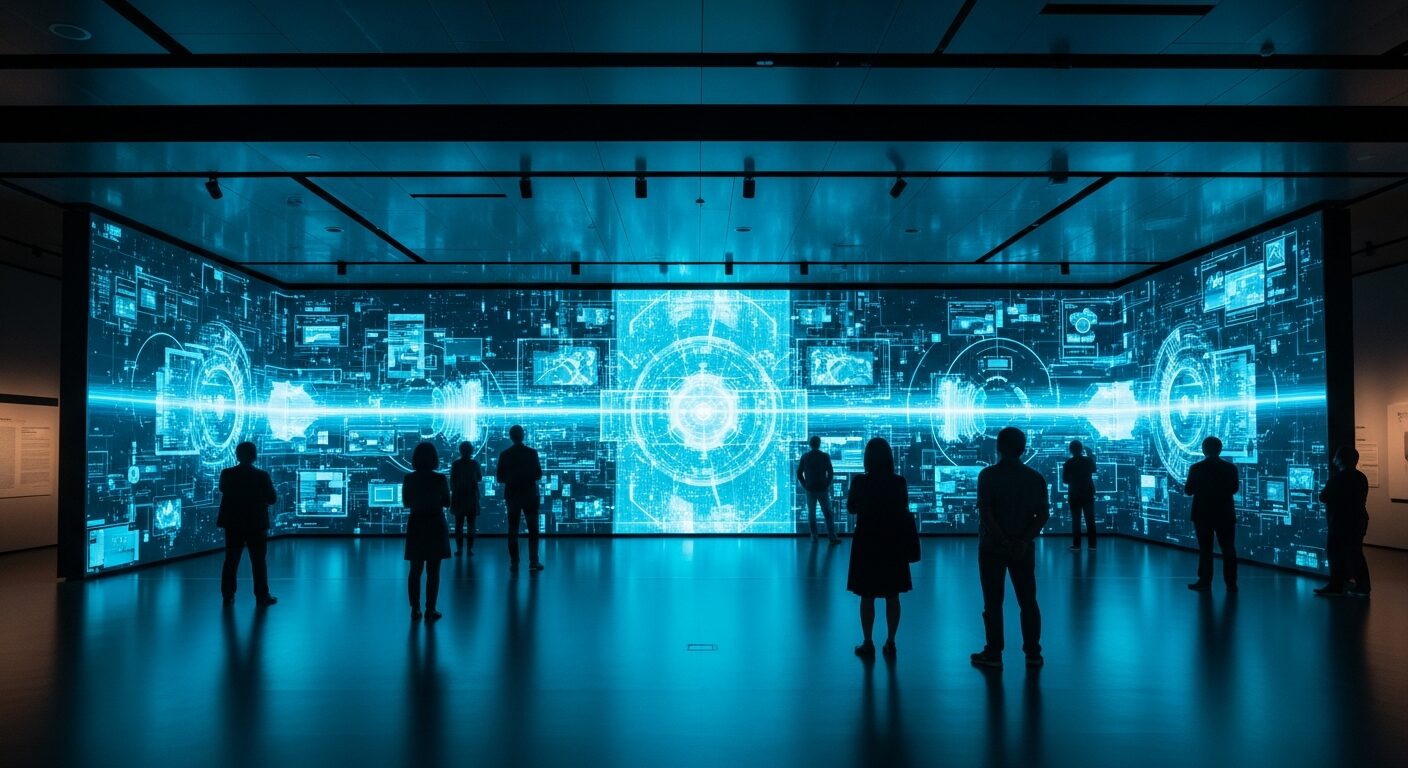
What is a Hologram Wall?
A hologram wall is a large-format display installation that uses holographic projection, transparent LED panels, or projection-mapped surfaces to create the appearance of three-dimensional content across an entire wall surface. Unlike conventional video walls or flat-screen displays, hologram walls present content with depth and spatial presence — making imagery appear to emerge from the wall, float in front of it, or extend into virtual space behind it.
Hologram wall installations are increasingly deployed in experience centres, museums, corporate lobbies, and visitor galleries where immersive storytelling and premium visual impact are essential. They serve as the centrepiece of holographic experience environments, drawing visitors into narratives that unfold across expansive visual canvases.
Vision3D designs hologram wall storyscapes — complete narrative environments built around large-format holographic wall displays. Each installation combines the holographic display technology with spatial audio, environmental lighting, interactive elements, and curated content journeys to deliver experiences that go far beyond simple visual display.
How Hologram Wall Displays Work
Hologram wall installations typically use one of several display technologies. High-end installations use transparent holographic gauze or mesh screens that are nearly invisible when unlit. High-brightness projectors cast content onto these screens, creating floating imagery that appears three-dimensional against the dark environment behind the screen.
Transparent LED panels offer another approach — embedding tiny LED elements within a transparent substrate that allows viewers to see through the wall when it's inactive, while displaying vivid holographic content when activated. These systems offer excellent brightness and can operate in ambient lighting conditions, making them suitable for lobbies and public spaces.
Advanced hologram wall installations combine multiple projection layers at different depths, creating true parallax effects where foreground and background elements move independently as viewers change their viewing angle. This multi-layer approach creates significantly more convincing depth perception than single-surface projection.
Use Cases for Hologram Walls
Corporate Experience Centres: Hologram walls serve as the hero element of corporate experience centres, presenting brand stories, product innovations, and corporate histories in immersive visual narratives. Visitors are drawn into the story through spatial depth and movement that flat screens cannot deliver.
Museum and Gallery Exhibitions: Museums use hologram walls to create immersive exhibition environments where historical events, cultural narratives, and scientific phenomena unfold across expansive holographic canvases. A hologram wall depicting a historical battle, a geological timeline, or a cultural journey creates an emotional connection that traditional exhibit design cannot match.
Visitor Centres and Tourism: Tourism destinations use hologram wall installations to introduce visitors to the region, culture, or attraction through immersive visual storytelling. These installations create memorable first impressions that set the tone for the entire visit experience.
Retail and Brand Environments: Premium retail environments use hologram walls to present product ranges, brand heritage, and lifestyle narratives in immersive display environments that elevate the shopping experience beyond conventional merchandising.
Advantages of Hologram Wall Installations
Hologram wall installations offer several key advantages for experience centres and institutional environments. The immersive visual impact creates significantly higher visitor engagement and dwell time compared to conventional video walls. The three-dimensional presentation makes content more memorable and emotionally impactful.
Content flexibility is another major advantage. Hologram wall content can be updated remotely without any physical hardware changes, allowing institutions to refresh narratives seasonally, rotate exhibition content, or customize experiences for different audiences and events.
Spatial integration is unique to holographic displays. Because many hologram wall technologies use transparent or semi-transparent display surfaces, the installation can be integrated into architectural design without creating the visual barrier that conventional screens impose. The holographic content appears to exist within the architecture rather than on a separate display device.
Vision3D Hologram Wall Experiences
Vision3D designs hologram wall storyscapes as part of our Immersive Environments capability. Each installation is designed around a narrative framework — the hologram wall serves the story, not the other way around.
Our hologram wall installations are complemented by hologram floor displays, spatial audio systems, environmental lighting, and interactive visitor touchpoints to create complete immersive environments. Explore how hologram technology is transforming experience centres.
Contact us to discuss a hologram wall installation for your space.