
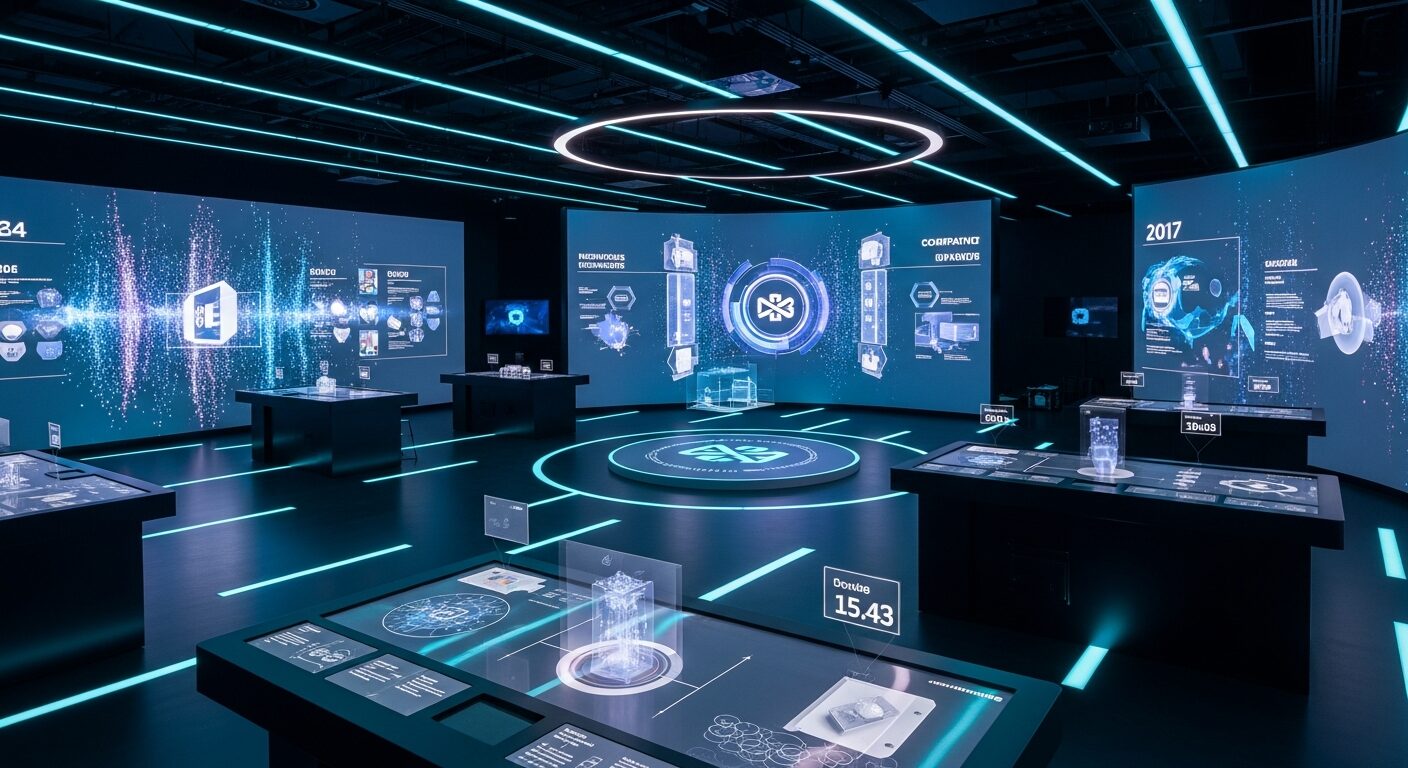
The Evolution of Experience Centres
Traditional experience centres — corporate visitor centres, brand showcases, innovation labs, and institutional galleries — have historically relied on video walls, touchscreen kiosks, and physical models to communicate their narratives. While these technologies served their purpose, they no longer meet the expectations of visitors who consume rich, interactive digital content in their daily lives.
Hologram technology is enabling a new generation of experience centres that feel genuinely immersive. Instead of viewing content on flat screens, visitors step into holographic environments where brand stories, product innovations, and institutional narratives unfold around them in three-dimensional space. The result is dramatically higher engagement, longer visit durations, and significantly better message retention.
A hologram experience centre is not simply a showroom with holographic displays added. It is a designed environment where every element — spatial layout, holographic content, interactive touchpoints, lighting, and audio — works together to deliver a cohesive, immersive narrative experience.
Holographic Technologies in Experience Centres
Hologram Wall Storyscapes: Large-format holographic wall displays serve as the primary storytelling medium in many experience centres. These installations present brand histories, product ecosystems, innovation timelines, and corporate narratives as immersive visual journeys that unfold across expansive holographic canvases. Visitors are drawn into the story through spatial depth and cinematic presentation.
Holographic Product Showcases: 3D hologram projectors present products, prototypes, and innovations as floating, interactive holograms that visitors can examine from multiple angles. A holographic presentation of a new automotive design, an engineering prototype, or an architectural model creates a presentation moment that conventional media cannot match.
Interactive Holographic Floors: Hologram floor installations transform the ground plane of experience centres into interactive digital surfaces. Visitors walking into a room where the floor displays company data, product networks, or brand worlds creates an immediate sense of immersion and sets the tone for the entire visit experience.
Digital Presenters on Holographic Stages: Holographic stages present company leaders, subject matter experts, or historical figures as life-sized digital personas. A holographic CEO delivering a welcome message, a holographic engineer explaining a product's technology, or a holographic founder sharing the company's origin story creates a personal, human connection that pre-recorded video cannot replicate.
Use Cases Across Industries
Corporate Innovation Centres: Technology companies, manufacturing firms, and research organizations use hologram experience centres to showcase their innovation capabilities to clients, partners, investors, and recruits. Holographic displays present complex technologies, product ecosystems, and R&D pipelines in visually compelling formats that make advanced concepts accessible and memorable.
Real Estate Experience Galleries: Property developers create holographic experience centres that allow prospective buyers to walk through holographic renderings of unbuilt properties, explore neighbourhood environments, and visualize living spaces at full scale. These holographic showrooms replace conventional model apartments with immersive spatial experiences that drive purchase confidence.
Government and Public Sector: Government agencies and public institutions deploy hologram experience centres to communicate policy initiatives, infrastructure projects, and public service information. Holographic displays make complex infrastructure plans, environmental data, and civic information accessible and engaging for public audiences.
Healthcare and Pharmaceutical: Medical institutions and pharmaceutical companies use holographic experience centres to present research findings, product mechanisms, and clinical data in three-dimensional visualizations that improve comprehension among both specialist and general audiences.
Advantages of Holographic Experience Centres
Holographic experience centres deliver measurably better outcomes than traditional showroom formats. Visitor engagement metrics — dwell time, interaction rate, message recall, and satisfaction scores — consistently exceed those of conventional display environments. The immersive quality of holographic presentation creates emotional connections that flat-screen content rarely achieves.
Content flexibility is a significant operational advantage. Holographic experience centre content can be updated remotely to reflect new products, updated data, seasonal campaigns, or audience-specific messaging. This eliminates the cost and downtime associated with physical exhibit fabrication and allows the experience centre to stay current continuously.
The premium perception created by holographic technology also has strategic value. A holographic experience centre signals innovation, investment, and forward-thinking to visitors — whether they are clients, partners, investors, or recruits. The quality of the experience environment reflects directly on the perception of the organization it represents.
Vision3D Experience Centre Design
Vision3D designs holographic experience centres as part of our end-to-end immersive environment design capabilities. We work with corporate, institutional, and public sector clients to create experience centres that communicate their stories through immersive spatial design, holographic displays, interactive experiences, and digital content.
Our approach begins with understanding the institution's narrative objectives, audience profiles, and spatial constraints. We then design the complete experience — from spatial layout and holographic content to interactive elements and visitor journey choreography — ensuring every element serves the communication goals.
Explore our solutions for corporate and institutional environments or contact us to discuss your experience centre project.